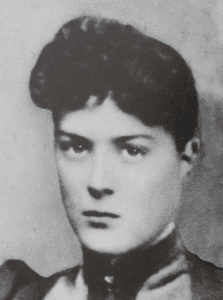
“It will be readily perceived that under such adverse circumstances I had become despondent. I was six or seven thousand miles from my native land, in a wild, rocky, mountain country, in a destitute condition, the ground covered with snow, the waters covered with ice, and I with three fatherless children with scarcely nothing to protect them from the merciless storms. When I retired to bed that night, being the 27th of October, I had a stunning revelation. In my dream, my husband stood by me and said, 'Cheer up, Elizabeth, deliverance is at hand'. The dream was fulfilled.”
Browsing Tag
food
7 posts
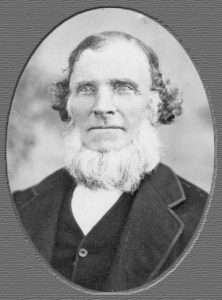
COX, Orville Southerland
Occasionally, the monotony of the bellows was broken in other ways. For example: At one time, oxen were brought to the shop to be shod that had real hard hoofs, called “glassy hoof.” Whenever Deacon undertook to drive a nail in, it bent. Cox straightened nails over and over, as nails were precious articles in those days, and must not be discarded because they were bent. After a while, the boy said, “Let me.” He shod the ox without bending a nail. Thereafter, Cox shod all the oxen with one and all that came to the shop.
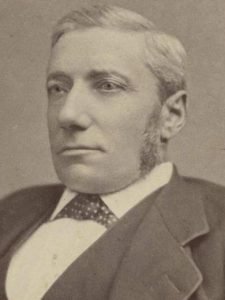
STAINES, William C.: Original Pioneer
Another of the original immigrants to Sail Lake valley was William C. Staines, for many years the emigration agent of the Church of Jesus Christ of Latter-day Saints. He was…
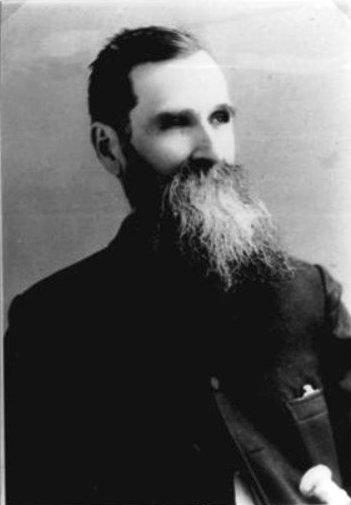
JOHNSON, Benjamin Franklin
Every house was a hospital, but without nurses. There were hardly enough men to bury the dead. As Benjamin had cared for the sick at the Kirtland Poor Camp, he knew what should be done and was immediately called upon by Joseph to help. He reported: “I had come to Nauvoo on horseback and as the houses of the brethren were scattered for some distance up and down the river, I kept my horse under the saddle and rode from house to house giving medicines and caring for the sick, and for six weeks did not take off my boots or coat for one night of sleep.”
WOOLSEY, Thomas: Journal Entries
[On arriving at the South Fork of the Platte River, they decided to follow along the bank, and passed an old deserted Indian village. An east wind blasted their faces, and the temperature plummeted. They were forced to take shelter under the bank of the river, where they slept on the ice. The weather was so cold that six inches of the tail of one of their mules was frozen.]
CHRISTENSON, Tilda Christena: History
Raised in Gunnison, UT; Mid-wife for over fifty births; Husband left on a mission only one week after being married; worked in the Manti Temple to support husband; early day Wyoming Pioneer.
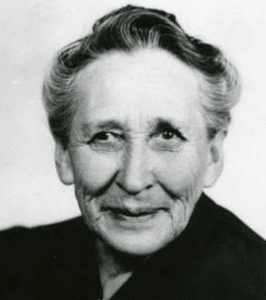
FERRELL, Maggie Anna: A life history
At Pueblo they laid over for a day and a half to wait for another train to come through the mountains. The mountains were so steep that the only way to get the trains up over them was to put one engine on front and the other on back (one to push and one to pull) up the steep hills and then to hold them back as they went down the steep grades. Maggie was very frightened of the mountains and very homesick. When they were on the high ridges where Maggie could look down into the canyons she was very sure that they would fall down into them. The high mountains did not look very beautiful to the little fifteen year old from the low rolling hills of the Bluegrass country of Kentucky, and Tennessee and Illinois. She was very thankful when they reached Salt Lake City and the long trip was over.