FREESTONE, Thomas and Ann Fall: Perseverance!

Their journey across the plains was an arduous one, but late in 1853 they arrived in American Fork. One year later the family moved to “Mountainville” (later named Alpine) where they lived in the fort for protection against the Indians, while they began to re-establish their affairs. Exerting all their efforts, they partially overcame their hunger by eating roots, pigweed and wild onions, and beat back enough crickets to raise a full crop of grain. In spite of their many trials the hardy family hung on to their testimonies and endured.
0 1
Read Time:3 Minute, 44 Second

THOMAS FREESTONE AND ANN FALL

By Angus H. Belliston

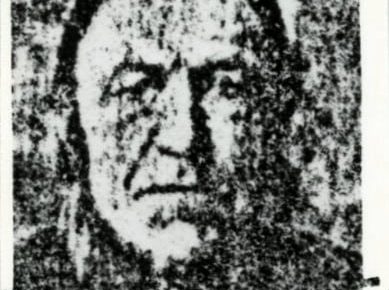
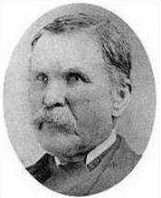
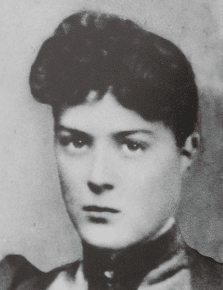
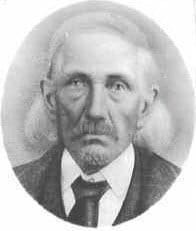
Thomas Freestone, the father of my great grandfather, George Freestone, was born in Fixton, Suffolk, England on 19 May 1795. This was a comparatively prosperous time in England, and Thomas could have stayed there in relative comfort. But in about 1825 Thomas left England to emigrate to Prince Edward Island, Canada. In August 1837, Thomas, now forty-two years old, married Ann Fall, age twenty-four. Ann was born in England too, on 6 August 1812 in Aldburrough, Yorkshire, and had moved to Prince Edward Island with her parents in about 1818. Ann was a gentle, religious, refined lady.

This couple sought to improve their fortunes by moving in 1840 to the U.S.A. They settled on a farm in central Ohio. Life was good for these faithful Methodists. They loved the soil which they farmed, and prospered modestly for a few years while their children were being born — George in 1838, James in 1840, Elizabeth Ann in 1842, Rhoda in 1844, Phoebe Ellen in 1847 (she died as an infant), Johanna in 1849, Emma Sarah in 1852 and Jane Marie in 1855 — eight children in all, of which seven lived to adulthood.

The LDS missionaries came in 1850 and baptized them. Ideally, everything should have gotten better, but got worse instead. In about 1851 they lost their farm, which had been mortgaged to pay for a season of severe illness. In 1852, they felt the spirit of gathering to Zion, sold another small acreage they had and all their other possessions, acquired a wagon and, in late summer, joined the Saints who were heading west. They struggled through fall rains and mud and reached Mt. Pisgah in Iowa in a snowstorm on Christmas Day.

The family stayed in Mt. Pisgah, Iowa over the winter of 1852-53, and finally, with help from kind fellow Saints, arrived in deep poverty at Winter Quarters. On their journey, the father and older boys had worked at anything they could do, for food or money to sustain them. When they reached Council Bluffs in the spring, they found an emigrating company nearly ready to leave for the West. Again they found help from other Saints, quickly acquired an outfit and supplies, and joined them.

Their journey across the plains was an arduous one, but late in 1853 they arrived in American Fork. One year later the family moved to “Mountainville” (later named Alpine) where they lived in the fort for protection against the Indians, while they began to re-establish their affairs. Exerting all their efforts, they partially overcame their hunger by eating roots, pigweed and wild onions, and beat back enough crickets to raise a full crop of grain. In spite of their many trials the hardy family hung on to their testimonies and endured.

In 1858, the Freestone family had been in Utah five years. The oldest child, George (my great-grandfather), was twenty years old, the youngest, Jane, only three. The father, Thomas, was sixty-three years old. The family discussed the possibility of moving to another location where they might find more security. Thomas went to Southern Utah on a scouting mission, probably looking for a new family location. Near Parowan he was ambushed by hostile Indians and killed by an arrow. One of the Indians sent word to the family of this tragedy, and claimed he had mercifully put the dying man out of his misery and buried him in an unmarked grave.

The older boys became the providers for the growing family. Three years later George married and left home. Four years after Thomas’ death, as mother Ann visited one day with her bishop about their difficult circumstances, he advised her to marry again, and introduced her to a man named Hodnett. The two went to the Endowment House in Salt Lake City and were married the very next day. Hodnett proved to be a good provider for the family, but was reputed to have been hot tempered and difficult. However, Ann was good natured and gentle, and they managed together.

With the unmarried children, they moved to Orderville and put all their sheep into the United Order (retrieving them again later when the Order failed). Ann’s health and eyesight failed in her later years and she moved back to Alpine to live in the home of her youngest daughter. She died there on Christmas day in 1888, at age seventy-six.

Happy
Happy
0 %
Sad
Sad
0 %
Excited
Excited
0 %
Sleepy
Sleepy
0 %
Angry
Angry
0 %
Surprise
Surprise
100 %
You May Also Like

ASHBY, Nathaniel

The Ashbys were seaman and ship wrights until after the War of 1812. Nathaniel however, was apprenticed to a shoemaker at an early age to learn the shoemaking trade. He became expert in the making of fine shoes and started his own business.
View Post

HASKELL: George Niles

President Young told the men; "There would be no death from fighting befall you, if you keep the Lords Commandments. "There shall be no fighting except with wild beasts." The wild beasts turned out to be wild bulls of which there were several injuries and mules gored. The Battalion shot over twenty bulls before they quit charging the men, mules, and horses. George Niles Haskell enlisted at the age of 49. They journeyed on to Winter Quarters where he took his wife, one girl and a son and proceeded on to Kegs Creek, where he left them with friends and acquaintance. Malinda had married prior to this time. The men then left for Fort Leavenworth where they received their gear and proceeded toward Mexico. The family was to await the return of George Niles Haskell and the military pay from the Army was used to help to support them. President Young made arrangements with the Army and Govt. to remain here on Indian Land for the duration. George was Private #46 of Company B. Many of the Mormons traveled to the Missouri River with the enlisted men. He had enlisted for a year, 16 July 1846 to 16 July 1847.
View Post

FERRELL, Maggie Anna: A life history

At Pueblo they laid over for a day and a half to wait for another train to come through the mountains. The mountains were so steep that the only way to get the trains up over them was to put one engine on front and the other on back (one to push and one to pull) up the steep hills and then to hold them back as they went down the steep grades. Maggie was very frightened of the mountains and very homesick. When they were on the high ridges where Maggie could look down into the canyons she was very sure that they would fall down into them. The high mountains did not look very beautiful to the little fifteen year old from the low rolling hills of the Bluegrass country of Kentucky, and Tennessee and Illinois. She was very thankful when they reached Salt Lake City and the long trip was over.
View Post

ALLEN, Joseph Stewart: Blessings For Those Who Serve

"I simply cannot go on any farther; my feet are too sore." They sought out a fallen log (tree) and there sat down to rest. There, too, they knelt down to pray. They prayed for some shoes out there in that raw, bleak country away from stores or from any town where shoes could be bought if they had the money to buy them. They must have had great faith for after sitting there awhile longer to rest they rose to go on and saw there beside the log a pair of shoes. "They were surely meant for you, Brother Allen," said his companion. "They would not do for me at all. They are too small." So Joseph put on the shoes which fit perfectly and they traveled on.
View Post

ALLEN Jr., Daniel: A Life of Consecration

Having completed their assignment, Daniel and his committee returned to Nauvoo, only to find buildings burning, mobs raging, and the saints gone. Daniel hurried to his home to find that his family was still alive, but his wife Mary Ann had just had a new baby and was very ill. He pled with the mob to let him stay a few days so his wife could recover, but they said they would kill them all if they weren’t gone by the next day. They hurriedly loaded what they could in the wagon and made a bed for Mary Ann and the baby. The Allen wagon was one of the last three to leave Nauvoo. They traveled together for a short distance, but couldn’t keep up because of Mary Ann’s grave condition. Being left alone with only one other wagon, they trudged through the mud and snow as best they could until they reached the head of Soap Creek (it looks like this might be less than 100 miles from Nauvoo). Mary Ann had struggled so valiantly, but could endure no more, so she whispered her last words to her loving husband…”We’ll meet again dear love in a better world and I shall wait your coming”. She died on the trail in May, 1846, along Soap Creek, Davis County, Iowa with no one but her family and the angels in heaven to mourn her passing.
View Post

SWEETEN, Colen Hagle

Finally, I heard his muffled voice calling from the bottom of the well. He said that the horse filled the entire hole. There was just about enough mud and water to cover the horse. He could not find anything of the man or the shovel.
View Post

WOOLSEY, Jacob C. & son Joseph H. : 1848 Pioneers

Jacob C. Woolsey is the "brother-in-law who dug Abigail Lee's grave" at the "9th or Last Crossing of the Sweetwater" on 2 Sep 1848. Abigail Schaeffer is the widow of the above Joseph Woolsey and eight of her twelve children joined the Church and came to Utah! She was married to John D. Lee "for her protection and for convenience of traveling."
View Post

HIOTT, John: An Overlooked Pioneer

As far as history is concerned he was a faceless cipher who passed through life leaving few tracks and no one to mark his grave. It is easy to overlook that John and thousands of other forgotten Utah pioneers like him were critical in settling the Intermountain West. They dug the irrigation ditches, herded the cattle, built the shelters, attended meetings, maintained the roads, cut fire wood, tended the ill, mostly followed orders, and buried the deceased without fanfare. The accomplishments of their famous leaders would not have been possible without the blood, sweet, and tears of humble people such as John Hiott.
View Post

WOOLSEY, Thomas: Journal Entries

[On arriving at the South Fork of the Platte River, they decided to follow along the bank, and passed an old deserted Indian village. An east wind blasted their faces, and the temperature plummeted. They were forced to take shelter under the bank of the river, where they slept on the ice. The weather was so cold that six inches of the tail of one of their mules was frozen.]
View Post

George Alley

They traveled by "steam cars" to upper New York state, by canal boat to Buffalo, by lake boat to Cleveland, Ohio, by "steam cars" again to Portsmouth, by river boat down the Ohio and up the Mississippi to Quincy, Illinois, and thence by hired teams to Nauvoo. The exultation felt by George upon their arrival there is expressed by a note he made in his Bible at this time:
View Post