 0
 1
MILTON EZRA AND IDA HANSEN STEED
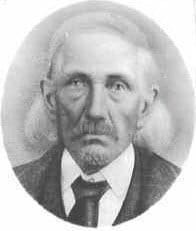
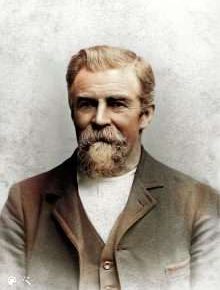
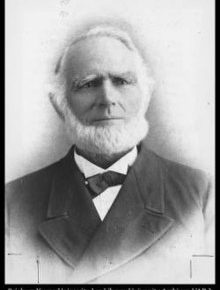
 Milton Ezra Steed was my father. He was born in Farmington, Davis County, Utah January 23, 1899. Very little is known about his younger years. He never talked about himself. We do know that he worked very hard on the Steed farm near Syracuse, also in Davis County, Utah, when he was growing up. He became skilled in all aspects of farming, including the raising of crops, handling livestock and operating and repair of automobiles and farm machinery. He was the most skilled at irrigation of any man I ever knew.
Milton loved working with livestock and the animals responded to his bidding in a most remarkable way. The bond of friendship between him and his animals was obvious to all of us who were privileged to see him work and interact with them. I never saw him abuse an animal in any way, nor did I ever see him back down to one, whether it was a bull, a ram sheep, a range cow or a horse. It is ironic, indeed that a bull which had responded to Milton’s gentle treatment would turn on him and, in one fatal moment, take his life.
His growing-up years in Davis County were much like those of other young men in that area. He worked hard on the farm. He attended church regularly and faithfully. He participated in high school sports and excelled in basketball and baseball. He was good looking and popular in school, where he was elected to offices in student government.
Milton was called to serve in the Central States Mission of the LDS Church when he was nineteen years old. His area of missionary service included the states of Illinois, Iowa and Missouri. According to the brief entries in his diary, he was a successful missionary.
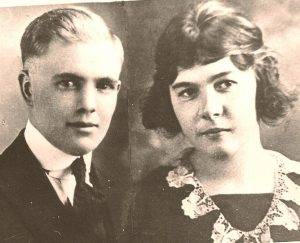
On November 29, 1922 after returning from his mission, and after she had returned from her mission in eastern Canada, he married his high school sweetheart, Ida Hansen.
Milton learned his lessons well on the Steed Farm in Davis County – lessons that would enable him to become a successful rancher in southern Utah. The Steed Ranch was located in Johns Valley, about fifteen miles north of Bryce Canyon. He served as bishop of the Widstoe Ward from August 25, 1929 to December 9, 1934.
An incident occurred while he was bishop which demonstrated the greatness of this man. It was on a Sunday afternoon. Sacrament meeting had just let out. The people were standing around on the church house steps, as the ranchers and townspeople were prone to do. There was a young man in the ward who had been drinking and partying all Saturday night in a way that was foreign to church standards and the standards set by his own family. With the discomfort of a hangover, and especially the torment of a guilty conscience, he was a miserable young man indeed.
In this distorted state of mind, he struggled to identify someone or something to blame for his misery. He concluded that the Church was the cause. Its teachings and standards were emphatically opposed to the kinds of activities he had been engaged in. That, he concluded, was the reason he was so miserable. And the bishop was the representative and symbo9l of the Church. Therefore, it was the bishop’s fault.
Now, back to the church house steps. The bishop had just come out of the chapel ad was standing on the top step visiting with another rancher when, unnoticed, that young man walked across the church yard, up the steps, and hit that bishop square on the jaw and knocked him down. Silence settled over the crowd; people stood motionless in a state of shock. Some of the men had their fists clenched, but no one made a move. All were wondering what the bishop would do. The bishop, however, was silently asking what the Lord would do if he were the bishop. The young man stood over the bishop with his fists clenched, glowering down at him. After a few seconds, which seemed much longer, the bishop got up and looked that young man squarely in the eye and calmly said, “Well brother ________, if that is the way you feel, perhaps you had better hit the other cheek.” He turned his head and waited.
That young man with his faced contorted in anger, and his eyes red from carousing the night before, raised his fists to strike again. But suddenly he hesitated, then slowly dropped his arms. He hung his head and, with tears flowing down his cheeks, turned and slowly walked away. A short time later, if you had been in that young man’s home, you would have seen that bishop with his arms around him, telling him of his love for him and of the Savior’s love for him. I was then, as now, very proud to be Milton Steed’s son.
After that incident the ward members rallied around their bishop like they had never done before. Yours later, when that same young man was a little older and wiser, he was himself called to serve as bishop in one of the wards in Springville, Utah. He became well known for his ability to work with young men who had a tendency to stray from the straight and narrow path.
The following tribute, written and given by his son Robert at Milton Steed’s funeral, June 27, 1955, gives some insight into the depth of his character, and describes the kind of man he was.
“Our father is gone now. The things that are in our hearts, we would give the world to say to him. His capacity was without limits. He was kind to all he knew. His feelings were seldom expressed in words, but always manifested in actions; nor did the animals with which he worked escape the effect of his kindness.
Our father gave of his energy, his resources, his all. There is no person, past or present, who can truthfully say the he took advantage of him or her in any transaction. Because he was what he was, father gave more than the occasion called for, more than was expected, often more than was considered possible. He lived and died by the principle that he owed his family, his fellow man and his God an honest day’s work, and with all his strength he gave it. If he had received a tenth of what he earned in worldly goods, his wealth would have been considerable.
The love he felt was seldom spoken, but to us who only partly understand, it radiated from his very being. Father was the most unselfish person I have ever known. It is true that a wish never entered his mind that was for himself alone. A day’s work by his keen mind and capable hands was never done just for himself.
To his God and his fellowman he cold never say no. He served in his every calling capably and humbly without hesitation. He lived the principles, both the letter and the spirit, taught by the Master. He is among the few who ever lived who was big enough to turn the right cheek when the left one had been struck. He was a pioneer in thought, in spirit and in action, and he loved that land and its products.
Now our father is gone and the cutting edge of our sorrow is the knowledge of the many things we could have done for him and didn’t, and the many words left unsaid.
Where he has gone there is no question. At the court of judgment he will be numbered among the greatest of the greats. Never has a man who thought he was so little been so much. If we live as he would have us live we can look forward with great anticipation to being reunited with him again, for he is unselfishly preparing the way.
It is a priceless blessing to be born of goodly parents and to have great ancestors. We who are descendants of this great man are blessed indeed.
____________________________________________________________________________
A RELIEF SOCIETY PRESIDENT’S CHALLENGE — A STORY OF FAITH AND COMMITMENT
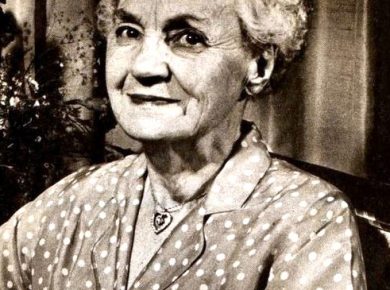
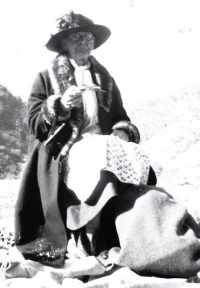
Ida Hansen was born September l6th 1900. She graduated from High School with honors in less than three years. Ida served as a missionary in the Toronto, Canada area from June 30th 1920 to April 26th 1922. She married Milton Ezra Steed November 29th 1922 in the Salt Lake Temple. For the next 23 years they lived on a ranch in a remote area in Southern Utah. (Widstoe, in Johns Valley near Bryce Canyon).
Ida was called to be the Garfield Stake Relief Society President in the late 1920s. The Garfield Stake included both Garfield and Paiute Counties. The Wards were located in towns scattered over a wide area, most of which were accessible by dirt or graveled roads. However, one Ward in Boulder, Utah was situated in some of the most remote and wildest terrain in the west – so difficult that access was limited to travel on horseback or on mules.
When she had been called to be the Stake Relief Society President, Ida Steed had made a commitment to visit each of the units in the Stake at least twice per year. The visits to the Boulder Ward were particularly challenging, since she was deathly afraid of Heights and very nervous about driving over the narrow winding road, which in places was extremely steep and dangerous. Her car, a 1928 Chevrolet, was relatively new, but that particular model had a tendency for the rear axle to twist off during steep climbs or in tight places. There was always the possibility that her car would break down on that road, It was not until about 1936 that a road traversable by automobiles was completed all the way into the town of Boulder.
However, a primitive road over which automobiles driven by brave and skillful drivers was built to the rim of a deep ravine about eight miles from Boulder. This road was opened sometime in the late 1920s after the Hells Backbone Bridge was “completed.” The road over Hells Backbone was originally built to service ranches located in a fertile valley about 15 miles west of Boulder. The road skirts some of the most inaccessible country in the world, now known as The Box Death Hollow Wilderness Area.. At the head of Box Death Hollow there is a narrow fin of terrain, known as “Hells Backbone” which separates the head of Box Death Hollow and the head of another equally deep and rugged canyon. The road traverses Hells Backbone to a place where the two box canyons come together by headward erosion, forming a gap. It is over this gap that the Hells Backbone Bridge is located The original Hells Backbone bridge was constructed by dragging two logs across a narrow gap, both sides of which dropped off vertically for well over a thousand feet. Loose planks were laid on the two logs, forming a “bridge” barely wide enough for a car to pass over.
As one can imagine, Ida would be in a state of apprehension when she would leave the Ranch before daylight and drive over the Escalante Mountain to the town of Escalante, then on to the end of the road, a distance of about eighty miles. Her first real challenge came about 15 miles from her home, where the road was so steep that Ford Model T’s and some other older autos had to turn around and back up that steep grade. The gas tank on those cars was located on the hood just in front of the wind shield so the gas could run by gravity into the carburetor. Because of the steepness of the road, the carburetor was higher than the gas tank so the gas drained out of the carburetor back into the gas tank and the engine would quit. This steep stretch of road was known as “Ford Stuck”.
Although Ida’s car had a vacuum system that sucked the gas from the tank to the carburetor it required considerable skill to negotiate that very steep section of road without letting the engine lug down and die. There was also the concern that the rear axle might twist off under the stress of the steep climb.
In Escalante Ida would pick up a member of the Stake Relief Society Board, Ruby Osborn, and proceed on the road that winds its way high up over the side of the Boulder Mountain,. Even today, though there is a modern bridge with rails on both sides, it requires courage to drive over it, especially for the first time. It is not hard to imagine how Ida Steed and her companion felt as she eased that 1928 Chevrolet onto that narrow bridge made of loose planks laid on two logs, afraid to look down on either side. Today if you look through binoculars down into the canyon on the east side of the bridge you can see the scattered wreckage of a vehicle that missed the bridge.
After safely crossing the bridge, Ida and her companion would proceed down a series of sharp switchbacks and on to a valley, where today there are a couple of ranches. They would then continue on to the rim of the ravine located about eight miles from the town of Boulder. There they would leave the car and hike across the ravine, where the Boulder Ward Bishop would meet them and take them the rest of the way on horse back. Usually it was almost dark when they reached their destination. The next day would be spent meeting with the Ward Relief Society officers and members and conducting necessary Relief Society business. Then the next morning at daybreak the Bishop would take them on horseback to the edge of the ravine. They would then hike across the ravine, get back into that 1928 Chevrolet and drive back across Hells Backbone and on to Escalante. After dropping Sister Osborn off at her home, Ida would drive up and over the Escalante Mountain and slowly work her way down the steep Ford Stuck decline and back to the Steed Ranch. Although she was physically and mentally exhausted she would kneel by her bedside and humbly express in prayer her thankfulness, not only for her safe return, but especially for the privilege she had been given to make that trip and to work with, and feel the goodness and friendship of the stalwart, faithful women in Boulder, and for the Bishop’s kindness in meeting them at the ravine.


 Brother Joseph