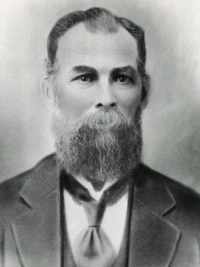
George Alley

They traveled by "steam cars" to upper New York state, by canal boat to Buffalo, by lake boat to Cleveland, Ohio, by "steam cars" again to Portsmouth, by river boat down the Ohio and up the Mississippi to Quincy, Illinois, and thence by hired teams to Nauvoo. The exultation felt by George upon their arrival there is expressed by a note he made in his Bible at this time:
0 1
Read Time:2 Minute, 8 Second

BIRTHDATE: 13 Dec 1792, Lynn, Massachusetts

DEATH: 18 Nov 1859, Salt Lake City, Utah

PARENTS: Hannah Batchellor and Joseph Alley

SPOUSE: Mary Symonds

MARRIED: 15 Sep 1822

PIONEER: 1848 Brigham Young Company

Children: George Hubbard 1823

Margaret Maria 1825

Lydia Ann 1828

Susan Hannah 1830

Stephen Webb 1832

Elizabeth Royce 1835

Charles Henry 1839

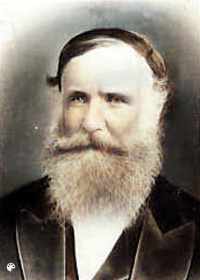
ACCOMPLISHMENTS: George Alley was born in Lynn, Massachusetts, on 13 Dec. 1792, the son of Joseph Alley and Hannah Batchellor. Joseph Alley had been active in the Revolutionary War as a member of the Lynn Minutemen.

George was an expert shoemaker and had his own shop in Lynn. He married Mary Symonds 15 Sep, 1822 and they had seven children: George Hubbard, Margaret Maria, Lydia Ann, Susan Hannah, Stephen Webb, Elizabeth Royce and Charles Henry.

Sometime between April, 1830, and December, 1832, the family moved to Salem, Massachusetts. It was there, in 1840 or 1841, that the family met, and were converted to the Latter-day Saint faith by Apostle Erastus Snow.

Early in the spring of 1842, George and Mary, with their children, embarked on an arduous journey to join the main body of Saints in Nauvoo, Illinois. They traveled by "steam cars" to upper New York state, by canal boat to Buffalo, by lake boat to Cleveland, Ohio, by "steam cars" again to Portsmouth, by river boat down the Ohio and up the Mississippi to Quincy, Illinois, and thence by hired teams to Nauvoo. The exultation felt by George upon their arrival there is expressed by a note he made in his Bible at this time:

We "Arrived in Nauvoo, 1842, by virtue of the commandment of the Lord, to gather out of Babylon."

They remained in Nauvoo until the fall of 1846, the prophet having been martyred two years earlier, when they moved by ox team to Winter Quarters.

Almost two years later, in 1848, they moved again, to the Salt Lake Valley. They were a part of Brigham Young's company, which left Winter Quarters June 1, 1848, and arrived in Salt Lake City on Sep. 20-22, 1848. George Alley was designated a captain of 10 in this company.

The Alley family, minus Margaret, who had married Brigham Young at Winter Quarters, spent the winter of 1848-49 in North Canyon (now part of Bountiful) in a log cabin built by George and his sons. The following spring they moved to Salt Lake into a house built by themselves on the northeast corner of State Street and Fourth South. It was in this house that George Alley died November 18, 1859.

Happy
Happy
0 %
Sad
Sad
0 %
Excited
Excited
0 %
Sleepy
Sleepy
0 %
Angry
Angry
0 %
Surprise
Surprise
100 %
You May Also Like

HOWARD, Joseph

A canal ran between and divided the 5 acre farm from that of Joseph's father, William. A pleasant pastime of the children was to watch the horses as they pulled the loads of freight and coal in boats along the canal. Locks were located near by and it was such fun to see the boats raised and lowered as they proceeded on the journey to the big cities.
View Post

ROBERTS, Owen: Welsh Convert

On Friday, May 20th, they started on the railroad for St. Joseph, Missouri where they arrived safely; from thence they proceeded on their way up the Missouri River on the steamboat “St. Mary”. Here they were treated roughly by the crew and others. They had no where to sleep or sit, but were almost constantly compelled to stand on their feet night and day until May 26th where they landed on the banks of the Missouri River below Florence, Nebraska at which place they lodged for a while so they could fit up their teams and baggage to cross the plains to the Rocky Mountains.
View Post

WOOLSEY, Joseph Henry and Abigail Schaeffer

When her daughter Agatha Ann Woolsey, the first wife of John D. Lee, introduced her to the Gospel, she embraced it whole heartedly, remaining faithful from her baptism 17 Jun 1838, in Vandalia, Fayette County, Illinois, until her death on the cold dreary plains of Wyoming, just before “Rocky Ridge” on the way to the summit of the Rockies.
View Post

JEPPSEN, Niels Andersen

The day after their wedding they walked to their farm in North Ward (now named Harper Ward). She carried a basket with her dishes in one hand, while with the other hand she helped Niels carry a large box which contained their worldly goods. A large stove kettle was fastened to the box, while suspended on a stick, which he placed across his shoulder with a sheet with quilts wrapped inside.
View Post

WOOD, George Lymer: An Incident in the Life

"The usual method of disposing of the dead was to weight the bodies and dump them overboard. When others and I asked the privilege of removing our dead and burying them on land, the Captain was hateful and mean about it. All of my dear ones except Samuel's wife I had to perform this last earthly service for. Others of the party had sustained like losses, and were as anxious as I to bury them as decently as possible. The Captain at last agreed to wait and we hired a Negro to help dig a trench big enough to put them in all together. We removed the dead from the boat and began our heart¬breaking task, but had it only partly done when the boat whistle blew and the boat began to get underway. All ran hastily back except the Negro, one woman and myself. She and I stood at the grave site of our dead and watched them go. What bitterness of spirit I experienced only God knows. Was this what I had come to America, the home of the brave, for? Here I was with two strangers standing beside the open grave of a group of strangers. Our common interests were all lying before us or fast receding from sight, subject to the whim of a heartless thing in human form. "Surges of emotion swept over me, sorrow, anger, love, fear, and despair, but my nearest duty was to protect these rapidly decomposing dear forms of mine from the ravages of wild beasts, heat, and other elements. Perhaps I had been blessed and spared to perform this last service. If! were dead with them our bodies would rot together. So I urged on my companions the need for work. I felt responsible for seeing this thing through.
View Post

FREESTONE, George: and his Wives, Alice Carlisle and Jennie Lind

George found himself, as a fifteen year-old, driving four yoke of oxen on a heavy freight wagon to the Utah Territory. His younger brother, James, later wrote that he had driven sheep 1,000 miles barefooted across the Plains. “In Alpine,” George wrote, “between 1855 and 1856, I spent about half of my time building forts to fight against the Indians and half my time killing crickets.” The family struggled against these odds to make a living. Then in 1858, they lost their father when he was killed by Indians.
View Post