BROOKS, Karl: Mayor of Dixie

0 1
Read Time:3 Minute, 3 Second

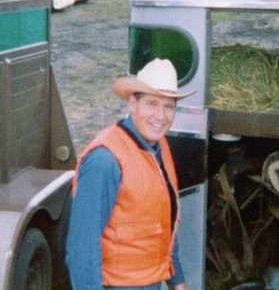
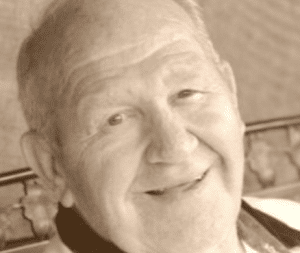
Karl Francis Brooks was born to Will and Juanita Brooks on November 7, 1935, in St. George, the ninth of eleven children. He lived until October 31, 2015

Karl grew up in St. George, attending Dixie High School and Dixie College, where he played football, baseball, and was also student body president. In 1956, Karl left home and went to BYU where he played football, baseball, and received his B.S. and Masters degrees. After graduation, he moved to Mesquite, NV to teach history and coach football at Virgin Valley High School.

He had the chance to move home and came back to St. George where he taught at Dixie High School and then Dixie College. He then met the love of his life Carla Hoyt. They married in Kamas, Utah on June, 4th, 1965, and were sealed in the Los Angeles LDS Temple a year later on their anniversary.

Karl taught school in Pomona, CA before returning to Utah to get his Ph.D. in Educational Administration at the University of Utah. Degree in hand, Karl moved his young family to Monticello, Utah in 196 where he became Principal of Monticello High School and Assistant Superintendent of the San Juan County School District.

In 1971, Karl finally had the opportunity to return home to his beloved St. George to work and raise his family. For 25 years he served Dixie College as a teacher, director of high school relations, vice president, and athletic director. Everything Karl accomplished demonstrated his love for his community and his ancestors that settled there.

He served as Mayor of St. George for 12 years, during which the city grew from seven to 60 square miles in size and from 10,000 to 50,000 in population. Because of his key roles at both the city and the college, he was instrumental in getting the Dixie Center built. He also worked diligently to restore and preserve the local Opera House and art museum.

He was was president of the St. George Chamber of Commerce and the Utah League of Cities and Towns, and served as chairman of the Zion Natural History Association, the Dixie Center Control Board, and the Municipal Finance Cooperative Agency. As mayor, he was instrumental in acquiring three new golf courses, developed much public park space and a hiking/trail system. At Dixie College, he worked to increase major gifts, expand the campus, increase scholarship endowments and obtain funding for the athletic department.

Karl was known statewide as “Mr. St. George” and epitomized what has become to be known as the “Dixie Spirit.” He co-authored A History of Washington County, was in constant demand as a public speaker and received numerous education and civic awards.

Karl retired in 1997 but continued to love, support and serve his community for the rest of his life. After retirement, he also had the opportunity to serve two LDS Missions with his wife in Boston, MA and San Diego, CA. He served as a Bishop and in the Stake Presidency at Dixie College and was a faithful member of the Church of Jesus Christ of Latter-Day Saints.

Karl loved all sports, hunting, fishing and spending time in Pine Valley and at “the farm”. Above all, he loved every person he ever met, and everyone loved Karl. He had a great gift to remember names and faces and could connect people and families everywhere he went. He was happy and content every day of his life, and smiled through every difficult and painful experience. He continually lifted others with his smile and his kind words.

Upon his death, Karl was buried in the St. George Cemetary.

Happy
Happy
0 %
Sad
Sad
0 %
Excited
Excited
0 %
Sleepy
Sleepy
0 %
Angry
Angry
0 %
Surprise
Surprise
100 %
You May Also Like

William Henry Adams, Jr.

In 1853 when the grasshoppers took the crops, he and his family subsisted on boiled thistles, mushrooms, or any kind of roots or segos. He apprenticed as a stone and brick mason with his father. They built an adobe house in Pleasant Grove, as well as many other buildings there.
View Post

ANDERSON, Melvin “P”: A Modern Pioneer

Mrs. Kaye Collins, band instructor at the high school brought some band members together and Lehi had a Silver Band again. But they needed a wagon. Mel decided that he could build a new wagon and set about designing and then started to build. Melvin had played in the band for about 12 years, so this was close to him. After 8 to 16 hour days and six months, with considerable volunteer help, the wagon was completed with Upholstered seats and special suspension. Mrs. Collins said, “It rides like a Cadillac!” This was in 1997. They were invited to meet the incoming Wagon Train and Pioneers at the “This is the Place State Park” on July 22, 1997, in celebration of the original pioneer trek.
View Post

PETERSON, Charles Sreeve

Mr. Powell, tried to persuade him to give up his faith or otherwise he would have to surrender his work position. He flatly told him no, as to deny his knowledge that he had received would be the greater sin. In his words, “I knew it would be a great sacrifice to me to give up my employment and the comfortable home which I appreciated so much, but to give up the principles which I had received and which I knew to be true would be a far greater sacrifice, and of the two I would choose the lesser … no position, wealth or earthly honor could move me from my convictions and purposes at that time…”
View Post

CALL, Helaman Pratt

My father had done a little experimenting. We had a large bathtub in one of the bedrooms in our home—it hadn’t been remodeled. They had just put in a bathtub and a toilet and a hand bowl in one of the bedrooms so there was quite a bit of room in there. It was a large oversize tub. I thought my father was going to baptize me but Charles Jones was going to baptize me. He had experimented how full he could fill the tub without running it over and still get me and him both in the tub. They put a stopper on the overflow so that the water would come up higher than the normal overflow would allow.
View Post

ORR, Robert Ustain: A Short Biography

Robert Orr was quite the character on the stage, taking mostly comedy roles. Adept at showing the humorous side of life, he was a good pantomime and had plenty of chances to use his talent. When they were able to have a stage curtain made, he was in charge of running the curtain up and down and kept the coal-oil lamps all clean and filled. The first play they put on was called "Ten Nights in a Bar Room", which Robert had a part. This play was a favorite for many years and they played it at the opening of each season. They also took their plays over to Camp Floyd, Eureka and Tooele.
View Post

COOLEY, Andrew Wood: A pioneer devoted to family

December 25, 1885. I wish I could have had the privilege of spending Christmas with you at home, but it is our lot to spend it apart. I hope you have spent it in a different way from what I have. We had a good dinner. The warden did the best he could to make the prisoners happy, but when a man’s liberty is gone, he can’t be happy when he has a family at home. I have thought of home the whole day long and so I do every day. I shall never be a happy man if I cannot enjoy the society of those that are my own flesh and blood which my family is. Things look dark to me, but I must hope for the best. God is at the helm
View Post