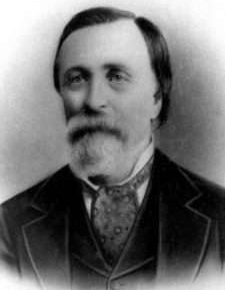
BACON, Guinivere Ellen Kotter

0 1
Read Time:50 Second
[This article first appeared in the Mar/Apr 1970 issue of Pioneer Magazine.]

First Utah Feminine Flyer

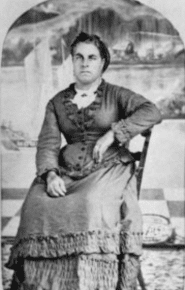
Guinivere Ellen Kotter Bacon, daughter of Mr. and Mrs. William F. Kotter, learned to fly at the Airtech School of Aviation, Lindberg Field, San Diego, California and soloed Aug. 29 1929, the first woman from Utah to do so.  She was also the first to secure both the private and commercial pilot’s license.

Guinivere was a charter member of the Anne Lindbergh Girl Glider’s Club,—organized in San Diego in the Spring of 1930.  The club purchased a Bowlus ninety-foot span sailplane, which Col. Charles A. Lindbergh tested for them.

Anne Lindbergh, using the Club’s glider, was the first woman in the United States to qualify for third and second class glider licenses.  Guinivere was the second to qualify for the third class and third to qualify for the second class glider license. She also qualified for entrance to long distance flying contests but never used the privilege.

Happy
Happy
0 %
Sad
Sad
0 %
Excited
Excited
0 %
Sleepy
Sleepy
0 %
Angry
Angry
0 %
Surprise
Surprise
100 %
You May Also Like

BLAIR, Seth Millington

No power on earth shall stay thine hand, thou shalt rebuke the waves of the sea, and like Enoch turn rivers of water out of their courses, cause streams to break forth in dry places to give drink to thy people, feed a multitude in the wilderness by the same power that Jesus fed the multitude when he was in the flesh, shall do every miracle that your heart desires, live to see Zion established in peace on the Earth.”
View Post

YOUNG, John Ray: Experiences

John R's mother was ill and stayed in Winter Quarters, but John R and his brother Franklin W ( 8 ) left soon after the advanced party, in the Jedediah M Grant Company. In his book John R. states that they were no ones responsibility, but everyones chore boys. It is heart renching to me to picture a sick mother sending a 10 year old son on a 1000 mile treck through wild country with an 8 year old in tow. One morning when they were camped on Hams Fork near Ft Bridger, in what is now Wyoming, a cow was sick and would not get up. John was left behind to try to get her up and bring her to the next camp site. It is terrible to think of the fear he felt as the last dust settled from the wagons as they faded from view. While tending the cow he saw an Indian across the river, and he decided to leave the cow and head for camp. The next morning several men returned to the previous camp site, and found that the cow had been butchered by Soux Indians 'on the war path after Shoshones', This band raided Ft Bridger, but left the Mormon train alone except for one sick cow.
View Post

CROSS, Benjamin

Benjamin Cross, was chosen to be the first bishop of Peteetneet Creek ….October 26th, 1854 there was an article in the Deseret News of Israel Calkins having raised produce on nearly an acre belonging to Bishop Cross: 150 bushel of beets, 150 bushel of potatoes, 3 bushel of onions, 130 good cabbage heads and an additional 300 heads damaged by the grasshoppers, 3 barrels of pickle cucumbers, and quite a quantity of melons, squash, and peppers. Benjamin was assisting Charles B. Hancock financially to get a grist mill built in Payson. On November 15th George A. Smith came to Payson from Provo to speak in a meeting and stayed the night with Bishop Cross.
View Post

BRIGGS, Thomas

Bountiful Pioneer At their December meeting the South Davis Chapter eulogized the pioneer life of Thomas Briggs, which was presented by Bruce Briggs, a second great-grandson. Thomas Briggs emigrated to…
View Post

MOLEN, Jesse: The Life and Struggles

Upon arrival in Salt Lake City they had very little food or other provisions. They were required to subsist on plant roots to supplement the little other food they had. The next year they experienced the cricket infestation and lost most of their crop. The rigors of the struggle to travel west plus chills and other conditions had taken their toll on Jess’s health.
View Post

CARLING, John Witt

Wagons for Fleeing SaintsJohn Carling and his son Isaac worked at making and mending wagons for the Saints who were being driven from Nauvoo. The mob violence became so intense that the Carling family decided to leave with the main body of saints. Brigham Young sent Heber C. Kimball to inform John that if he would stay until all of the Saints had been provided with good outfits, not a hair of their heads would be harmed. They remained as requested, though some wives complained that they would all be killed. “The morning they were to leave, they were counseled to get to the ferry boats before the mobs were astir, and upon arriving at the ferry, the captain hurried them onto the boat and admonished them to be quick because they could see the mobs coming. Some were on horses, and others were running, but all with guns in their hands, and they were cursing. As the saints left the shore, they could hear the leader of the mob ordering his men to shoot. But as the men came to the shore, they stood still. It is told by some that two shots were fired but they missed the people in the boat.”
View Post

KILLIAN, Captain John

When the Elders administered to me, Brother Killian being mouth, I was in bed. He poured the oil on my forehead and I jumped right out of bed and put on my clothes. On hearing that Robbins was going to Quincy in the morning, I walked up to his house, three-quarters of a mile, and went with him in his carriage to Quincy, remained all day and returned with him at night.”
View Post

DAVENPORT, James and Almira Phelps

In this spring of 1847, James Davenport was recruited as a blacksmith for the first company to leave with Brigham Young for the Great Basin of the West. They would generally follow the Oregon/California Trail along the Platte River. But they deliberately chose the opposite side of the river from the well-traveled side. Part of the mission of that first company was to identify the best route for the trail and the best sources for feed for the livestock, and to improve the road for the thousands that would follow. There were worrisome encounters with Indians, whose intentions were not well-know at the time, but no serious troubles occurred.
View Post