PITT, William

0 1
Read Time:1 Minute, 35 Second
This article originally appeared in Pioneer Magazine, 2010 Vol.57 No.3
by Kent Lott

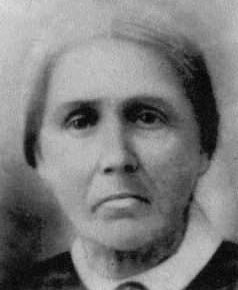
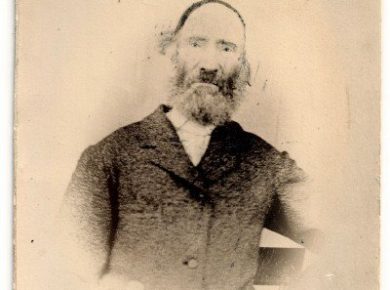
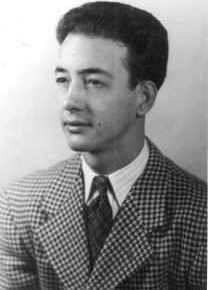
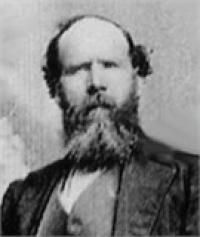
Born in Dymock, England, August 16, 1813, William Pitt joined the Church in 1840. By 1842, he had moved to Nauvoo, Illinois. One evening in 1842, a group of 27 men assembled at the Nauvoo home of John W. Coolidge, greeting each other with warm handshakes and pleasant conversation. That evening they organized the Nauvoo Brass Band, a musical group that would march its way west with the Saints five years later and be a spirit-sustainer in the early days of Western colonization.

William Pitt, a left-handed fiddler, flutist, clarinetist, and all-round musician, was selected as leader. (The band was also known as Pitt’s Brass Band for that reason, and as Joseph’s City Band because its primary purpose was to accompany the public drills of the Nauvoo Legion.) William was a logical choice for leader; a British convert, he had brought with him a large selection of music arranged for brass instruments which the group immediately began practicing, even though the instruments available were mostly “old fashioned and inconvenient for advanced playing,” according to Horace K. Whitney, a fifer in the band.

During the Mormons’ trek across Iowa in 1846, Pitt’s band not only helped to keep people happy with its music but also raised money by holding ticketed events in communities through which they passed.

Pitt was in the original group to go to the Salt Lake Valley with Brigham Young in 1847. In 1852, Pitt served as a missionary in England for the Church.

The Nauvoo Legion Brass Band, the Salt Lake City-based successor to the original Nauvoo Brass Band.

Sources: William E. Purdy, “They Marched Their Way West: The Nauvoo Brass Band,” Ensign, July 1980, 21; Wikipedia. William Pitt photo courtesy LDS Church Archives.

Happy
Happy
0 %
Sad
Sad
0 %
Excited
Excited
0 %
Sleepy
Sleepy
0 %
Angry
Angry
0 %
Surprise
Surprise
100 %
You May Also Like

WARNICK, Anders Peter: Stalked by Cholera in 1866

From 1863 to 1875 cholera swept through Europe. The Austro-Prussian War in 1866 accelerated its spread. That fateful year 250 thousand people died from the lethal disease in Prussia and Austria, 90 thousand perished in Russia, and 113 thousand succumbed the next year in Italy. Hungary, Holland, and Belgium were similarly hard hit by the disease. Little wonder, then, that the virulent bacteria made its way on board the ship that the Anders Peter Warnick family boarded in Hamburg, Germany on June 1, 1866.
View Post

ALLEY, George H.

It is not difficult, then, to see this young man fitting perfectly into the scene, when, on April 3, 1860, the riders of the Pony Express began their mad, daring dash between St. Joseph, Missouri and Sacramento, California. He was ideally equipped for this adventure. His career as a "Pony Rider" began when he signed in at the Salt Lake City Station located on the east side of Main Street between First and Second South Streets.
View Post

BARLOW, James and Ann Crompton

Ann Crompton Barlow was an English Mormon Emigrant, who felt the desire to bring her three youngest children, John (17), Jane (15) & Joseph Smith (7), to the Utah Territory to gather in "Zion" with the Saints. She was a widow, with meager means, thus was chosen to use the Perpetual Emigration Fund by the leaders of the Manchester Branch.
View Post

YOUNG, John Ray: Experiences

John R's mother was ill and stayed in Winter Quarters, but John R and his brother Franklin W ( 8 ) left soon after the advanced party, in the Jedediah M Grant Company. In his book John R. states that they were no ones responsibility, but everyones chore boys. It is heart renching to me to picture a sick mother sending a 10 year old son on a 1000 mile treck through wild country with an 8 year old in tow. One morning when they were camped on Hams Fork near Ft Bridger, in what is now Wyoming, a cow was sick and would not get up. John was left behind to try to get her up and bring her to the next camp site. It is terrible to think of the fear he felt as the last dust settled from the wagons as they faded from view. While tending the cow he saw an Indian across the river, and he decided to leave the cow and head for camp. The next morning several men returned to the previous camp site, and found that the cow had been butchered by Soux Indians 'on the war path after Shoshones', This band raided Ft Bridger, but left the Mormon train alone except for one sick cow.
View Post