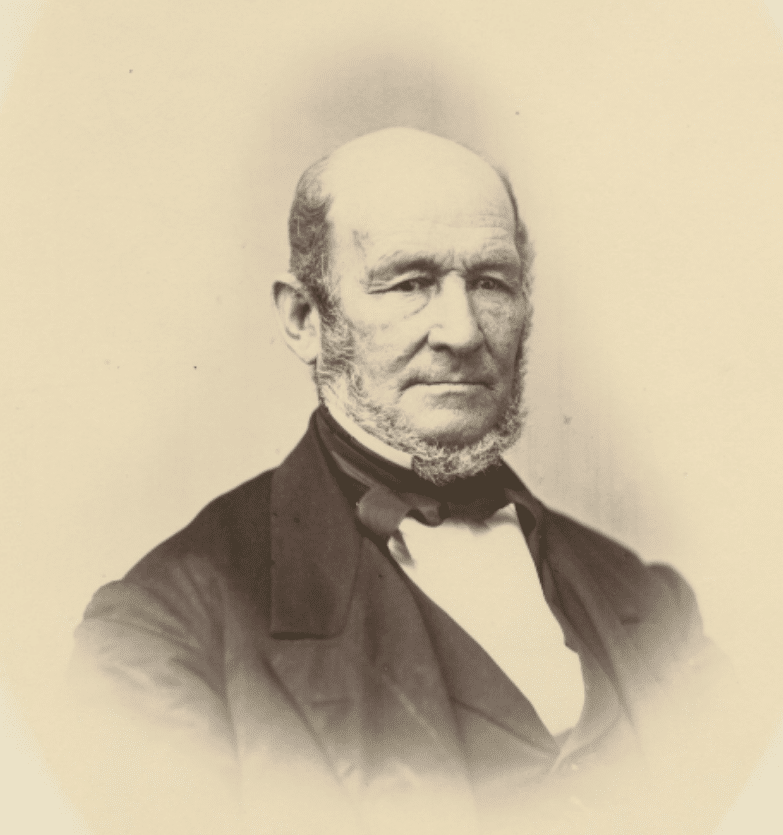
WATT, George D.

0 1
Read Time:1 Minute, 30 Second
This article originally appeared in Pioneer Magazine, 2010 Vol.57 No.3

On Saturday evening, July 29, the Mormon missionaries agreed to baptize 15 of the eager investigators the following morning in the River Ribble.

Heber C. Kimball

Heber C. Kimball estimated that between seven and nine thousand people were sitting and standing on the bank, watching the open-air baptisms. He records:

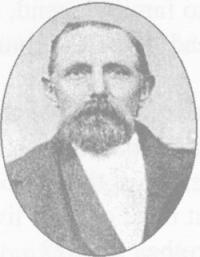
“Two of the male candidates, when they changed their clothes . . . were so anxious to obey the Gospel that they ran with all their might to the water, each wishing to be baptized first. The younger, George D. Watt, being quicker of foot than the older, outran him, and came first into the water” (in Whitney [1967], 135).

In 1842, Watt left England to join the gathering of the Latter-day Saints in Nauvoo, Illinois. In 1846, Brigham Young sent Watt and his wife back to England as Church missionaries. Watt used his skill at Pitman shorthand in serving as a clerk to mission president George Q. Cannon. In late 1850, the Watts returned to America and joined the new gathering of Latter-day Saints in the Salt Lake Valley in Utah Territory.

George D. Watt was on a committee called by President Brigham Young as part of a project to help simplify spelling in the English Language. The Deseret Alphabet came about on January 19, 1854, when the Board of Regents of the University of Deseret announced that they had adopted a new phonetic alphabet. The new alphabet consisted of 38 to 40 characters and was developed mostly by George D. Watt.


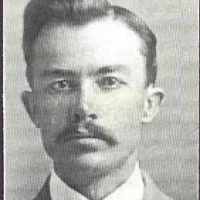
Excerpts from Ronald G. Watt, “Sailing the Old Ship Zion”: The Life of George D. Watt,” BYU Studies, 18.1. George Watt photo courtesy LDS Church Archives.

Happy
Happy
0 %
Sad
Sad
0 %
Excited
Excited
0 %
Sleepy
Sleepy
0 %
Angry
Angry
0 %
Surprise
Surprise
100 %
You May Also Like

ROBERTS, Levi

After travelling over the mountains one day we met with some of our brethren from the Valley. This was a time of rejoicing. Captain Brown who left us at Santa Fe with the sick which went by the way of Fort Kearney and a few brethren with him from the Valley, brought news that we were not to go to the Valley, and told us we had better stay another year in California. So the company divided right where we met each other; some went on to Winter Quarters; some to the Valley, and some turned back. Daniel Browett, Slater, Cox, Levi Roberts and myself turned back to Sacramento and went to work for Mr. Sutter who treated us very kindly. I sent a mule to my wife with Brother Harris, which she got…. We all went to work at the same place for Captain Sutter. We took the work of cutting a millrace. Brother Browett went [p.379] to work with the millwright, this was in September and later on in the fall, I and two others took sick with the bilious fever. We were so sick we couldn't help each other to a drink of water. We lay under some ties and had to crawl around with the sun to keep from making us chill…. Our appetites were very poor, and our food was flour, water and squash. Had it not been for the thoughts of my wife and family I could have died, but we all three recovered after awhile and went to work on the millrace again and worked all winter. Sometime in the winter two of the brethren who were working for Mr. Sutter in the mountains found gold in a tailrace they were making. Mr. Sutter let me see the first gold they found before sending it to San Francisco to get it tested. In May 1848 some of the brethren and myself made a trip in the mountains to try and find a road over (instead of going down Truckee River, as we had to cross it about 20 times) but when we got in the mountains we found so much snow we had to return, and on our way back I stopped at what we called the Mormon Island, where there was some of the brethren at work getting gold, Brother Sidney Willis and his brother; also Brother Hudson. I stayed here for a short time and got some gold.
View Post

JEPPSEN, Niels Andersen

The day after their wedding they walked to their farm in North Ward (now named Harper Ward). She carried a basket with her dishes in one hand, while with the other hand she helped Niels carry a large box which contained their worldly goods. A large stove kettle was fastened to the box, while suspended on a stick, which he placed across his shoulder with a sheet with quilts wrapped inside.
View Post

DIBBLE, Philo

There he was shot and wounded by the anti-Mormon mob.  While he was bleeding to death, in fact almost gone, the prophet was sent for.  He and the prophet were very close friends.  The prophet laid his hands upon his head and blessed him to live and said he would go to the Rocky Mountains and be a useful instrument in carrying on the work of the Lord there, and would live to be of old age. 
View Post

MOLEN, Jesse: The Life and Struggles

Upon arrival in Salt Lake City they had very little food or other provisions. They were required to subsist on plant roots to supplement the little other food they had. The next year they experienced the cricket infestation and lost most of their crop. The rigors of the struggle to travel west plus chills and other conditions had taken their toll on Jess’s health.
View Post

GLEASON, John Streator: Rush Valley Miner

John S. Gleason did indeed own the Mountain Lion mine, or parts there-of, but also the Blue Wing mine listed above and much to our surprise, at least seventeen other lodes shown in Figure 13.0. Two miles north of Ophir is Jacobs City in Dry Canyon. Some of the richest lodes of the Ophir Mining District came from this location. John S. Gleason owned in part the Iris(Ira) and Jacobs Hill lodes (Shoo Fly) in Dry Canyon. Millions of dollars of rich metals were taken from the Ophir and Jacobs City locations. The date of sale of the Mountain Lion Lode no. 2 was 4 March 1871. It was sold with the webster and women rights lodes for $2,000 dollars. The Mountain Lion Lode and thirteen other lodes were sold on 10 June 1871 for the combined sum of$5,000 dollars.
View Post

FREESTONE, Thomas and Ann Fall: Perseverance!

Their journey across the plains was an arduous one, but late in 1853 they arrived in American Fork. One year later the family moved to “Mountainville” (later named Alpine) where they lived in the fort for protection against the Indians, while they began to re-establish their affairs. Exerting all their efforts, they partially overcame their hunger by eating roots, pigweed and wild onions, and beat back enough crickets to raise a full crop of grain. In spite of their many trials the hardy family hung on to their testimonies and endured.
View Post