MEEKS, Dr. Priddy

0 1
Read Time:1 Minute, 13 Second

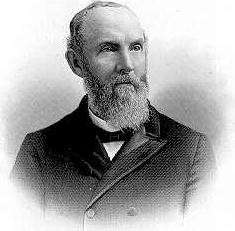
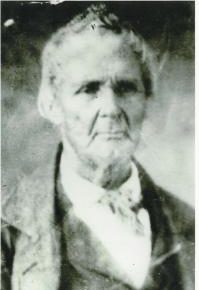
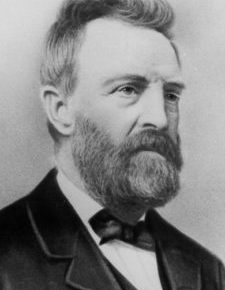
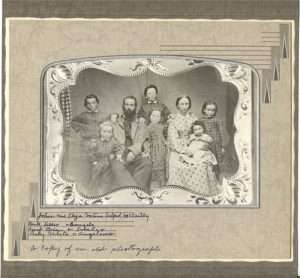
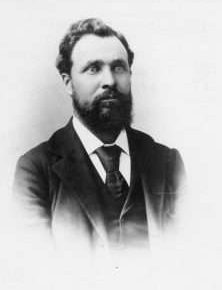
Born August 29, 1795, in South Carolina, Priddy Meeks was converted to the LDS Church in 1840 in Brown County, Illinois, where he also served as bishop. Meeks joined the Saints at Nauvoo, Illinois, from 1842 to 1847 and was blessed by the Prophet Joseph Smith and Hyrum Smith that he would have children and sons to carry on his name. They requested that he name his sons after them [which he did]. Arriving in Salt Lake Valley, October 1847, he served as first president of “Society of Health,” which trained the Saints in better medical practice. The remainder of his life was spent in colonizing southern Utah including Parowan (1850), Leeds-Harrisburg (1862), and Berryville, now Glendale (1846). His family was the first in Mt. Carmel (1864) living in a dugout. In 1876 he moved to Orderville, Kane County, and joined the United Order. Brother Meeks was a strict observer of the Word of Wisdom and practiced medicine somewhat after the “Thompsonian” school.

He was a faithful Latter-day Saint, and departed this life at his residence in Orderville, October 7th, 1886, at the ripe age of 91 years, leaving two wives and a large posterity to mourn his departure.

Priddy was also the personal physician to LDS Church Presidents Joseph Smith and Brigham Young.


Information from Daughters of Utah Pioneers marker located at S. Hwy. 89, Mt. Carmel, Kane County.

This article originally appeared in Vol.59 No.1 (2012) of Pioneer Magazine
Happy
Happy
0 %
Sad
Sad
0 %
Excited
Excited
0 %
Sleepy
Sleepy
0 %
Angry
Angry
0 %
Surprise
Surprise
100 %
You May Also Like

ALLEN, Jude

In May 1845, the company turned west from their northwestern trek and moved across western Iowa to Fort Vermillion, a French trading post in the present south-eastern part of South Dakota. This group of Mormons was probably the first Anglo American settlers in South Dakota. Jude and the others in the company spent the next ten months hunting buffalo, herding cattle, putting up log cabins, raising vegetables and putting up hay.
View Post

ASHTON, Edward

Edward was apprenticed to a man who would teach him how to make shoes. He was bound for three years for his board and room, and his mother paid the sum of six sovereigns (approx $30.00) for his apprenticeship. This was not a happy experience as he did not get enough food and it was not of the highest quality, and he was required to do all kinds of work besides the trade he was supposed to be learning. The man was most unkind and Edward suffered a great deal of abuse as his employer routinely beat him.
View Post

ARMSTRONG, Francis

From this humble beginning began the rise of one of Utah's greatest entrepreneurs of his day or any other day. He obtained his own saw mill, then a lumber company, then a construction company. As the years went by, he purchased a flour mill, several huge ranches, and developed sugar companies, banks, savings and loan operations, railroads, transfer companies, insurance companies, and eventually electric street cars (the second in the world) and the supporting electricity production company.
View Post

Life of James Kippen

Mr. Kippen was a firm believer in the teachings of his church regarding work for the dead, doing work along this line in the temple for members of his family who had died out of the faith of the Mormon Church, believing that by this means he would be able to save their souls. He passed all through the scenes of hardships and difficulties which the settlement of Utah made a matter of history, and during the Johnston Army troubles, he served as a guard in the Green River country and in Echo Canyon.
View Post

ANDERSON, Neil

One day, when it was soon time to harvest the beets, he called the boys together to show them how to top the beets. When he had them all around him he took a big beet and his best knife and toped the beet and at the same time he cut the end of his finger off. Then he said, "Boys, that will never do. Don't do it that way!"
View Post

DAVENPORT, James and Almira Phelps

In this spring of 1847, James Davenport was recruited as a blacksmith for the first company to leave with Brigham Young for the Great Basin of the West. They would generally follow the Oregon/California Trail along the Platte River. But they deliberately chose the opposite side of the river from the well-traveled side. Part of the mission of that first company was to identify the best route for the trail and the best sources for feed for the livestock, and to improve the road for the thousands that would follow. There were worrisome encounters with Indians, whose intentions were not well-know at the time, but no serious troubles occurred.
View Post