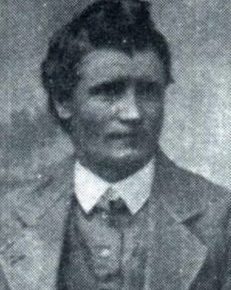
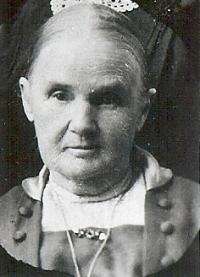
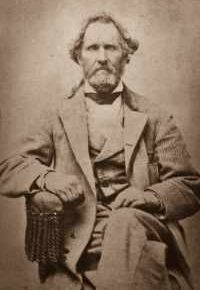
COX, Amos

Sister Brady Englestead has told me of how her sister who was about 14 years old had been sick for months, and got so she wouldn’t eat, and although they had the elders administer many times, still she seemed to get worse. One day she said “If you will have Amos Cox administer to me I think I will get well.” Father was only 17 years old at the time and had never administered to anyone in his life, but they sent for him out in the field where he was scything grain. He said he was dumb founded, but told them he would come. There in the field he asked Heavenly Father what to say and said he believed it was one of the most humbling experiences of his life. He went to the house, washed his hands, and sealed the anointing. He promised the girl that she would get well, then when he looked at her and saw how frail and pale she looked, he was scared and so weak that he sat down.
0 1
Read Time:3 Minute, 43 Second

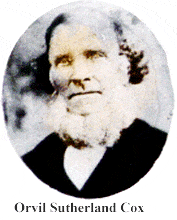
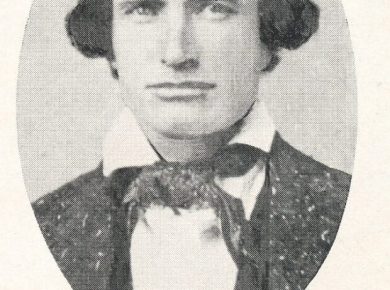
Amos Cox born 8 October 1856 at Manti, Sanpete County Utah was the son of Orville Southerland and Mary Elizabeth Allen Cox.  When Amos was a small boy they were called to go to the Muddy in Nevada and settle that part of the country, after many L.D.S. families had built canals set out orchards and vineyards and got the land to producing.  The state set such a high tax that the Saints were unable to meet it, so were told to get out so grandfather and grandmother moved to Orderville, Utah where they later joined the Order.

“Father remembered the long tables where everyone ate and where the butter was put on the bread and then scraped off so it was called bread and scrape, but he also remembers some very good meals that was served, which tasted especially good after a long day of scything with a hand scythe.

“My father as well as Sister Brady Englestead has told me of how her sister who was about 14 years old had been sick for months, and got so she wouldn’t eat, and although they had the elders administer many times, still she seemed to get worse.  One day she said “If you will have Amos Cox administer to me I think I will get well.”  Father was only 17 years old at the time and had never administered to anyone in his life, but they sent for him out in the field where he was scything grain. He said he was dumbfounded, but told them he would come.  There in the field he asked Heavenly Father what to say and said he believed it was one of the most humbling experiences of his life.

“He went to the house, washed his hands, and sealed the anointing.  He promised the girl that she would get well, then when he looked at her and saw how frail and pale she looked, he was scared and so weak that he sat down.  In a few minutes the girl asked for some bread and milk.  She ate all of it, and wanted more, but her mother was wise and told her that she must not eat too much at once, but could have more later.  Father then went back to the field.  The girl improved from that day on and lived to raise a large family.

“Father seemed to have the gift of healing.  I have seen several persons whom the doctors had given up, but lived after father administered to them.  I also saw a case of someone who didn’t live, but father was using tobacco at the time as a doctor had told him to so as to remove the fat from around his heart, but father felt that was why the Lord did not hear his prayer, because he was breaking a commandment.

“Father was married to Sarah Arletta Palmer 10 July 1876.  I think in the Endowment house.  Anyway he said he was endowed in Salt Lake City.  They had been married a number of years but had no children, it was during the time of polygamy and as the government was trying to get the manifesto thru.  Father went to Mexico and married my mother Grace Ellen Chestnut on the 4th of June 1894.  They were married by Brigham Young Jr. son of President Brigham Young, who was down there for that purpose.

“Father and mother are the parents of eight children.  As there were no doctors in the L.D.S. Colonies at that time, Aunt Letty took care of the confinement cases with fathers help sometimes in Chiuchupa, Garcia, and Pechaco, the Mountain Colonies.  Later they did some of that work in Colonial Juarez.  Father also set the broken bones, extracted teeth, and treated snake bites.  He said that with the help of the Lord they never lost a case.

“Father also practiced the blacksmith trade and went as a guide with mining men from Boston and other Eastern cities.  When I was about 12 years old, father sold a mining claim for five thousand dollars and we moved to Juarez.  Father invested part of the money in the electric light company and bought a blacksmith shop and a home with the other part.  We had electric lights, a telephone, an Edison Phonograph and linoleum on the floors, something we had never had in Chuichupa.  Also an organ of which we girls were very proud.”

Happy
Happy
0 %
Sad
Sad
0 %
Excited
Excited
0 %
Sleepy
Sleepy
0 %
Angry
Angry
0 %
Surprise
Surprise
100 %
You May Also Like

William Henry Adams, Jr.

In 1853 when the grasshoppers took the crops, he and his family subsisted on boiled thistles, mushrooms, or any kind of roots or segos. He apprenticed as a stone and brick mason with his father. They built an adobe house in Pleasant Grove, as well as many other buildings there.
View Post

COX, Orville Sutherland

Being successful in disposing of their chairs, and securing loads of bacon and corn, they were almost home when an Iowa blizzard, or Hurricane, or cyclone, or all in one, struck them. Clouds and Egyptian darkness settled suddenly around them. They had no modern "tornado cellars", to flee into and no manner of shelter of any kind. The cold was intense; the wind came from every direction; they were all skilled backwoodsmen and knew they were very close to their homes; but they also knew that they were hopelessly lost in that swirling wind and those black clouds of snow. They and their oxen were freezing, and their only hope of life was in making a fire and camping where they were.
View Post

FREESTONE, George: and his Wives, Alice Carlisle and Jennie Lind

George found himself, as a fifteen year-old, driving four yoke of oxen on a heavy freight wagon to the Utah Territory. His younger brother, James, later wrote that he had driven sheep 1,000 miles barefooted across the Plains. “In Alpine,” George wrote, “between 1855 and 1856, I spent about half of my time building forts to fight against the Indians and half my time killing crickets.” The family struggled against these odds to make a living. Then in 1858, they lost their father when he was killed by Indians.
View Post

EAGER, Anna: Pioneer Child & Mother

Anna is born in Virgin, Utah but a a very early age moved to Eagar Arizona, then Snowflake, Az, then Morelos, Mexico Where she went to school. Forced out of Mexico, she moved with her family to Woodruff, Arizona, then later to Hurricane, Utah. She married, raised her family, and died there.
View Post

MELLOR Jr., James: Inspirational Story

Mary, however, was so hungry and faint that she finally told Louisa to go on without her. Louisa would have none of that. She instead walked ahead a short distance, kneeled down, and poured out her heart to the Lord to help them. She arose and headed back toward her mother on the same path she had just taken. She walked a short distance when she suddenly saw something in the prarie grass. It was a freshly baked pie! It was laying right side up, and the crust wasn't even broken. They both thanked the Lord for the immediate answer to her prayer, ate the pie, and resumed their tip toward the company. In the meantime, since they had not caught up with the company in the time expected, James Sr. had taken his handcart to go look for them. He found them and took them in the handcart back to camp.
View Post

KENDALL, Elizabeth Clements

While the wagon train was stopped one day for a rest Elizabeth and her girlfriend had taken their knitting and gone down alongside the creek to set in the sun. They looked up from their chattering and laughter to see an Indian watching them. Then he disappeared. Upon their return to camp, the Indian was in consultation with Captain Zebriski. Then later the Captain reported to Elizabeth their conversation. The Indian, attracted to Elizabeth had said to the Captain, “Heap wino squaw, she knit socks, me want her.”
View Post