0
 1
This pioneer story originally appeared in the Nov/Dec 1980 issue of Pioneer Magazine
Colonel Chester Loveland was raised on a farm in Ohio, and his educational advantages were only such as the pioneer school afforded. It was in the pioneer school he formed the acquaintance of Fanny Call, whom he married in 1838.
He joined the Latter-day Saints in June 1837 and moved with his father to Lorain County, where he lived until 1840, when he moved to Carthage, Illinois and purchased a farm.
On account of his religious beliefs, in 1845 he and his sick family were attacked at midnight and their home and household goods were burned by a mob led on by a lawyer named Stevens.
In the fall of 1845, he moved to Nauvoo, Illinois and was appointed Captain of the Nauvoo Legion in its first organization. During the turbulent times through which the Church passed, he had many hair-breadth escapes. In one instance a leaden ball designed to take his life, came so near as to graze his face, scorching it sufficiently to cause the skin to peel off.
He relates this incident himself:
“I was on a jury when some of our brethren who had been falsely accused, were brought to trial before 11 mobocratic jurors. I held that jury 36 hours, until they were nearly starved. Two verdicts were before us: one guilty, the other not guilty. Eleven signed the guilty verdict and insisted that I should do the same. No gentlemen, I said, before I will sign that paper I will die here on the floor, and the red ants may carry me out through the keyhole.”
As a result, every man signed the verdict of not guilty, and the innocent went free.
Loveland entered into plural marriage, January 15, 1846 having sealed to him in the Nauvoo Temple a second wife by the name of Rosannah Winters. The following spring he went west and took up a farm at Council Bluffs, Iowa, which he cultivated until 1849, when he was employed by the U. S. Government to assist in building Fort Kearney on the Platte River. About the first of May 1850 he was appointed Captain of the first 10 in Captain Willies’ company of 50, and started with his family for Salt Lake City, Utah.
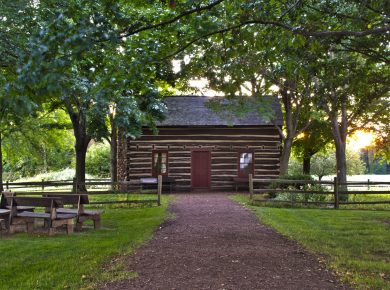
During the journey he buried his son Levi, who died with cholera, which was then raging in the country. After a long, perilous journey of four months, he arrived in Salt Lake City, September 1850. He located soon after in Bountiful, Davis County, where he built a log cabin to shelter his family through the winter. To procure food for his wives and children he burned charcoal on Weber River, which he sold and delivered to blacksmiths in Salt Lake City.
In 1853, he was appointed Lieutenant Colonel by President Brigham Young, then Governor of Utah, with instructions to organize a regiment in the northern part of the territory. He subsequently carried out these instructions and was commissioned Colonel by Governor Cummings, which position he held until his death in 1886.
In the fall of 1853 he married Celia Simmons. In 1855 he went to Carson Valley, which at the time was a part of Utah, but is now Nevada, to assist in locating a colony of Latter-day Saints. During one of the explorations at Walker Lake, they were overcome with thirst and so intense was their suffering, that every man’s tongue was swollen out of his mouth.
In 1860 he moved to Calls Fort where he resided on a farm. While there he experienced many perilous and dangerous adventures, so frequent in pioneer life. He kept a hotel for transient miners and immigrants. His only neighbors, for some time, were his son Sheriff C. C. Loveland and family. Late in the fall of 1862, about 45 immigrants, known as Captain Smith’s company, were enroute to California. On Raft River they were attacked by Indians, who killed 4 and wounded 9 others of the company. All their teams and provisions were stolen and the company left without food.
By almost superhuman strength and fortitude, three immigrants made good their escape and called upon Colonel Loveland to rescue the remaining members of the company. The Colonel, with three others, started for the scene of trouble and upon arrival found about 30 men, women and children on the verge of starvation. All they had eaten for nine days previous was wild berries from the mountain shrubs. Although the teams and provisions were lost, the remaining members of the company were rescued and shared the hospitality of the whole-souled Colonel.
In 1865 he moved six miles south to Brigham City. He was elected first mayor of Brigham City. This position he held with honor and credit for two consecutive terms, (4 years). He subsequently was Assessor and Collector of the county for several years. Through his influence and ability he did much to formulate the laws and ordinances of the beautiful city of Brigham, which rightly is styled the “City of Homes.”
He married Rosetta Snow November 17, 1866. Early in the year 1868 he was appointed Captain of a company to go to the “terminus” of the Union Pacific Railroad on the Platte River after an immigration of Latter-day Saints who were on their way to Utah.
They were attacked by Indians on the Sweetwater who stole their teams. The animals were recovered, but not without a hard struggle, in which four Indians were killed. The company arrived safely under the judicious management of the Colonel. (Rosetta Snow was the daughter of Lorenzo Snow and his second wife, Mary Adaline Pettibone Goddard).
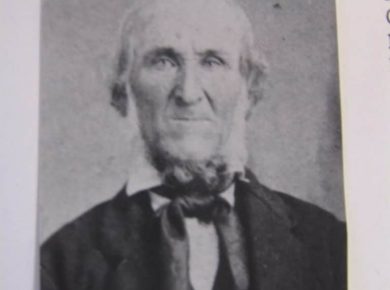
Loveland married Louise Falkner September 5, 1868. The Colonel was six foot-two inches in height, weighed 240 lbs., had blue eyes, high forehead and brown curly hair. He had a fine physique. When in his military suit and mounted on his horse, he was the admiration of all. He was a stranger to fear and never shunned positions of danger, where duty called to rescue either friend or stranger.
In physical development he was evidently formed for a champion – tall and robust. He might well pass for a modern Ajax, in strength and agility. He acquired considerable wealth during his life, yet owing to proverbial generosity and whole-soul disposition, he never became rich.
He was the friend of the poor and needy. No one ever left his door hungry. In politics, he was a Democrat. Probably no one did more to bring into subjection this desert country than the honored and courageous Colonel Loveland. His fame as a leader and pioneer will be handed down for generations to come. Fond memories of his honesty and friendship will ever be cherished by his numerous posterity. He was beloved by all, especially children whom he always noticed and made happy.
On March 5, 1886 he passed peacefully away.
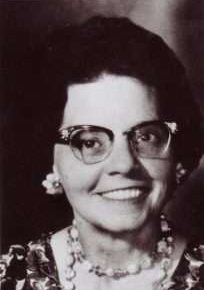
(Jennie Marble Nielsen statement: Chester Loveland was my great grandfather on my Mother’s side. My mother’s maiden name was Harriet Adelaide Loveland.)


 Brother Joseph