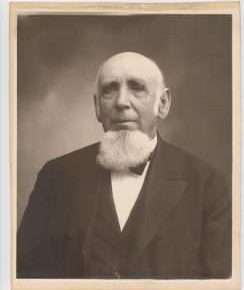
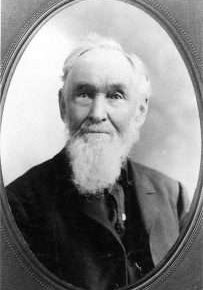
ARMSTRONG, Thomas Kirk

Thomas Kirk Armstrong was instrumental in developing the Utah territory with his team and wagon, his sawmill work, and in the sheep business at a location about seven miles east of Park City, Utah. He also maintained a dipping vat that all sheepmen used to dip their sheep in. They used a solution of tobacco and sulphur
0 1
Read Time:4 Minute, 6 Second

Thomas Kirk Armstrong was born 7 September 1847 at Plenmellor (or spelled Plainmellor), Northumberland, England the 6th child and son of William Armstrong and Mary Kirk. He was christened Thomas Armstrong, in the Presbyterian Church. Later , he added the maiden name of his mother “Kirk” to his name. He was the sixth child of thirteen children. His father was a machinist and a master blacksmith who worked for Stephenson and Hartshorn Machine Shops at Newcastle-on-Tyne and who also helped construct the first locomotive built in England.

In 1857 Thomas, now age 10, traveled with his family from Penmeller to Canada and settled in Mount Hope, Glanford, Wentworth, Ontario (near Hamilton), where his father William bought property and worked at his trade of blacksmith and also owned and operated a large farm.

In 1858 just a year after the Armstrong family arrived in Canada Thomas’ older brother Francis left home with some friends on horseback to go to Australia, but he got side tracked in Missouri and eventually joined the Mormon Church and traveled to the Salt Lake Valley and worked at the Saw Mill in Big Cottonwood Canyon for a Mr. Little, but due to his hard work and saving of his money he eventually bought the saw mill.

Thomas was living with his family in the 1861 Canadian census in Glanford and was listed as age 12. But over the years from age 12 to 20 he was influenced by his brother’s letters, and in 1867 he left home and traveled with a company of saints to the Salt Lake Valley which arrived on October 1, 1867. He worked for his brother at the saw mill in Big Cottonwood Canyon running the lath mill. He was baptized 8 months later on May 7, 1868, a member of the Church of Jesus Christ of Latter Day Saints, called “Mormons”. He took out USA Citizenship in 1875.

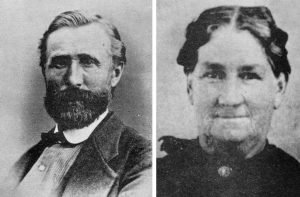
While Thomas was working at the Saw Mill he met a young woman named Margaret Stevenson Hutchison who was a cook. Margaret was baptized as a child of age 8 in Scotland, as her parents were converts. She immigrated with her father William Hutchison and sister Euphemia in 1866. Thomas married her on January 19, 1869, by Daniel H. Wells in the LDS Church Endowment House. Note: SLC temple was not completed until 1894.

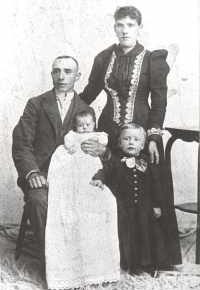
Ten children were born to Thomas Armstrong and Margaret Hutchison.

  • Thomas Hutchison Armstrong -born 15 Feb 1870 in Big Cottonwood Canyon, Utah Territory
  • Jane Penman Hutchison Armstrong -born 9 Dec 1871 in Big Cottonwood Canyon)Utah Territory
  • William Hutchison Armstrong- born 9 Feb 1874 in Salt Lake City) Utah Territory
  • Francis Hutchison Armstrong -born 16 Mar 1876 in Salt Lake City, Utah Territory
  • Margaret May Armstrong -born 8 May 1878 in Mount Hope)Glanford, Ontario, Canada
  • John William Armstrong – born 9 Aug 1880 in Mount Hopee Glanford, Ontario, Canada
  • Mary Alice Armstrong -born 6 Dec 1882 in Salt Lake City, Utah Territory
  • David George Armstrong- born 8 April 1886 in Salt Lake City, Utah Territory
  • Annie Emma Armstrong -born 25 Oct 1888 in Salt Lake City, Utah Territory
  • Clara Famey Armstrong -born 26 May 1892 in Salt Lake City, Utah Territory

Three of the ten, William, John and Annie Emma died when young children. The others all lived and married except, George who remained a bachelor. He had 40 grandchildren and Six were living as of April 1996.

Thomas Kirk Armstrong was instrumental in developing the Utah territory with his team and wagon, his sawmill work, and in the sheep business at a location about seven miles east of Park City, Utah. He also maintained a dipping vat that all sheepmen used to dip their sheep in. They used a solution of tobacco and sulphur.

Because of the poor economy during President Grover Cleveland’s administration, Thomas was forced to sell all of his sheep for $1.75 a head. He later became a watchman at the Salt Lake City water work reservoir located at 13th East and 1st South Streets. His brother Francis Armstrong was Mayor of Salt Lake City and Thomas obtained this job for his brother.

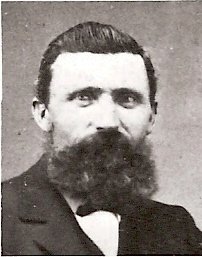
Many histories are written about Thomas. Interesting comments from his children in the histories include one story telling that his children urged him to shave off his beard, but he felt so uncomfortable without it and felt he looked so “funny” that he grew it back. The children never made that request again! Thomas was much admired as a very kind man of impeccable integrity. His son-in-law, Frank Bates Hall, husband of his daughter May, said “He was one of the most honest and big hearted men I have ever known”.

Thomas died at the age of 79, on March 1, 1927, just six days away from turning 80, and was buried in the Salt Lake City Cemetery.

[See Original copy in SUP Library for extensive documentation & notes]

Happy
Happy
0 %
Sad
Sad
0 %
Excited
Excited
0 %
Sleepy
Sleepy
0 %
Angry
Angry
0 %
Surprise
Surprise
100 %
You May Also Like

ALEXANDER, Abel

Their two year old daughter, Edna, received fatal burns when a pot of freshly made tea was upset, scalding her chest. Due to the shock of the accident as well as the severity of the burn, she died on December 17, 1853. They had to use the funds they had saved to pay for the medical care and burial expenses for their little one.
View Post

PORTER, Sanford: A Visionary Man

The last night there came a Voice–clear, audible, and distinct, "There is a God, and He has known the desires of your heart this number of years. I will instruct you three times this night the way that is right- -that you need never again doubt, but shall be satisfied in your mind concerning God.”
View Post

CARLISLE, Richard & Jane Field

Members of the family were baptized at various times in 1849 and 1850. Richard became the Presiding Elder of their branch. In 1851, on the “Good Ship Ellen,” they emigrated to America, except for their oldest son, Thomas, who came a year later. On their way up the Mississippi River, Jane died in St. Louis on 24 June 1851. She had done the washing for a woman afflicted with the dreaded cholera, so common among emigrants on that river. Jane caught the disease and died almost immediately. It must have been very difficult for Richard to manage his large family during the years following Jane’s death. First he had to get the whole family across the Plains, then provide a home for them in a new land. The bereft father and his motherless brood stayed to work in St. Louis during the remainder of the first year. The youngest son, Richard, hired out to a Mormon family and came west with them, the first of his own family to arrive in the Valley. The oldest son, Thomas, had by then joined the rest of the family in St. Louis.
View Post

PICKETT, John – A Fully Converted Pioneer

In 1861 John and his family were called to move to Gunnison, Utah. Their first home was west of where Gunnison now stands. It was a dug-out near the Sanpitch River. It was located a little distance south of the “Rocky Point”. They soon found that the dug-out was not a good place to live. The first winter was a hard one with a lot of snow. The next spring when the snow melted the ground turned to deep mud. Some of the dug-outs filled with water and their chimneys collapsed. The whole place became a “Hog Wallow” and that is how that part of the valley got its name.
View Post

FREESTONE, Thomas and Ann Fall: Perseverance!

Their journey across the plains was an arduous one, but late in 1853 they arrived in American Fork. One year later the family moved to “Mountainville” (later named Alpine) where they lived in the fort for protection against the Indians, while they began to re-establish their affairs. Exerting all their efforts, they partially overcame their hunger by eating roots, pigweed and wild onions, and beat back enough crickets to raise a full crop of grain. In spite of their many trials the hardy family hung on to their testimonies and endured.
View Post

GLEASON, John Streator: The Martyrdom of the Prophet

“The scene through which I have been called to pass since I arrived in this place from the East has almost alienated me from my country. Almost one continual round of mobocracy by night and by day. When I contemplate the scene it almost makes me shudder, and my blood run cold in my veins. I have been an eye witness to almost the whole scene from the beginning. My life has been exposed—threatened from time to time. . . when they were filled with wrath …. About a week before the assassination of Joseph and Hyrum Smith I was arrested—marched to jail by a band of the desperate and could not even lay there in peace—was aroused about 12 o’clock by a rush of men into the yard and a loud rattleing [sic] and hallooing at the door of the jail. One of our men went down and opened the door, when they rushed up stairs and caroused about a while, and left us.”
View Post

ASH, Alma

This article originally appeared in the July/August 1983 issue of Pioneer Magazine by Steven R. Sorensen, City Creek Chapter British Convert’s Pioneer Spirit Waits 24 Years to be Fulfilled Alma…
View Post

MAUGHAN, John Harrison & Sarah Mariah Davenport

Mariah learned midwifery from her mother-in-law, Mary Ann Weston, the second wife of colonizer, Peter Maughan. She was set apart for her midwifery duty by Peter Maughan and spent many successful years in this service. She earned little pay except hearty thanks, and brought almost all her patients safely through their ordeal. It was expected that a midwife might be available for other medical service. During a winter epidemic of boils, which seriously afflicted both children and adults, Sarah Mariah had a dream one night in which she saw a blue mold under rose bushes. The next day she and John went to an area where wild roses grew abundantly, scraped away the snow and found the blue mold. They collected a quantity of the substance, brought it home and made poultices which, when applied, completely cured the boils. Later, people wondered if this might have been a form of penicillin. But without question, it was a giftof Divine Providence.
View Post

ANDERSON, Hans

They had 37 deaths on this voyage due to an out break of the measles and the stagnant and unfit water. Just 4 days before arriving in America, August 7th, Hans' grandson Carl Fedrick Liljeroth died. The "Emerald Isle" arrived at the New York harbor on August the 11th.
View Post

The Life Story Of Albert Clements And Ada Winchell

Taking the baby's hand from covering his mouth he asked eagerly – "Was President Rigdon there in his place and did he take up the reigns of government and start the good work speeding on with new force & vigor?" "Why do you ask a thing like that, Albert?" Ada questioned, with a look and in a tone that would indicate she almost felt it sacrilege for her husband to have given utterance to such thoughts. "Yes," she continued, "Sidney Rigdon was at the meeting, but he was no better prepared to take the leadership among our people than this baby of ours is.
View Post