 0
 1
Submitted by Larry Gibson, past president, Timpanogos Chapter

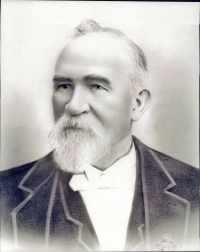
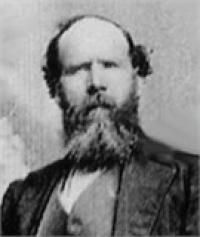
My great-great-grandfather, Allen Stewart (Stuart) Adamson, was born April 29, 1823, at Dundee, Scotland. He was the son of James Adamson, born June 17, 1791, in Benchley, Forforshire, Scotland, and Ann Middleton who was born in 1784 in Dundee, Scotland. His father James’ occupation was a flax dresser.
He started school at the age of five years and quit when he was six and a half years of age. When he was ten years old, he started working for David Maukey [Mackay] in Dundee, learning the weaving trade. He worked there for two years learning the business very well.
When he was twelve, he began to work for Baxter Brothers, machinery builders. He worked for them for two years and then was apprenticed to them to learn the machinist trade making various machines, carding engines, etc. He completed his apprenticeship when he was nineteen years of age. From then until he was twenty-nine, he followed the machinist trade, working for Baxter Brothers; Taylor’s Foundry; Wallace Factory, building locomotives for Dundee Railway; Wings East Cross at Edinburgh, Scotland; and Blythes in London.
By this time, he was led to search some few books he could find to get a little more schooling. He finished his time with these companies about September 1844. He then left that place and went about looking for work as is generally the case in the [“this Gentile nation”].
It was during this time he heard of the Mormons in the town of Dundee. He was attending the Methodist’s meetings. And, He was offered work in a place called Blairgosy [Blairgowrie], twenty-two miles north of Dundee. He accepted and moved having got acquainted with the principles of the doctrine [of the Mormons]. He remained at Westfield Works about eight months. During this time, he was not connected with any religious body, but, as he states, “rather got careless and chose the habits of his neighbors which led me into follies and to give way to the weakness of human nature and many things not pleasing in the sight of God”. He was, in a great measure, delivered from this dangerous condition by going south again to Dundee.
Early in the year 1845, he went to work at a factory by the name of Taylor’s Foundry and was again led to attend the Methodist body. In July or August of that year, a man came to work at the same place where he was working who was a Mormon. He said that this man would always overcome him with scripture, although he, being a Methodist, thought it rather hard that he should be put to a stand by him. However, so it was. This man had truth, and he had error, and so this man had the more easy a triumph. He offered him the “Voice of Warning” to read. He accepted it with this remark that, “I would point out his error for him.” He did read the book carefully. Instead of detecting errors in it, he found that it showed many errors in his own faith. After reading it, he was convinced that it contained more truth than he had ever been taught to believe. Feeling a little troubled in mind, he went to a meeting in the Wride’s Hall and heard Father [Elder] Banks preach. He was very touched by the discourse given.
The following Monday, he was not at peace in my mind. He thought he needed to come to a determination upon the subject. He saw the Methodists and all his former friends being against him if he were to joined the Mormons. On the other hand, he saw the truth of God which he had not been taught to believe; and he saw how despised the Latter Day Saints were. In August of 1845, he reasoned that the truth of God was of greater value than the smiles of his friends so, there and then, he said to himself, “I will go and be baptized, let people say what they might.” At that moment he said, “I shall never forget the peaceful sensation which passed over my whole system.
The moment I determined to be baptized, it was the approval of the Spirit of God.”That evening, being the 11th of August 1845, he was baptized into The Church of Jesus Christ of Latter-Day Saints by High Priest John Banks in the River Tay, Scotland. He said,“I thank my God that I ever heard the glorious gospel of truth and salvation, for then my mind was enlightened, and I was led to rejoice. I received gifts of God according to the promise of the gospel.”
His confirmed Methodist friends now withdrew their fellowship. They said he had gone beside myself and much they said because he had obeyed this gospel. However, he did not give heed to their talk. Rather he continued with much joy, and in the December conference of 1845, he was called to the office of a Priest and ordained under the hands of Father [Brother] Banks and Father [Brother] Wayah; Father [Brother] Banks, spokesman. This was in St. Mary’s Chapel, I Street, Edenborough. He also had his brother David with him at this conference although he was not in the church at that time.
He returned to Dundee and went about doing his duties as a Priest in preaching the gospel. Of this he said, “I did not say much at first. I had but few words, but I grew daily ‘til I became stronger in words. It is indeed marvelous how the Lord will take simple unlearned men to teach the enlightened people of the 19th century. So it was, only by the power of the God of Israel, that I was enabled to do my duty in righteousness.”
From October 1849 to December 1851, he served as an excellent missionary for The Church of Jesus Christ of Latter-day Saints, baptizing thirty-nine converts.
On June 19, 1852, he went to London; and on December 14, 1852, he left on the ship North America for America, arriving in Boston on February 6, 1853, and immediately sailed up the coast to Halifax, Nova Scotia. He stayed in Nova Scotia, working as a missionary until May 1854 when he started for Utah. He took a boat for Boston, from where he traveled by railroad and steamboat to St. Louis, Missouri, and then up the river to Fort Leavenworth. From Fort Leavenworth, they traveled by ox team across the plains to Salt Lake City, arriving September 29, 1854. He went from Salt Lake City to Palmyra, Utah County, and moved from there to Spanish Fork.
He married Esther Ogilvie, the daughter of a family he had worked with in Scotland, on September 29, 1855, and they lived in Palmyra and Spanish Fork all their married life. They had a family of nine children, five boys and four girls.
He was a skilled machinist, an excellent carpenter and millwright. Among the flour mills he helped construct were the Spanish Fork Co-op Flour Mills, another just east of the Co-op Mills, and one at West Jordan.
He built the roof on the Provo Tabernacle in 1884 for $6,396.80.
He was also a good alto singer and was a charter member of the Spanish Fork choir.

Although self-educated, he was an efficient stenographer, using the Pitman system, leaving a brief history of his life which he had written in shorthand.
He was rather retiring in his disposition, very refined in his association with others, and used excellent English in all his conversation.
He died December 4, 1908 in Spanish Fork and is buried in the Spanish Fork City Cemetery.


 Brother Joseph