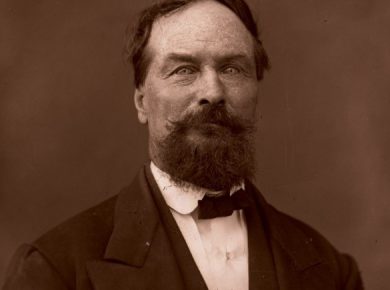
PETERSON, Charle Sreeve

0 1
Read Time:5 Minute, 3 Second

Submitted by: William “Bill” Morgan, Timpanogos Chapter, SUP

  • Born: 7/28/1818 in Mount Holly, Burlington, New Jersey
  • Died: 9/26/1889, Mesa, Maricopa, Arizona

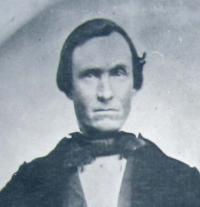
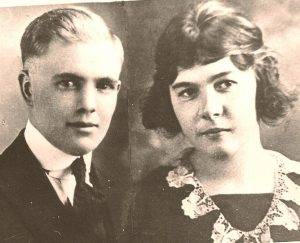
Charles S. Peterson is buried in Mesa, Arizona alongside his third wife Ann Patten Peterson, both showing Faith in Every Footstep markers. Nearby is the grave of his fifth wife, Mary Martha Thompson Peterson, who bore him 11 children and lived 50 years past his death to age 90. His third wife, Ann, had raised her own 13 children, along with three of four children from the first wife, Ann Bunting Dennis, who died in Nauvoo. Also, one of three that survived childhood from his second wife, Mary Ann Patten. Add to that my own great grandmother, Fannie Busby Peterson, who was born to the fourth wife, Margaret Crispin Peterson.

My own great, great grandmother, Margaret Busby Crispin Peterson, wasn’t a Utah pioneer. Technically, those who immigrated to Utah prior to the driving of the Golden Spike in 1869 were pioneers but those who came thereafter were not. “Maggie” came by train from New Jersey in 1870.
Charles and his sons had worked with his son-in-law, Roswell Stevens, Jr. and others to build the road from South Ogden through Weber Canyon to Wyoming. The train tracks from the east coast to the west coast followed that road through the mountains. In 1869-1870 Charles had taken the train to visit his mother and siblings in Mt. Holly, New Jersey. There he met Maggie, who had been working as a maid for his mother, Martha Murdock Peterson. After he baptized Maggie, in New Jersey in January, 1870, he brought her to Utah. In August, 1870 he married her in the Endowment House. She was his fourth wife.

A side story is that Maggie was known by Morgan county locals as the woman who brought smallpox to the valley, having been exposed to the disease while riding the train. My wife’s ancestor, John Toone of Croydon, Utah was known as the man who experimented with penicillin and saved the lives of many who were exposed to the pox.

My great, great grandfather, Charles Sreeve “Shreeve” Peterson, had been raised near Sreeveville in Mt. Holly, New Jersey. He had married at age 19 to a local girl and they gave birth to three children before joining the Church of Jesus Christ of Latter-day Saints in 1843. Their fourth child, Edward, was born 1843 in Nauvoo, after which Ann died the following year, in 1844. Edward then died, also in Nauvoo, October 1845. Charles served in the Nauvoo Legion prior to the time that Joseph and Hyrum were martyred.

After Ann’s death, according to Charles’ autobiography, Brigham Young told Charles to “go hunt another wife.” He did so and in the Nauvoo Temple he married Mary Ann Patten in 1845. She bore him a son that they named Charles Peterson but in July of 1847, in Iowa they buried their son. In 1847 while living in Pottawattamie, Iowa she bore him a daughter, named Ann. In 1849, still in Iowa, she bore another daughter, Martha. Another son, Alma Patten Peterson, was born in Andrew, Missouri in 1850.

Unfortunately, baby Martha died in 1851.

Mary Ann left the marriage soon after Charles had married Mary Ann’s half-sister (same father but different mothers), Ann Patten in January, 1849 in Kanesville, Iowa. That same year he emigrated to Utah, leaving the United States. He had given his wagon to help the first group of saints but stayed to help build wagons and other blacksmith duties at Winter Quarters until 1849.

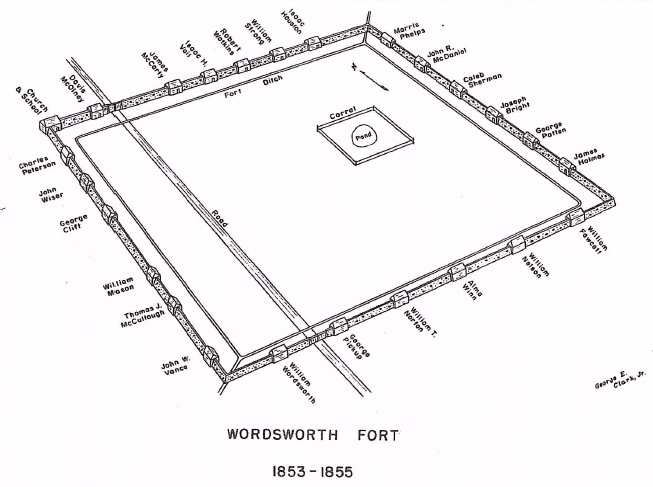
His first Church assignment in Utah was to be the first presiding Elder in Mountainville, which became Alpine, Utah. His residence is seen in the map of the Wordsworth Fort, in the left corner, next to the church/school building.

After two years the fort was abandoned and Charles Peterson was called to settle Weber Valley, which became Morgan county, east of Ogden. Besides farming and road building he was the blacksmith, postmaster and became the judge of Weber City, which became Peterson, Utah, named after its founder. He was the first Bishop when the ward was formed.

In 1870, as mentioned earlier, he married Margaret “Maggie” Crispin, my great, great grandmother. She was only 26 years old when he was 52. She gave birth to my great grandmother, Frances “Fannie” Busby Peterson, in 1871, named after Fannie’s grandmother, Frances Ann Busby, in Philadelphia.

Less than two years after his marriage to Maggie, Charles brought 22-year-old English convert, Mary Martha Thompson, into the family when he was 56. She was his fifth wife and gave him ten additional children. She was supported by her children for 50 years after her husband’s death. He died in Mesa, Arizona at age 71 when she was only 40.

That fifth wife may have been the straw that broke Maggie’s back. She moved into Ogden to become “the city woman” and was denied access to her own daughter, Fannie, who was raised by the third wife. At age 34 Maggie married Charles Hall Jenkins who had children from a previous marriage to Sarah Ann William Hart from Wales. He died a horrible and tragic death in the Ogden railyard. He was collecting nails in the railyard and dodged one train only to be mangled by a train on parallel tracks coming the opposite direction. He was 50 years old. Seven years later Maggie was running a boarding house for rail workers when she died on her own front porch from apoplexy (stroke) at age 47.

In case you’re wondering how this Peterson Patriarch came to die in Mesa, the story is that one of his sons from the first marriage became the first Sheriff in Mesa. He wrote to his father, who was feeling arthritic, how hot and dry the weather was near Phoenix. The rest is family history, since my own maternal grandfather was born and buried in Mesa, near his pioneer ancestors.

Happy
Happy
0 %
Sad
Sad
0 %
Excited
Excited
0 %
Sleepy
Sleepy
0 %
Angry
Angry
0 %
Surprise
Surprise
100 %
You May Also Like

JACOBSEN, Christian Jensen: Frontier Craftsman

Another life altering experience occurred in 1854 when L.D.S. missionaries introduced the Jensens to a new religion. After a short investigation Christen and Kirsten were baptized on a cold day in December and became the first members of the church in their local area. Soon after, Christian was called to be a local missionary and also to preside over two branches of the church. In the fall of 1857 he was assigned to open a mission on LæsØ, an island located midway between Jutland and Sweden. As a missionary he received frosty receptions but soon encountered some inhabitants in need of his clock repairing skills. This led him to adjust his strategy and avoid the topic of religion until he had the family’s clock dismantled. Once the family knew him as a clock repairman, they were more prone to discuss religion with him. Using this strategy, and after visiting the island several times, Christian baptized a dozen or so members and organized the Byrum Branch there.
View Post

YOUNG, John Ray: Experiences

John R's mother was ill and stayed in Winter Quarters, but John R and his brother Franklin W ( 8 ) left soon after the advanced party, in the Jedediah M Grant Company. In his book John R. states that they were no ones responsibility, but everyones chore boys. It is heart renching to me to picture a sick mother sending a 10 year old son on a 1000 mile treck through wild country with an 8 year old in tow. One morning when they were camped on Hams Fork near Ft Bridger, in what is now Wyoming, a cow was sick and would not get up. John was left behind to try to get her up and bring her to the next camp site. It is terrible to think of the fear he felt as the last dust settled from the wagons as they faded from view. While tending the cow he saw an Indian across the river, and he decided to leave the cow and head for camp. The next morning several men returned to the previous camp site, and found that the cow had been butchered by Soux Indians 'on the war path after Shoshones', This band raided Ft Bridger, but left the Mormon train alone except for one sick cow.
View Post

MOLEN, Jesse: The Life and Struggles

Upon arrival in Salt Lake City they had very little food or other provisions. They were required to subsist on plant roots to supplement the little other food they had. The next year they experienced the cricket infestation and lost most of their crop. The rigors of the struggle to travel west plus chills and other conditions had taken their toll on Jess’s health.
View Post

BLAIR, Seth M.

The following biography was previously submitted to www.pioneerstories.com Spouse: Cornelia Jane Espy, Harriett, Sarah Pioneer Type: Early Pioneer Seth was raised in Tennessee along the banks of the Mississippi River…
View Post

RUCK, Elizabeth Collett

That is the date when Wilford Woodruff was at Leigh (about 9 miles from Redmarley) baptising Thomas and Ann Oakey (Elizabeth’s sister) among others (9 in all) when the dog was thrown in the pool as recorded by Wilford Woodruff himself.
View Post

GLEASON, John Streator: Rush Valley Miner

John S. Gleason did indeed own the Mountain Lion mine, or parts there-of, but also the Blue Wing mine listed above and much to our surprise, at least seventeen other lodes shown in Figure 13.0. Two miles north of Ophir is Jacobs City in Dry Canyon. Some of the richest lodes of the Ophir Mining District came from this location. John S. Gleason owned in part the Iris(Ira) and Jacobs Hill lodes (Shoo Fly) in Dry Canyon. Millions of dollars of rich metals were taken from the Ophir and Jacobs City locations. The date of sale of the Mountain Lion Lode no. 2 was 4 March 1871. It was sold with the webster and women rights lodes for $2,000 dollars. The Mountain Lion Lode and thirteen other lodes were sold on 10 June 1871 for the combined sum of$5,000 dollars.
View Post

ATKIN, Thomas Jr.

When the call came in late 1857, for men to defend the church against Johnston's army, Thomas and other Tooele men responded. The Tooele contingent, under the command of Major John Rowberry, was sent to Echo Canyon, October 10. They remained in Echo Canyon until December 1.
View Post

CROSS, Benjamin

Benjamin Cross, was chosen to be the first bishop of Peteetneet Creek ….October 26th, 1854 there was an article in the Deseret News of Israel Calkins having raised produce on nearly an acre belonging to Bishop Cross: 150 bushel of beets, 150 bushel of potatoes, 3 bushel of onions, 130 good cabbage heads and an additional 300 heads damaged by the grasshoppers, 3 barrels of pickle cucumbers, and quite a quantity of melons, squash, and peppers. Benjamin was assisting Charles B. Hancock financially to get a grist mill built in Payson. On November 15th George A. Smith came to Payson from Provo to speak in a meeting and stayed the night with Bishop Cross.
View Post

STEED, Milton Ezra & Ida Hansen

The bishop had just come out of the chapel ad was standing on the top step visiting with another rancher when, unnoticed, that young man walked across the church yard, up the steps, and hit that bishop square on the jaw and knocked him down. Silence settled over the crowd; people stood motionless in a state of shock. Some of the men had their fists clenched, but no one made a move. All were wondering what the bishop would do. The bishop, however, was silently asking what the Lord would do if he were the bishop. The young man stood over the bishop with his fists clenched, glowering down at him. After a few seconds, which seemed much longer, the bishop got up and looked that young man squarely in the eye and calmly said, “Well brother ________, if that is the way you feel, perhaps you had better hit the other cheek.” He turned his head and waited.
View Post