0
 1
This story originally appeared in the Nov/Dec 1980 issue of Pioneer Magazine
Winner Senior Division Pioneer Story Contest 1980 Encampment
Helen Free VanderBeek Route 5 Box 151 Idaho Falls, Idaho 83401
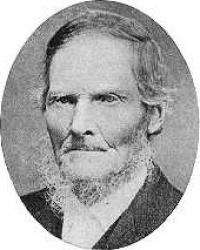
Christmas Eve, 1898, found missionary William H. Edwards searching the cold, snow-swirled streets of industrial Sheffield, England for a street named Adelphia. The object of his search was James Wadsworth, by then an aging man in his eighties, the great uncle of Edwards’ wife, Elizabeth. Two other missionaries, Brothers Brown and Greenwood, accompanied Edwards and aided him in the search for Adelphia Street.
Several times the trio had to interrupt the celebration of certain Sheffield families to ask directions. “Where is Adelphia Street?” they inquired. “And where is James Wadsworth?” As the cold search for Elizabeth’s great uncle continued, Edwards recalled to himself and to the Brothers Brown and Greenwood what he knew of the return to England of James Wadsworth.
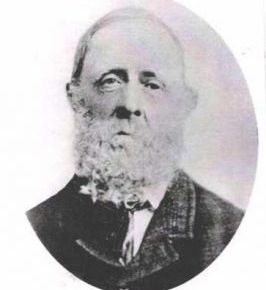
James Wadsworth, born about 1810, the son of James Wadsworth, had joined the Church of Jesus Christ of Latter-day Saints in its second decade of existence. His enthusiasm for the Gospel led him to introduce it to members of his family, of which at least one, a nephew, accepted. James was honored to baptize this nephew, George Wadsworth, the 9th of March 1852.
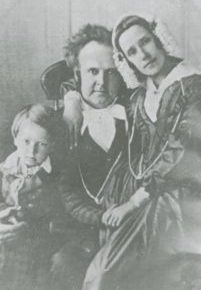
A certain closeness had already developed between James and the younger George. George had married Alice Allen who bore him a son, James Allen Wadsworth, in 1848. Less than a year later, Alice was dead of consumption. George, a miner, had no way to care for his small son so he asked his Uncle James Wadsworth and his wife Elizabeth to raise him for a time. James and Elizabeth had never had children of their own, though they had taken in at one time or another several foundlings to raise. They had a foster child named Mary who was about ten years older than little James when they welcomed him into their home and hearts. So, by the time James baptized George in 1852, James and Elizabeth had had little James for three years.
Shortly after George’s baptism he met a young woman who had been a member of the Church for several years and who appealed to him very much, Elizabeth Broadbent. These two were married at St. John Church in Sheffield the 18th of April, 1953. The same day they were joined together by Elders John Memmott and James Wadsworth at Pilley.
In the meantime both James and George were active missionaries in their area. James preached at many gatherings in Sheffield, Pilley, Darfield, Bark and Barnsley. Off and on George was assigned to preach in various areas around Sheffield. May 17th, 1855, the same day he was ordained a Priest, George was appointed to preach at the bottom of Howard Street with others. Later that year he was assigned to raise a branch in Dronfield and on Sept. 30, 1855 was made President of that Branch. Shortly thereafter, he was made an Elder.
Elder Edwards thought about this special relationship between James and George; James had baptized George, had performed his marriage ceremony, and “missionaried” with him and had raised his son. Knowing the rest of the story he wondered how he would be received when he did find the elderly James.
It was 1856, Edwards remembered, when all of them, James, Elizabeth, Mary and little James, George’s son, along with George, his new wife Elizabeth and their infant, Nephi John, had embarked on the ship “Horizon” for Zion. The ship, with 856 Saints had arrived in Boston on Sunday the 25th of May. From there the company traveled by rail to Iowa City which they reached July 8th.
At Iowa City, George Wadsworth was asked to stay behind, raise a branch during the winter in Iowa City and to come west the following year. This, thought Edwards, must have been when the great split between James and George began. Surely George would have wanted his eight year old son, little James, to stay with him in Iowa City. But it didn’t happen that way. The older James and his wife Elizabeth, along with Mary who had married on the ship and little James joined Captain John A. Hunt’s ox team which arrived in Salt Lake City in sections between December third and fifteenth, 1856.
March 25th, 1857, George Wadsworth was relieved of his responsibilities in Iowa City and in July joined the William O. Young company, arriving in Salt Lake City in September. He must have been pleased at the prospect of seeing his little son, James, again. Both Wadsworth families were called to settle in Payson, Utah, but this stay was of short duration. Edwards guessed at what must have happened in Payson. George must have confronted James about his desire to have the boy return to live with him. Or, perhaps it was then that something happened to embitter James against the Church, and he planned to return to England taking little James with him.
George’s heartache must have been great either way. He wanted his nine year old son to stay in Zion with him. The family stories Edwards had heard said that George had to kidnap his own son to keep him from being returned to England. By 1858, George and his family were in Toquerville, Utah from which place, the Bishop, Joshua T. Willis, wrote to J. V. Long, President of the Second Quorum of Seventies to which George belonged:
“This is to inform you that Brother George Wadsworth is a member of this branch and is in good standing. Please do not let his whereabouts be known for good reasons if you want to correspond with him.”
Edwards had seen that note, carefully preserved among the family records. He had been told that the uncle had hired a detective agency to find little James. He also knew that there were no Wadsworths listed in the Toquerville 1860 census because George signed all public documents at that time with his first name, George and Allen, his wife’s surname. He remembered too, the stories of hiding, of want and suffering the family endured for the next few years.
Perhaps, in his old age, James’ heart had softened toward the family. Edwards hoped so. The English streets were becoming colder, fewer people were about when the three missionaries found the right door on Adelphia Street. A young man answered their knock. Edwards asked to see James Wadsworth. When the old man within heard his name he came to the door. Edwards explained that he was from America and had married one of George’s daughters, the same George who had gone with him to America forty years before. Edwards told James that George had died that year. James replied gruffly,
“Well, he and I could never hitch. He has been dead to me for the last forty years. He died last January, you say, and me not worth a bloody penny letter to let me know. I do not want to know any more about it.”
Edwards tried to reason with him, but the ranting continued. Finally, Edwards and the other Elders withdrew, leaving the old man still in the doorway, frothing at the mouth and sending imprecations after them into the cold Christmas Eve air. Edwards bade him goodbye and departed.
Sources:
- Pilley Parish Registers by coor FS.
- Crossing the Ocean and Crossing the Plains Indexes.
- Journal History entries.
- Church Chronology by Andrew Jensen.
- George Wadsworth Family Organization Packets, Helen Free VanderBeek Genealogist.
- Brief History of George Wadsworth by himself, 5 pp, unpub.
- Marriage Certificate of George and Elizabeth Broadbent Wadsworth.
- Missionary Journal of William Henry Edwards of Panaca, Lincoln County, Nevada who left for his mission 8 October, 1898.
- Many of these historical items were collected and preserved by Myrtle Joy Wadsworth Free.


 Brother Joseph