0
 1
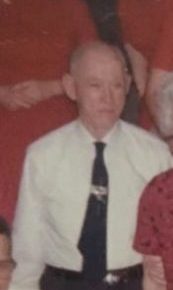
Thomas Alston & Mary Ellen Holt
The life story of Thomas Alston and Mary Ellen Holt Alston, their progenitors and their family after them is of interest and should be preserved for the generations that follow.

Thomas Alston was born 24 October, 1857, at Southport, Lancashire, England, to James Alston & Ann Molyneaux. His father was a joiner and builder; one of the leading builders of Southport. He had his own shop and kept from 2 to 6 joiners constantly employed. He was a member of the lifeboat crew of Southport and took part in many rescues from stranded vessels along the coast of the Irish Sea.
James Alston’s birthdate is 19 January, 1827. He was born at Longridge, Lancaster, England. He married Ann Molyneaux or Molyneux, 8 November, 1852. He died 26 May, 1863 at Southport, Lancaster, England. Ann Molyneux was born 3 February, 1829, at Southport, Lancaster, England, and was a daughter of John Molyneux, who was born 21 August, 1796, in Rainford, Lancaster, England, and Betty (probably Elizabeth) Howard, who was born 31 May 1793 at Scarsbrick, Lancaster, England. She married John Israel Prye December, 1865, after immigrating to Salt Lake City, Utah in 1865. She died 20 November, 1894, at her home in Sugar House, Salt Lake City, Utah near 1800 East & 2100 South.
At age 4 years, Thomas Alston injured his right knee. The story as told by him is that he fell while walking on top of a picket fence at their home: The knee was partially dislocated and there developed what was called “bone tuberculosis or white swelling,” which retarded the growth of the right limb and caused partial stiffness in the knee which made him permanently lame. He also says of his mother, that she was a Boot Binder and Seamstress in her earlier days and later a housewife. She had limited education, yet was skillful in her profession and an excellent housekeeper.
Bloomfield’s list of Norfolk, Volume 1, page 5140 says: “Alston was the Saxon lord of Stanford in Norfolk, before the Conquest but dispossessed thereof by the villainous Normans. The Coat of Arms, Arms Azure, ten stars, 4-3-2-1 order, Crest on a wreath, a half-moon Argent, charged with a star or in the arms, Motto, Immotus.
There is no doubt that the Molyneux family (Earls of Sefton near Liverpool, England) whose progenitor accompanied William the Conqueror in his expedition to England in 1066, from Normandy, France; and this is the stock from which descended John Molyneux (sometimes spelled Molyneaux). John Molyneux, mother’s father was born, 21 August, 1796, in Rianford, Lancaster, England, wrote, Thomas Alston. He was the son of Thomas and Ann Molyneux, living in Rainford, England about 1772, John’s wife was Betty (Could have been Elizabeth) Howard Molyneux. They with their children, became converted to the Church of Jesus Christ of Latter-Day Saints (Mormon) in 1839 or 1840, among the earliest of such converts from England.
John and Betty with son, John, and daughter, Margaret, immigrated to Utah about 1855; son John and family went to St. Louis, Missouri, in 1857. Ann Molyneux, Thomas Alston’s mother was a member of the Church of Jesus Christ of Latter-Day Saints, at the time of marriage to James Alston and so remained until death. No others of the family came to America.
Christopher and John Alston, brothers of Thomas, immigrated to Utah in 1864,in company with a neighbor and friend, of their mother and resided with their mother’s parents, John and Betty Howard Molyneux, who had immigrated to Utah about the year. 1854 or 1855 and lived in Salt Lake City, Utah.
Thomas’ widowed mother and Thomas and the two sisters: Elizabeth Alston, born 6 September, 1859,who married Apollos Griffin Driggs and died, May 1, 19l9, in Salt Lake City, Utah; and Margery Alston, born, 6 November, 1861, married Joseph Whiteley, and died, 26 April, 1954, in Salt Lake City, Utah. They immigrated to Utah in 1865, leaving England, May 10, on board the ship “David Hoadley”, a condemned sailing vessel in company with 24 other, passengers. After a stormy passage of six weeks and four days, it landed at NewPort. They crossed the plains by ox-team with an independent company under Captain Walker and arrived in Salt Lake City, in November.
The family lived in Sugar House where later their mother, Ann Molyneux Alston, married John Israel Prye and lived in his home on 1800 East, near 2100 South streets. Thomas was baptized, 21 March, 1867, by Luther Twitchel and confirmed, 4 April, 1867, by A. H. Raleigh, in the Sugar House Ward. He was ordained an Elder, 15 February, 1875i by William H. Smith, and received his endowments the same day. He was ordained a Seventy, 11 May, 1884, by Samuel Fletcher. He was set apart as President of the 105th Quorum of Seventy, 1 November, 1891, He was ordained a High Priest, 28 July, 1900, by Nathanial V. Jones.
She used her washing blue (Ultramine) and being at a loss as to what would set the dye fast, so as not to run, she used the contents of the under-bed vessel which she called “chamber lye” for that purpose. The result of her efforts was marvelous; Jacob’s ring streaked, speckled and spotted cattle surley were not more wonderful. Some parts of the garment being dark blue, others of various tints ranging from light blue to white. However, I wore the “bags” the next Sunday and was enrolled in Sunday School. The boys guyed me so much on account of my beautiful nether garment, that I never wore “Jacob’s Coat” again. In some way I was provided with more suitable rainment later and continued attendance at Sunday School as long as we resided in the ward.
Upon recommendation of Bishop Raleigh, who seemed to have taken a liking for me, I received my endowments in the Endowment House which stood on the Northwest corner of the Temple Block, Salt Lake City on February 15th, 1875, and was ordained an Elder that day, by Elder William J. Smith, which was the first office in the Priesthood I had held.
I attended school in the 19th district school house adjoining the ward meeting-house and located on the corner of Fourth North and Second West Streets, under Paul Lechtenberg, James Watson and Lucius W. Peck (principally Peck).
At the time there were no free schools held in Utah, so students were required to pay tuition, which was rather difficult to provide; while attending with Peck, my tuition became considerable in arrears, therefore, he proposed that I assist him with classes at a salary of $1.00 per week and my tuition, (in all about $1.35 per week) the $1.00 per week to apply on deferred payments.
I continued such assistance and in attendance at night school until I had the privilege of attending the Deseret University, (now University of Utah) in company with my very dear friend and almost constant companion, Willard Erastus Weihe, a native of Norway, and Utah’s most wonderful violinist. Attending the school at that time were Heber N. Wells (afterwards Utah’s first State Governor) Brigham B. Young, Richard W. Young, (later commander of the Utah Artillery in the Spanish-American War) Joseph C. Kingsbury (now President Emeritus of the University of Utah) and others who have later become prominent in affairs of the State of Utah and of Salt Lake City. Dr. John P. Park, Utah’s foremost educator, was President and Principal, with Francis N. Bishop, Joseph L. Rawlins, Joseph B. Toronto and others as members of the faculty.
On account of lack of funds, I was only permitted to attend the “U” one quarter, paying the tuition with flour; then returned to Mr. Peck’s school and later assisted a Mr. Paul Harrison in the same district (19th).
The family later removed to the Southeast Bench (now Pleasant View) and engaged in farming. About the year 1874 the Dunford Farm consisting of 110 acres, located at the corner of 23td East and 21st South Streets was leased for a term of five years. I did the first plowing on the place after moving thereon.
In December 1875, the Trustees of the Hoytsville School District, Summit County, Utah, sent Charles Mills, one of their number, in company with Andrew Hobson and his son John Henry, to take me to that district to teach their school. We proceeded by way of Weber Canyon through Morgan County, stopping the first night at Enterprise, a small settlement in Morgan County, where we attended a dance in the evening. The next day proceeded on our way, reaching Uncle Wilson’s home early in the afternoon.
I engaged to teach the Hoytsville School early in January 1876, at a salary of $45 per month. The school house consisted of one log room about 30 by 40 feet, heated by a stove in the center. The teacher was also the janitor etc. The furniture consisted of long benches and two long flat desks or tables made of plain lumber without paint; one table had lids and space for books and there was one small desk for the teacher and a blackboard. The older students would sometimes assist with the fire and sweeping the floor after school. During the season we had 86 pupils enrolled, ranging in age from 4 to 22 years. Alonzo Winters, who had previously taught the school, being the oldest student. It was a very severe winter. The snow drifted in places, especially in front of the Wilson home, as high as the roofs and made excellent sleighing all winter. I taught in Hoytsville and Wanship about three seasons.
[Several paragraphs skipped here because of poor copy]
Having been defeated for re-election in 1888, we returned to Salt Lake City, where I entered the employ of George M. Cannon, County Recorder of Salt Lake County and assisted in the compilation of the County Abstract Records, they being the first of that character in the county. While working for Mr. Cannon, I was called to take a mission to Great Britain, leaving for that field April 10, 1889; my-Wife with her three children returning to our home in Coalville, with only $125.00 per year income in sight to support the family and myself while away. The Summit Stake paid a portion of the fare ($100.00).
In company with Ralph Maxwell, of Kamas and Edward Richens of Henefer, both in Summit County, Arthur F. Cummings, Robert Harman, James R. Smith and Louis A. Kelsch of Salt Lake County, and others from various parts of Utah and Idaho, numbering about 70 in all, we left Salt Lake City by Oregon Short Life Railway, bidding adieu to my family at Echo, who were to return to our home in Coalville.
Nothing of importance occurred enroute, until approaching New York, when some of the company, desiring to view Niagara Falls, decided to go around by another road, but having seen them when we first came to America, and being anxious to reach our shipping port as early as practicable so as to exchange the second class tickets with which we had been provided on leaving home, for first class passage on the steamer, myself and about 3 others decided to go through on the same line so as not to miss our chance of securing first class berths, which we did by paying $10.00 extra, and receiving the only remaining berths of that class unassigned. We boarded the S. S. Wyoming, of the Guion line, which was the line used exclusively by the church for the members sailing both ways, and after an uneventful voyage of 10 days arrived at Liverpool, where we were met by Elder John E. Clark of the Liverpool Office and piloted to a hotel adjoining the Church Office, which was at 42 Islington, where it had been located for many years. On the following day the members of the company were assigned to their various fields of labor by Elder Duncan McAllister, whom I had known since a boy. Each Elder was assigned to the field of his labors and I was left until the last. Elder McAllister then asked me where I would like to labor. I answered that my people were located in. Lancaster [but] I would like to be assigned to Liverpool.
[After returning, I served] President Lorenzo Snow as Assistant Recorder and continued to so act until 1898, when in company with George G. Bywater, Engineer, Joseph Henry Dean, chief janitor, Henry C. Harrell, janitor and others, was released on the plea of lack of funds; time of service, nearly five years; again all rules of Seniority being disregarded and outraged. Wilson remained in the position, until after the decease of Elder Nicholson, but finally was summarily dismissed for insubordination and improper conduct.
November 1st, 1891, I was set apart as one of the Presidents of the 105th Quorum of Seventy, at Sugar House, which was organized that day with Martin Garn, John M. Whitaker and myself the only presidents then called, with Henry Cox as Secretary. The quorum was to include the Seventies resident in Sugar House Ward. The presidency was afterwards filled by adding Joseph W. Summerhays, William Spry and others and monthly meetings were held at our house, now 913 E. 21st South Street.
[The rest of the document was too difficult to digitize, but is available in the SUP Library in SLC.]


 Brother Joseph