0
 1
Hardships Have Their Reward

Celestia Curtis was born 21 April 1832 at Rutland, Tiago County, Pennsylvania, a daughter of Enos and Ruth Franklin Curtis. This was two years after the Church was organized. Her father was away on a mission at the time of her birth. Her father was a Patriarch in the Church. He had preached the first sermon Brigham Young had ever heard, and helped in baptizing him. She was the youngest of 14 children.
The family was driven from place to place during the mobbing of the Saints. Celestia’s mother became very ill. The mob would come and order them out of their house. They would carry the mother outside on a sheet, when the mob would leave, they would carry her back in the house. This happened several times, then the mob came and set fire to their place and burned all they possessed, This time her mother had to lay out in the rain on a bed of peppermint leaves until the dark of night, when the men would be able to come and get her because they could not come and get her during the day for fear of the mob.
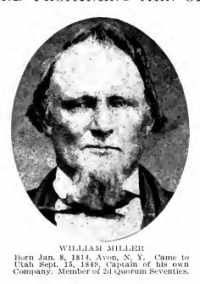
Ruth Franklin Curtis died the 6 May 1845 at Council Bluffs, Pottawattamie Co., Iowa, from worry, excitement and exposure. Celestia was only 13 years of age at that time. She came to Utah with her father and others in the “Bill Miller’s”Company. (This Captain Bill Miller was not the one that dressed in disguise of Pres. Brigham Young.)
When they were crossing the Missouri River on a Ferry boat with all of their belongings a wind storm came up. It was taking them down in a whirlpool where all would have been lost; The people were screaming for they thought there was no help for them. Celestia’s father (Enos Curtis) raised his hand and commanded the wind to cease and for the boat to stand still in the name of the Lord. The wind did cease and the boat stood still until the men on the bank could get ropes to them to pull them to safety. Then the wind blew all night. They could hardly keep the wagons from blowing over. This happened on Celestia’s 18th birthday.
They reached Salt Lake City on the 17 Nov. 1856. They came with three oxen and one cow. They had bought a wagon from Jabez Durfee, he had made it all out of wood.
Celestia had nursed and taken care of Jabez’s mother, Magdelena, called Laney Pickle Durfee, when she was very ill. She asked Celestia if she would marry her son Jabez. His father, Edmond Durfee, had been killed by the mob.
She said she hated to die and leave Jabez alone. Celestia said, “I don’t even know whether he wants me for a wife or not.” At last she said if Celestia would promise to marry Jabez she could die easy. Celestia promised her she would marry Jabez. Laney Pickle died 17 May 1850 at Council Bluffs, Pottawatomie County, Iowa.
Celestia married Jabez Durfee 25 Dec. 1850 by a bishop and was later sealed in the Endowment House 21 Mar. 1857. They lived in Big Cottonwood, then later moved to Springville, where their first child, Maria, was born. Then Pres. Brigham Young called them to go to Cedar City, Iron County, Utah to help build it up. They lived there about 9 years where their sons Erastus and Elial and a daughter Deseret were born. Elial died when he was about 18 months old. He was buried there in Cedar City.
They planted the first orchard there and raised the first fruit. Jabez made the first molasses mill. One time when Pres. Brigham Young came there for Conference Celestia made some pies out of dried peeled peaches, sweetened with molasses they had made themselves. They thought that would be a fine treat for Pres. Young. It was a treat to them.
The Lord blessed them and they became more prosperous. When they were released from Cedar City they came back to Springville. After they began to get settled again a storm came up and they lost nearly all they had. Jabez made a wooden molasses mill to try to get a start again. Later he got some iron rollers. They fared better. They made their own candles out of tallow with a string in the middle of it to light it. Sometimes they would put grease in a dish with a rag in it to light. Jabez gave Celestia a present of a lamp the first she ever had that was when her daughter Chloe was a baby that was in 1864. At that time coal oil was $11 a gallon. Then in 1867 when John was a baby she got her first cook stove for Christmas. The first meal cooked on it was Christmas dinner. Celestia made her own soap by putting water on wood ashes then putting grease in it and boiling it until it was thick. She also made soap out of…… ? or alkali and boiling it with water and grease.
Jabez made a loom for Celestia she would weave cloth for clothes and carpets and rugs to help make a little money. They built a larger – 2 story brick home on main street in the south part of town. Upstairs they had a large room where the towns people danced and put on shows, a large orchard was planted on the land by the house. The children, Edmond, Chloe, John, LeGrand and Vilate were born after they moved back to Springville making 9 children in all.
Celestia had another great sadness come into her life when her daughter Deseret married George Holdaway and on Sept. 30,1878 gave birth to a little daughter. Deseret passed away leaving the little daughter for Celestia to raise. Celestia loved the baby with all her heart and raised her as one of her own.
They lived through the grasshopper war also the Indian uprising. Jabez did all the finishing work on the first meeting house in Springville. He was a carpenter by trade. Then in 1877 Jabez went to Willow Bend, later called Aurora to take up a homestead. He became a successful farmer. Celestia stayed in Springville, with the younger children, raising a garden taking care of the orchard, drying fruit. Then in the fall of 1879 she moved to Aurora. A ward was organized on a Sunday, Feb. 27, 1881. Jabez was made a Bishop and was a bishop until he died the 27 Dec. 1883.
Celestia carried on the work, also nursing the sick, caring for the dead. She was loved by all who knew her. Celestia Curtis Durfee died on 17 June 1891 in Aurora, Utah at the age of 59 years.
Chloe was born Aug 7, 1864. (She is the child who wrote this history?)
The year Jabez died had been a bountiful year. He raised 5,600 bushels of grain, besides a good deal of hay and other crops.


 Brother Joseph
 Pioneer John