 0
 1
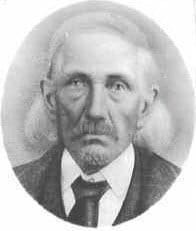
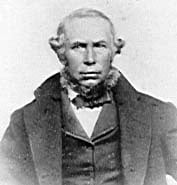
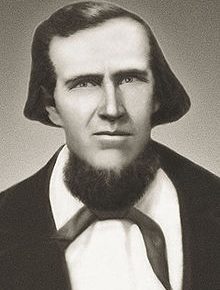
Amazing Pioneer
- Born: Aug. 23, 1808 Death: probably 1882 Columbiana County, Ohio Fruitland (San Juan County) New Mexico, USA
- Parents: Michael Schertz and Elizabeth VanderBeek
- First Wife:
- Margaret Cameron (1808-1850) 8 Sept. 1831, St Clair Twp., Columbiana, Ohio
- Children:
- George Washington Shirts (1832-1857)
- King Darius Shirts (1833-1882)
- Don Carlos Shirts (1836-1922)
- Sariah Jane Shirts McDonald (1838-1919)
- Elizabeth Ann (Bassi) Shirts 1842-1842)
- Moroni Shirts
- Sarah Ann Shirts (1843-1844)
- Elisabeth Ann Shirts McDonald (1848-1937)
- Second Wife:
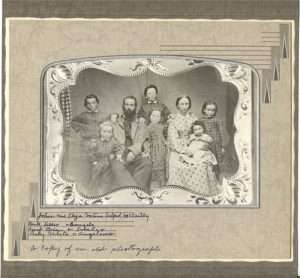
- Belana White Pulsipher (1829-1859) 10 Feb 1851 Salt Lake City, Ut.
- Children:
- Peter Shirts (1856-1943)
- Eliza Jane Shirts Rawlings (1858-1934)
- Elsie Shirts
- Third Wife:
- Ann Elizabeth Dufresne, 25 Nov. 1856, later divorced
- Fourth Wife:
- Matilda Murch Pinney, (1824-1890) 16 Nov. 1859, Salt Lake City, Ut. (Helped raise Peter’s children)
Peter’s Story:

Peter Shirts was raised in Ohio, he witnessed firsthand the persecutions of the newly organized Church of Jesus Christ of Latter-day Saints. He and his wife Margaret disagreed with the mob’s treatment of the Saints, and began listening to the gospel. They were soon baptised by Brigham Young’s brother Lorenzo Dow Young on 15 Aug. 1832. Their baptism caused a great argument in the family, so bitter that Peter and Margaret never saw them again. This rift coupled with their desire to see the Prophet Joseph prompted them to sell their choice property in East Liverpool, Ohio after only owning it a short time.
They moved to Kirtland, where Peter began working on the Temple. (building during the day and standing guard against the mobs at night.) When the Kirtland Safety Bank failed, Peter lost his money, but stayed faithful to the church. Moving with the church to Missouri, Peter settled his family in St. Louis, but things were no easier there. Denied legal protection, outnumbered and disarmed, they fled from the mobs in the winter of 1838-39 from Missouri to Quincy, Ill.
By 1842 the Nauvoo 1st Ward Record lists Peter, Margaret and 5 children living there where he worked on the Temple. Skilled in metal works, Peter crafted the key and lock to the door of the Nauvoo Temple.
He was ordained a member of the 10th Quorum of Seventy 8 Oct. 1844.
By 1845, following the Prophet’s murder in 1844, the persecutions had not let up and the Saints were in need of food. Parley P. Pratt, Willard Richards and W.W. Phelps organized a group of men to provide fish for the people. Isaac Higbee was appointed president, with John Higbee and Peter Shirts as councilors with 28 men and 8 boats and skiffs. Peter was made an officer in the Nauvoo Legion.
On Jan. 21, 1846 Margaret received her endowments in the Nauvoo Temple, with Peter following Jan. 23rd when they were also sealed.
Using an old cow and an ox for a team, Peter left with the other Saints in February 1846.
The awful ordeal crossing Iowa is well documented elsewhere. Peter and Margaret suffered with the rest but thankfully their 5 children made it through. Peter was made an advance scout and guard for the people by Brigham Young, a position he would hold until his death in 1882.
At Winter Quarters, the Shirts family moved out into the countryside about 18 miles north of Council Bluffs. They established a branch there named Shirtses Branch on June 4, 1848 with Thomas Smith as Branch President and Peter Shirts as his 1st Councilor.
On 1850 the family joined the Benjamin Hawkins Company to cross the great plains to Utah. The company consisted of about 100 wagons. Peter was made captain of the first 10. In addition he was to be guide and hunter to provide fresh meat for the people.
Peter lost his wife to cholera along the Platte River.
William McDonald recalled that one day Peter went out to hunt. When he didn’t return they were worried that he was lost or taken by Indians.
“We built fires all around the camp and fired guns and about midnight Peter came in with the hind quarters of a large deer on his shoulders.”
They arrived in Salt Lake the last of September.
The Shirts family came to Parowan with George A. Smith. He is credited with the discovery of coal on Coal Creek near present day Cedar City and asked George A. Smith if he could settle on the creek south of Coal Creek. (Quichapa Lake also had an earlier name of Shirts Lake for Peter ) By 1852 he was settled on “Shirts Creek” below “Shirts Canyon” . He talked a good friend, John Hamilton, into moving his family there, with the promise of half the water from Shirts Creek. They built a protection from the indians there called Shirts Fort. (There he made salt about ¼ mile below the present day site.) Later he would sell his half to John Hamilton and it is still known today as Hamilton’s Fort.

Sometime in the Fall of 1852, John D. Lee and several others located on Ask Creek, about 25 miles below Cedar City, calling it “Harmony”. March 6th, 1853 John D. Lee wrote to Brigham Young, “in the month of January in company with Peter Shirts, I rode over to the Rio Virgin country (or warm country as the Indians call it)”
By 1856 it became apparent that further settlements along the Rio Virgin were possible. Parley Pratt and the Southern Exploring Company had ridden horseback over the black lava flow which clogged the valley below Fort Harmony from the steep slopes of Pine Valley Mountain on the west to the base of the Hurricane fault on the east. Fathers Escalante and Domingues had also crossed over and down Ash Creek in their efforts to return to Sante Fe in 1776. But, for development, wagon passage was essential.
The only route for a wagon was to go northwest from Fort Harmony up Pinto Canyon, hit the old Spanish Trail skirting the north side of the Pine Valley Mountains over to the Mountain Meadows area, follow the Santa Clara river down through what is now Gunlock into the Tonaquint area to the Rio Virgin; then up river some 25 miles to the Toquerville area.
The Washington County Commission paid Peter Shirts $300 to make a road over the lava flow saving well over 50 miles and making development of the upper Rio Virgin country possible. The road was to follow an old Indian trail on the west edge of the Black Ridge. When asked how the wagons would get across the deep canyon which barred the way, he replied, “We’ll leap it!”
The 165 ft deep canyon crossing became “Peter’s Leap.” The stream became “Leap Creek.” A sturdy windlass was erected on top of the north canyon wall. The wagons coming from the north were stopped here. The cargo was lashed securely to the wagon box. The teams were unhitched and led down the winding 30 percent grade to the canyon bottom. Then the wagons were eased down the canyon wall. The teams were then hitched to the wagons and they were pulled out of the canyon, up a gradual slope (15% grade) through a break in the south canyon wall. Freighters and peddlers coming from the south, unhitched their teams in the bottom of the canyon and the windlass pulled their loaded wagons up the face of the cliff.
The road to and from Peter’s Leap left much to be desired causing Apostle George A. Smith to proclaim of it:
“The most desperate piece of road that I have ever traveled in my life, the whole ground being covered for miles with stones, volcanic rock, cobbleheads – and in places deep sand.”
This old pioneer trail and Peter’s Leap Road were both used until 1869 when the Territorial Legislature appropriated $1,000.00 to build a good surveyed road along the skirt of the Hurricane Cliffs, east of Ash Creek. This road was well-graded and wound in and out of the ravines. It was a single track, with turnouts to let traffic pass. This road was the main route from Salt Lake to Utah’s Dixie and on to California from 1869 to 1925. In 1925, a two-lane graveled road was built over the Black Ridge. Many years later this road was replaced by Interstate 15.
The early pioneers discovered an Indian cave, near the top of the canyon wall, at Peter’s Leap. It is accessible from the south rim, by following a narrow trail down the face of the cliff to an opening over 100 feet above Leap Creek. Early settlers found woven yucca sandals, arrowheads, spear points, bone awls and other items in the cave, as well as deposits of bat guano. In January of 1858, a group of workers went to Peter’s Leap Cave and excavated the bat droppings. Nitrate was leached out and combined with sulfur and sagebrush ashes. The result was saltpeter, the main ingredient of old fashioned gunpowder. Production cost: $0.25 per keg.
During the time Peter was building his road over the Black Ridge, in the Spring of 1857, Seth Johnson and his brother Nephi, Darius Shurtz and his brother Carl (which is what Don Carlos went by), Anthony J. Stratton, James Bey, Andrew J. Workman, William Haslam and Samuel Bradshaw camped on the LaVerkin Creek and made a road up the great Hurricane Fault so they could explore the upper Virgin River country. One man had to remain in camp to keep the Indians from stealing their food. They were about a month making the road and named it Johnson’s Twist.
Angus M. Woodbury wrote (A History of Southern Utah and its National Parks) that these same 9 men assisted in building the road through Zions Canyon. We do know that Nephi Johnson (the Johnson’s settled east of Kanab now called Johnson’s Canyon) together with David H. Cannon accompanied Erastus Snow in 1863 traveling from Kanab area to St. George. Following an old Indian trail over the hill, they held back Snow’s buggy with their ropes and safely lowering it down when a gust of wind blew the top of the buggy off. “That must have been a hurricane,” exclaimed Erastus Snow, “We’ll call this the Hurricane Hill.”
Just a little more about Don Carlos, Peter’s 3rd son. While living at Fort Harmony in 1857, 25 year old George Washington Shirts, Peter’s oldest son died of worms. August 23, younger brother, 21 year old Don Carlos who had been courting Mary Adeline Lee (the daughter of John D. Lee) married his brother’s widow and Mary Adeline the same day. They were married in Parowan by George A. Smith. On June 5, 1858 Mary Adeline gave birth to a son whom she named Don Carlos. In an attempt to drive genealogists crazy, Elizabeth (Betsy) also gave birth 11 days later to a son and also named him Don Carlos.
The two half brothers weren’t raised together however, because during their pregnancies the Mountain Meadows Massacre happened. Don Carlos, acting as an interpreter, was to deliver a message from John D. Lee to the Indians prior to the Massacre about their actions . For some reason Don Carlos got it wrong or changed his mind. The directions given were not as John D. Lee had directed. He became very angry with Don Carlos and was able to facilitate a divorce of his daughter from him, thereafter maintaining the grandson was not named after his father, but for the Prophet Joseph’s brother Don Carlos Smith. Known throughout his life as “Carl”, Don Carlos Shirts went over to the Panguitch area and finally down to Escalante where he died in 1922.
Now back to the life of Peter Shirts.
Peter was a special missionary to the Lamanites. He was an explorer and true pioneer. He was appointed by Brigham Young to locate different parts of the country suitable for settlement and agriculture. He was a man with a restless, eager spirit, who was also a lonely trailblazer.
He penetrated into many remote mountains and valleys. In 1855 he and Rufus Allen assisted in surveying Las Vegas Springs. While living in Harmony, he had an argument with his son King Darius which escalated into a brawl. It appears that Darius wanted to associate himself with a secret group called Danites. Captain Shirts, as Peter was titled, would hear of no such thing.
Charges were brought before the brethren. The Bishop being absent, it fell to Peter’s good friend the 1st councilor who judged Peter guilty of abuse of his grown sons and ordered him to give 10 acres of his farm each to King Darius and Don Carlos.
In 1859, Peter moved his family to Mill Creek and in 1860 they settled on the Upper Snake Creek in Provo Valley. Here he built a saw mill in order to get timber to build a road into the mountains. Part of the road up Snake Creek Canyon is still called “Shirts Dugway.”
The wanderlust hit Peter again and the outbreak of the Black Hawk War in 1865 found him (the first white man), his wife, two daughters and a son pioneering the lonely valley of the Pahreah River (changed to Paria by John Wesley Powell), east of Kanab where the Cottonwood Wash meets the river. (The future townsite of Paria) The Black Hawk War began with the confrontation with white settlers by the young chieftain Black Hawk April 9, 1865. By the end of that year more than 30 whites had been killed and thousands of cattle stolen. By Fall, the brethren were encouraging all outlying settlers to move back into safer communities like Grafton, or Parowan. Peter’s friends were expecting him to move back, but when the snow fell, Peter didn’t arrive. The winter was hard and the Indians were hungry. Many small settlements were raided and some people killed. It was reported that Peter and his family had been killed also. The next spring, as soon as the snow melted, twenty men from the Iron Military District went out to find them. They were surprised to find Peter alive and tilling his fields with a group of men pulling his plow.
It seems that as he had been preparing to leave the valley in the fall, the Indians had stolen all his stock but one cow, so he couldn’t move. He walled up his windows and barricaded his door and kept his double-barreled shotgun with plenty of buckshot. He also kept his pitchfork, pick and other tools ready for action, if needed.
Although the Indians planned all winter to kill Peter, he gave them food to keep them from starving. When the Indian Chief was severely afflicted with boils, Peter was able to cure him.
The following spring, Peter told the Indians,
“You have eaten my food. I must raise more for another winter. Because you ate my oxen, you musts pull my plow.”
1877 found Peter establishing a settlement at Montezuma Creek. The Creek, and Montezuma Canyon as well as nearby Recapture Creek were named by Peter. Shirts claimed that the last Aztec ruler Montezuma was captured and killed in that area. It was fortunate for the struggling 1879 “Hole in the Rock” party that Peter was there already to help feed the starving immigrants when they arrived.
In the spring of 1882, 74 year old Peter was off once more. He packed his donkey and headed out into the wilderness as he had done many other times. This time he didn’t come back and no one heard from him again.
In 1958, the family discovered that a man answering Peter’s description, had been in Fruitland, San Juan, New Mexico in 1882 and had become ill and died in the late summer of 1882. He was buried there. Whether this “Old Daniel Boone” is the one buried there, or not, the family has since put a tombstone there for him.


 Pioneer John
 Brother Joseph