BRINGHURST, William Augustus, Sr.

0 1
Read Time:1 Minute, 43 Second
This pioneer history was submitted by Cailyn Bringhurst, a student at Washington Elementary School in Washington, Utah.
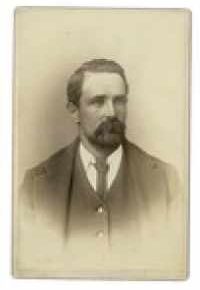
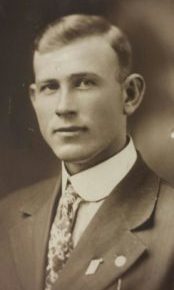
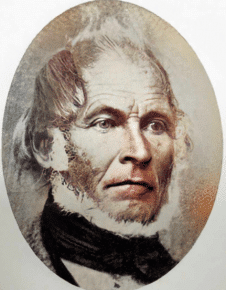
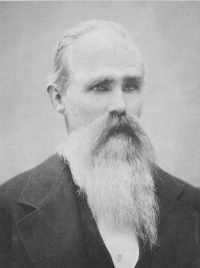
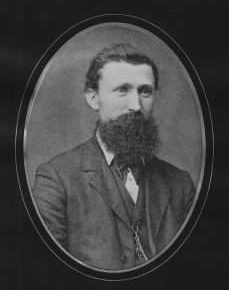
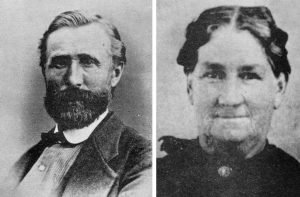
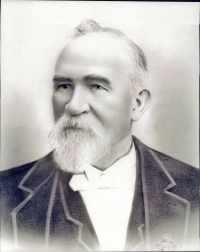
William Augustus Bringhurst Sr. (1839-1912)

I was lucky to be able to learn about my heritage through my great great great great grandpa, William Augustus Bringhurst, Sr. He lived an interesting life, and I am going to tell you a little about it.

William was born on January 26, 1839 in Lionville, Pennsylvania to Samuel and Eleanor Bringhurst. When he was eight years old, his family and he used oxen and a wagon to travel across the plains to get to the Salt Lake Valley. They got there in September.

When he was in the Salt Lake Valley, he worked at his father’s shop when he was sixteen years old. He learned how to repair and build wooden wheels. His dad and he were wheelwrights. William couldn’t go to a regular school but he was a boy who liked to study a lot and he wanted to make things better for the future.

When he was 23 years old, William married Selinda Palmer, He later married two more women, Susanna Steele and Mary J. Stapley, and had 25 kids altogether. The same year he married Selinda, he helped to stop trouble with the Indians. He also was a volunteer for the U.S. to guard the mail. President Lincoln called to Governor Brigham Young for volunteers and William was happy to help.

In 1866, he was called to serve at the Dixie mission. He ended up in Toquerville where he and his family stayed. He became the bishop for his ward and had many important state positions like High Sheriff, County Judge and Assessor of Taxes. He was a bishop until he died on March 8, 1912 in Toquerville.

These are some facts about my great great great great grandpa. I learned he was a good and caring man who was selfless and loved helping others. I hope to work hard and care for other people like him.

Happy
Happy
0 %
Sad
Sad
0 %
Excited
Excited
0 %
Sleepy
Sleepy
0 %
Angry
Angry
0 %
Surprise
Surprise
100 %
You May Also Like

ATKIN, Thomas

Mary became seriously ill with a "rupture" in her side. The doctors could do nothing to help her. Thomas, watching her suffer, resolved he would be more devoted in serving the Lord, if only the prayers and desires of his heart and those of his children regarding his beloved wife would be granted. Eventually, Mary was healed. He did not forget the resolution and promise he had made with the Lord and commenced in earnest to inquire of his spiritual advisors.
View Post

George Alley

They traveled by "steam cars" to upper New York state, by canal boat to Buffalo, by lake boat to Cleveland, Ohio, by "steam cars" again to Portsmouth, by river boat down the Ohio and up the Mississippi to Quincy, Illinois, and thence by hired teams to Nauvoo. The exultation felt by George upon their arrival there is expressed by a note he made in his Bible at this time:
View Post

History of Robert Wiley and Sarah Darling Wiley

Later Sarah decided to give up her business in Liverpool and join her family in Utah. Sarah had the means enough for a very comfortable trip across the plains. She had three teams and wagons fixed up for her trip. She brought many nice things from England. For herself she rode in a carriage across the plains.
View Post

BLANCHARD, Amelia Jane Davis

The Davis family, being among the first settlers to Cache Valley, suffered untold privations and hardships. Amelia remembered the trials they had with the Indians, and how frightened she was. They would come to the door begging for food and no one dared to turn them away. As Ann H. fixed food for them, the Indians would play with the white children. When coming out of the house with food one day, Ann H. discovered the Indians had exposed her children to the black smallpox. The twins soon came down with the illness. The settlers were all so frightened of the deadly disease that a log shelter was hurriedly built a short distance north of the Logan Cemetery. The Davis family, including the stricken twins, moved there in isolation. Amelia told of rats, mice, and snakes so thick that the healthy children took turns with willows, brushing the snakes from the beds of the sick children. Their beds located on the floor were made with a straw tick. The weather was severe coming through the open cracks of the shelter. The family was badly neglected and almost starved to death. Remarkably, the twins recovered from the smallpox epidemic, but after being home only a short time, diphtheria struck, taking the lives of both twins, Henry and Catherine. Childhood days were very strenuous and hard. These early settlers had lots of troubles, yet they had some thrilling and good times too. Amelia often told stories of the exciting sleigh rides, dances and house parties they enjoyed. How she loved her church activities! Amelia's greatest desire was to do good for others and scatter sunshine wherever she went.
View Post

MAUGHAN, John Harrison & Sarah Mariah Davenport

Mariah learned midwifery from her mother-in-law, Mary Ann Weston, the second wife of colonizer, Peter Maughan. She was set apart for her midwifery duty by Peter Maughan and spent many successful years in this service. She earned little pay except hearty thanks, and brought almost all her patients safely through their ordeal. It was expected that a midwife might be available for other medical service. During a winter epidemic of boils, which seriously afflicted both children and adults, Sarah Mariah had a dream one night in which she saw a blue mold under rose bushes. The next day she and John went to an area where wild roses grew abundantly, scraped away the snow and found the blue mold. They collected a quantity of the substance, brought it home and made poultices which, when applied, completely cured the boils. Later, people wondered if this might have been a form of penicillin. But without question, it was a giftof Divine Providence.
View Post