 0
 1
PIONEERS OF SOUTHERN UTAH
This article originally appeared in the Nov-Dec 1990 issue of Pioneer Magazine
by William R. Palmer
Privation and hardships were the common lot of the pioneers who braved a home in the Great Basin. The conditions repeat themselves with such universality in early Utah life that they may be taken for granted.

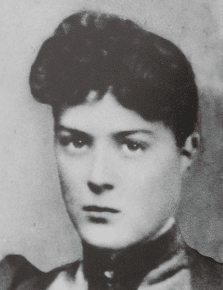
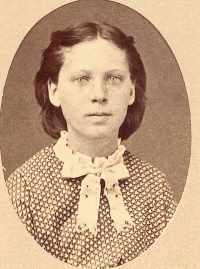
But here is a story unlike any other and surpassing most of them in the qualities of sheer heroism. It is the story of a Ellen Pucell Unthank, awoman who in spite of crushing handicaps carried on the highest mission of womanhood nor asked for pity or assistance that was not bestowed upon all wives and housemothers. Her name was Ellen Pucell Unthank but she was called Nellie by her friends and kinsfolk.
Nature did not bestow uncommon beauty of form or feature upon her, and circumstances denied her the advantages of education and culture, but the master sculptor, time, chiseled deep, strong lines of courage, strength, patience and kindness upon her face. Year in and year out she scarcely moved outside the limits of her own dooryard. Pain was the price of every step she took, and her physical world was bounded by the vision from her own humble doorstep.
Nellie, when a child of nine years of age, left her home in England to come with her parents and sister to Utah where they could worship with others of their faith and assist in building a new Zion here. She was youngest in a family of thirteen. The father worked hard in the factory but there was never enough income from his labor to supply the family with more than the barest necessities. The circumstances of the family in England were such that the children were often put to bed without supper so that the missionaries who chanced to call might be given food to eat.
Nellie’s mother, Margaret Perren Pucell, attended the first meeting of the Mormon Church in England. It was held in the Rev. James Fielding’s church, Vauxhall Chapel, in Preston, July 30, 1837. Only eight days after that first meeting nine converts were baptized by Heber C. Kimball in the River Ribble. Two days later another baptismal service was held and Margaret Perren Pucell was one who accepted the ordinance on that occasion. She was probably the second woman in England to be confirmed a member of the church, the first being Miss Jeannetta Richards with whom Margaret raced to the water’s edge.
Great prejudice developed at once against the new church because of its claims to new revelation and a restored Priesthood, and some who joined were afraid to let the fact be known. Three months after Margaret Pucell was baptized, her husband, Samuel Pucell, much troubled in mind about what might happen, made the humble confession to his wife that he had secretly joined the Mormons. The joy of both was beyond expression when she confessed to him that she, too, had joined the church a month earlier than he and had prayed every day that he would see the light and accept it.
May 2, 1856 the father and mother with two children, Maggie, aged fourteen, and Nellie, aged nine, sailed from Liverpool on the ship Horizon for America. On the vessel were eight hundred fifty-six saints bound for their Zion in Utah.
Unable for financial reasons to purchase wagon outfits to cross the plains many of this company of emigrants under Captain Edward Martin stopped nine weeks at Iowa Hill to build handcarts. It was July 27 before they were ready to make the start.
Because they were to pull their own provisions and supplies by hand, the weight of their loading was cut to the last possible pound. No extra clothing or bedding or food or cooking utensils could be taken. If the nights grew cold in the mountains, they could double up or build campfires to supplement the warmth of their bodies.
As long as the weather remained open they made excellent progress and were a happy, marching, singing army on their way to Zion. As they passed Florence, Nebraska, there were 576 persons in the company and one hundred forty-five handcarts.
Trouble fell fast and heavy upon these brave souls when snows began to fall upon them as they reached the mountains. They were poorly clad and with insufficient bedding to sleep warm, and the prairie fuel, the buffalo chips, was soon covered deep in the snow. Food ran short and the daily rations were repeatedly cut until they reached almost the vanishing point. Still the company struggled on.
Deaths were now occurring every day. The aged and the weak sat down to rest and never arose again. Every morning there were some whose eyes never opened to see the new day. The dead were wrapped in a sheet and buried in the snow for no one had the strength to dig a hole in the frozen earth. The church sent men in the spring to inter these bodies but wolves had done their work and few of the scattered bones could be identified.
Nellie’s parents were among those who died and laid to rest in snowbanks in the Black Hills of North Dakota. But those who died and were laid to rest in the snow were most fortunate of all. They were through with their suffering and had gone to their reward.
President Brigham Young in Salt Lake City, knowing that the handcart company was out on the plains, grew very anxious about them. Winter had set in early and he knew they were out in the snow. At the opening session of the October Conference he called for volunteers to go at once to their rescue and some teams were started before nightfall.
The handcart company was found almost buried in snow sixteen miles above the Platte River bridge. Nellie Pucell had her tenth birthday there. The company was in a truly pitiful condition. They were dying fast from starvation and cold and nearly all of them had frozen hands and feet and ears. The two orphaned children, Maggie, age 14, and Nellie, now 10, had no relatives to especially look after them. Nellie’s feet were badly frozen.
The rescue wagons gathered them up and took the sufferers to Salt Lake City where the church saw to it that they were cared for.
Poor little Nellie, nothing could be done to save her feet. When they took off her shoes and stockings the skin with pieces of flesh came off too. The doctor said her feet must be taken off to save her life. They strapped her to a board and without an anesthetic the surgery was performed. With a butcher knife and carpenter’s saw they sawed the blackened limbs off. It was poor surgery, too, for the flesh was not brought over to cushion the ends. The bones stuck out through the ends of her stumps and in pain she waddled through the rest of her life on her knees.
Nellie and Maggie came with handcart friends to Cedar City and both of them married here. Maggie became the wife of Jack Walker and reared a large family. Nellie became the plural wife of William Unthank and she, too raised a goodly family.
William Unthank’s first wife, Mary Ann, was a cultivated English lady but she bore him no children. She encouraged William to take another wife and he took two. Ellen Pucell and Margaret Smith were sealed to him on the same day.
Margaret was a widow and had a little home. William built a little house for Nellie just across the dooryard from MaryAnn. MaryAnn was kind to Nellie. She waited upon her in sickness and helped her raise her children. She took one little girl and reared her as her own.
While William was building that little adobe house in Mary Ann’s backyard, Nellie lived in a one room log house in the lower end of town. It had one door and two windows, a dirt floor and a fireplace with a smooth rock hearth before it. Nellie kept damping and scraping that dirt floor until she had it as hard and smooth as pavement. That floor was never swept. It was mopped up every day with a damp rag and no spot of dust or stain was ever left upon it. Every Saturday the hearth was whitened, clean muslin curtains were hung at the windows and around the goods boxes which served as cupboards. Old timers who remember, say Nellie’s little log home was neat and cozy, and there was a fragrance in its very cleanliness.
Those stumps were festering running sores as long as she lived. She never knew a moment of freedom from pain. To her, pain and suffering was the normal condition and freedom from it was the rare moment of forgetfulness. Dr. Geo. W. Middleton offered to trim her legs up by cutting the bones off farther up and bringing the flesh down over the ends so they would heal and enable her to wear artificial limbs, but the horrors of that first amputation were so vivid in her memory that she could never consent to another operation.
And so, Nellie Unthank waddled through life on her knees. In poverty and pain she reared a family of six children nor asked for favors of pity or charity because of her tragic handicap. William was a poor man and unable to provide fully for his family; so Nellie did all she could for herself. She took in washings. Kneeling by a tub on the floor, she scrubbed the clothes to whiteness on the washboard. She knit stockings to sell, carded wool and crocheted table pieces. She seldom accepted gifts or charity from friends or neighbor’s unless a bundle of darning or mending came with them which she could do to repay the kindness.
The Bishop and the Relief Society sometimes gave a little assistance which Nellie gratefully accepted, but once a year, to even the score, she took her children and cleaned the meetinghouse. The boy carried water, the girls washed the windows and Nellie, on her knees, scrubbed the floor.
This heroic woman gave to William Unthank a posterity to perpetuate his name in the earth and he gave her a home and a family to give comfort and care to her old age.
In memory I recall her wrinkled forehead, her soft dark eyes that told of toil and pain and suffering and the deep grooves that encircled the corners of her strong mouth. But in that face there was no trace of bitterness or railings at her fate. There was patience and serenity for in spite of her handicap, she had earned her keep and justified her existence. She had given more to family, friends and to the world than she had
See Also:


 Brother Joseph





 Pioneer John