RUSSON, Lott – Amazing Grace

0 1
Read Time:4 Minute, 13 Second

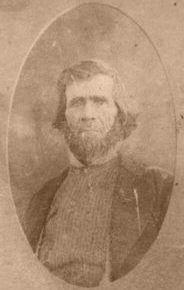
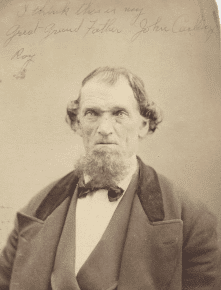
The miracle of AMAZING GRACE is well portrayed in the life of an English coal miner by the name of Lott Russon, born in Dudley, England, a place called “The Black Country” because coal was mined there. 

Lott grew up in a very poor coal mining family.  He was the only boy in a family of 6 children.  His life was miraculously spared multiple times throughout his 88 years of life.  Some of his survival stories have been passed down to his posterity to strengthen their faith as they face their trials in life.

When Lott turned 7 he was obliged to go to work as a rivet carrier to earn additional money for the family.  By grace he was saved when at work a spike got loose from a machine, flew across the room and entered his skull like a bullet.  He nearly died from the injury.  

At age 13 his father was disabled in a coal mine accident so Lott took his place and became a collier. When Lott’s father was well enough to walk, he came to the mine to check on Lott.  Tragically he fell down the shaft and was killed leaving young Lott fatherless.

From age 13 on Lott became the provider for his family.  Sometime later, after the death of his father, part of the mine collapsed where Lott was working, but by grace he and one other man somehow crawled two miles in darkness underground on hands and knees till they found the surface and returned back to the coal yard and to safety.  Both men had been given up for dead. 

By grace Lott survived a dozen other perils; a sudden flare of coal gas on the surface, burial under tons of rock when a mine roof collapsed, a freefall in an elevator car which dove some 470 feet when a cable jumped a pulley.  He survived an underground methane explosion.  He was buried in ice catastrophe. He lost his hearing when his skull was crushed by a steel bar.  By grace and and by priesthood power his hearing was restored. In all his ordeals it was by grace remained whole.  He lost only a part of one of his fingers.  

He joined the church when he was 24 but he could never earn enough money for his wife and 8 children to immigrate to Utah, so they stayed in Dudley and Lott continued working in the coal mines.  

Eighteen years passed. Lott was 42 years old. Elder Nebeker, the missionary who baptized him, sent $535.36 to him so his family could immigrate to Utah.  Lott was working in the mine the day the money arrived.  The mine was under threat of flooding and the pumps were working at full capacity to evacuate the water that was rushing into the shafts.  Lott was fitting pipes down in the mine when his wife arrived with the news.  What happened next was again the grace of God working in Lott’s life.   

In his own words he records, “On Oct. 14, 1871, my wife came to the pit and had me called up. At that time I was with the other men laying down pipe and we were up to our waists in water. When she saw me she said, “Take off the wet clothes, Lott, and never put them on again. The money has come to take us to Utah.” I said, “Let me go down and finish the job.” She said, “No, Lott, you might get hurt.” Reluctantly I complied.  As I was taking off my clothes the alarm whistle sounded.  Another accident happened and buried all the men in the mine. I alone was saved once again.”  

The ordeals in Lott’s life didn’t end with the arrival of the money from Elder Nebeker.  Many more trials and tribulations followed, but by the grace of God he and his family were able to come to Utah and join the saints where they could build Zion.  

They settled in Lehi, Utah where Lott, now in his mid 40s, started life all over again.  But this time they were in Zion.  Building a home and a foundation for their posterity who would have the blessing of growing up in the valleys near the Temples of God.  Lott and his wife received their endowments and were sealed in the endowment house in 1872.  Lott Russon lived 46 more years in Lehi, Utah.  He died faithful in the faith at age of 88.  

Lott’s life gives new meaning to the verse we read in 2 Nephi 25:22 where it says, “We are saved by grace after all we can do.”  Surely it was by grace that Lott lived to see old age, bless his grandchildren, and see the miracle of the gathering of Israel and to see Zion became firmly established in the tops of the mountains of Utah.

Whenever you hear the hymn AMAZING GRACE think of Lott Russon.  “For God resisteth the proud, and giveth grace to the humble.” 1 Peter 5:10

Happy
Happy
0 %
Sad
Sad
0 %
Excited
Excited
0 %
Sleepy
Sleepy
0 %
Angry
Angry
100 %
Surprise
Surprise
0 %
You May Also Like

CARLING, John Witt

Wagons for Fleeing SaintsJohn Carling and his son Isaac worked at making and mending wagons for the Saints who were being driven from Nauvoo. The mob violence became so intense that the Carling family decided to leave with the main body of saints. Brigham Young sent Heber C. Kimball to inform John that if he would stay until all of the Saints had been provided with good outfits, not a hair of their heads would be harmed. They remained as requested, though some wives complained that they would all be killed. “The morning they were to leave, they were counseled to get to the ferry boats before the mobs were astir, and upon arriving at the ferry, the captain hurried them onto the boat and admonished them to be quick because they could see the mobs coming. Some were on horses, and others were running, but all with guns in their hands, and they were cursing. As the saints left the shore, they could hear the leader of the mob ordering his men to shoot. But as the men came to the shore, they stood still. It is told by some that two shots were fired but they missed the people in the boat.”
View Post

JACOBSEN, Christian Jensen: Frontier Craftsman

Another life altering experience occurred in 1854 when L.D.S. missionaries introduced the Jensens to a new religion. After a short investigation Christen and Kirsten were baptized on a cold day in December and became the first members of the church in their local area. Soon after, Christian was called to be a local missionary and also to preside over two branches of the church. In the fall of 1857 he was assigned to open a mission on LæsØ, an island located midway between Jutland and Sweden. As a missionary he received frosty receptions but soon encountered some inhabitants in need of his clock repairing skills. This led him to adjust his strategy and avoid the topic of religion until he had the family’s clock dismantled. Once the family knew him as a clock repairman, they were more prone to discuss religion with him. Using this strategy, and after visiting the island several times, Christian baptized a dozen or so members and organized the Byrum Branch there.
View Post

ALLEMAN, John

JOHN ALLEMAN and his family arrived in Nauvoo in 1838 from Pennsylvania with two wagons, ten horses and their household possessions. He bought farm land and built a brick home for his family. He assisted in building the Nauvoo Temple and served as a cavalryman in the Nauvoo Legion.
View Post

BRINKERHOFF, Jesse: A Father’s Journey of Love

The flu epidemic of 1918 sometimes known as the Spanish Flu, reeked havoc across the world killing an estimated 100 million people, more than 500,000 in the US, and killed mostly strong healthy adults. Fear spread the country, along with the flu. Hospitals were full, health professionals died, Schools, churches, public buildings,etc, were closed, and people feared being around others. Little girls made up jump rope rhimes, and here is an example, "I had a little bird, it's name was Enza, I opened the window and in flu Enza.
View Post

Hyrum Woolsey To Utah – 1848 –

Hyrum Woolsey was closely associated with his brother-in-law John D. Lee, who married two younger sisters of Hyrum Woolsey, Agatha Ann Woolsey and Rachel Andora Woolsey. Hyrum Woolsey worked with John D. Lee as a laborer and as a teamster.
View Post

The Adventures of Nathan W. Adams

Much fanfare accompanied the completion of the transcontinental railroad at Promontory Point, Utah on May 10, 1869. Two weeks later Major John Wesley Powell and nine companions in four row boats left Green River, Wyoming, with almost no fanfare, to explore the Green and Colorado Rivers. It was a trip fraught with danger that only six of the men completed. Although not involved in running the river, my great uncle, Nathan Adams, would later share the adventures experienced by Powell’s second exploration crew as they mapped the Grand Canyon area during the 1870s. A hundred and forty years later only a few intrepid tourists visit Promontory Point each year, while tens of thousands of tourists, many of them from foreign countries, enjoy the marvelous scenery discovered by Powell and his colleagues.
View Post

KENDALL, Elizabeth Clements

While the wagon train was stopped one day for a rest Elizabeth and her girlfriend had taken their knitting and gone down alongside the creek to set in the sun. They looked up from their chattering and laughter to see an Indian watching them. Then he disappeared. Upon their return to camp, the Indian was in consultation with Captain Zebriski. Then later the Captain reported to Elizabeth their conversation. The Indian, attracted to Elizabeth had said to the Captain, “Heap wino squaw, she knit socks, me want her.”
View Post

HASKELL: George Niles

President Young told the men; "There would be no death from fighting befall you, if you keep the Lords Commandments. "There shall be no fighting except with wild beasts." The wild beasts turned out to be wild bulls of which there were several injuries and mules gored. The Battalion shot over twenty bulls before they quit charging the men, mules, and horses. George Niles Haskell enlisted at the age of 49. They journeyed on to Winter Quarters where he took his wife, one girl and a son and proceeded on to Kegs Creek, where he left them with friends and acquaintance. Malinda had married prior to this time. The men then left for Fort Leavenworth where they received their gear and proceeded toward Mexico. The family was to await the return of George Niles Haskell and the military pay from the Army was used to help to support them. President Young made arrangements with the Army and Govt. to remain here on Indian Land for the duration. George was Private #46 of Company B. Many of the Mormons traveled to the Missouri River with the enlisted men. He had enlisted for a year, 16 July 1846 to 16 July 1847.
View Post

HILL, Heamon Alison

During that time their father and baby Jasper died. They were so poor that they did not have enough money to bury their father and baby brother. “The Lord blessed us, for a man came to see us and seeing our plight, took us to his farm, gave us one room in his home, put our cattle in his pasture and buried our father and baby brother on his burying ground.
View Post