HUNTINGTON, Dimick Baker: Known for “Dimick’s Band”

0 1
Read Time:6 Minute, 11 Second

This article originally appeared in History of Utah Vol.4.

by Orson F. Whitney

This veteran will be remembered for four main facts in his history:

  1. His associations with the Prophet Joseph Smith;
  2. His membership in the Mormon Battalion;
  3. His early and long continued service as an Indian interpreters and;
  4. His connection with“ Dimick’s Band,” one of the earliest musical organizations in Utah.
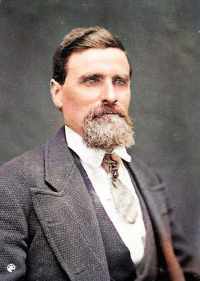
Dimick Baker Huntington (1808-1879)

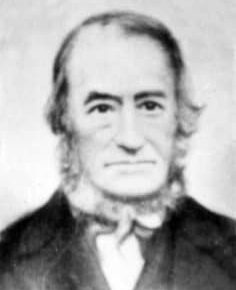
He was an honest, true-hearted man, who faithfully performed his duty in every position assigned him. The son of William and Zina Baker Huntington, Dimick Baker Huntington was born May 26, 1808, at Watertown, Jefferson county, New York. There he passed his early boyhood. He had a martial spirit and delighted in “playing soldier” and training the lads of his neighborhood. His father was a well-to-do farmer and gave his son a good common school education.

When eleven years of age he was disabled for farm work by lameness, resulting from a fever, in consequence of which he took to traveling as a peddler and tinker to earn his livelihood. He afterwards learned shoemaking and blacksmithing, the latter after living on the frontier. On April 28, 1830, he married, his wife’s maiden name being Fanny Maria Allen. She became the mother of seven children.

In 1835 Dimick B. Huntington joined the Church of Jesus Christ of Latter-day Saints, and in May of the next year moved to Kirtland, Ohio. The following summer found him in Missouri, where he passed through all the troubles that arose between the Missourians and the Mormon settlers. He was constable at Far West, and a brave and efficient officer. On one occasion ho stepped between the Prophet Joseph Smith and a club that was raised to strike him. He would have died for his leader at any time, and as long as Joseph lived he was one of his most faithful friends. At Nauvoo he held various offices in the city government, and was one of those arrested with the Prophet for the abatement of the paper known as the “Expositor.” After the murder of Joseph and Hyrum and the return of the dead bodies from Carthage, he was one of those who bore the remains of the martyrs to their earthly resting place.

He left Nauvoo in the exodus of February, 1846, pursued by military officers, and was obliged to separate himself from his family temporarily in order to escape. He proceeded to the Missouri river, where in July he enlisted as a member of the famous Battalion. He was in Company “D,” commanded by Captain Nelson Higgins, and besides performing the ordinary duties of a soldier, served his comrades in the capacity of blacksmith. At Santa Fe he was detached with others from the main command, and sent to Pueblo, his family being with him. A child was bom to him at that place, January 1st, 1847; an Indian squaw acting as midwife. He started with Captain Brown for California on May 24th of that year, but only got as far as Salt Lake valley, the Battalion’s term of enlistment having expired. He entered the valley twenty-one days after the Pioneers. Says he:

“Through all my travels in the Battalion, to Pueblo, back to Laramie and on to Salt Lake valley, I carried in my wagon a bushel of wheat, and during the winter of ’47 slept with it under my bed, keeping it for seed. For three months my family tasted no bread. We dug thistle roots and other native growths and had some poor beef, with a little milk, but no butter. Early in the spring of ’48 I rode one hundred and fifteen miles to Fort Bridger and bought a quart of little potatoes about the size of pigeon eggs, at twenty-five cents each. From these I raised that year about a bushel of potatoes, but ate none of them. I planted them in 1849 and have had plenty of potatoes ever since.”

Mr. Huntington first lived in the “Old Fort,” but in 1849 went to Provo and in 1850 to Sanpete to help establish colonies in those placos, being chosen for this task because of his qualifications as an Indian interpreter, and because recognized by the red men as their friend. He learned to talk in the Indian tongue soon after his arrival in the mountains, and this, he says, was in fulfillment of a promise made to him by the Prophet Joseph at Quincy, Illinois, in 1839. He was Utah’s first Indian interpreter and his presence was necessary at all meetings between the settlers and the savages.

He was in the first fight with the Indians at Battle Creek, March 5, 1849, and at the beginning of the action took command, in the absence of the colonel. He was also in the Indian fight at Provo, with his two sons, Allen and Lot. He accompanied Parley Pratt’s exploring expedition to Iron county in 1850, and in 1853, at the close of the Walker war, was sent by Governor Young, superintendent of Indian affairs, to arrange a treaty of peace with that turbulent chieftain. Says Mr. Huntington:

“While in conversation with the chief in his tent, he called me to the door and directed my attention to two braves who were driving an Indian prisoner before them. I asked, ‘What are they going to do?’ ‘Watch,’ he said, and in a moment or two they shot the prisoner, as a part of the traditional rites of the treaty. Walker remained peaceable until his death, and I was present at his burial, which was attended with all the traditional and superstitious observances. A consultation was held among the braves as to whether one of the chief’s wives should be killed and sent to the happy hunting grounds along with him, but it was finally decided that a male Piute prisoner should accompany him. Accordingly the prisoner was buried with the chief—buried alive, but only to his shoulders, and left to die at the will of ‘Shinob’ (God). I acted as master of ceremonies at a grand treaty between the Utes and Shoshones at Salt Lake City in 1854, and fed both tribes at my table. That treaty was never broken.”

When not among the Indians, trading and interpreting, Mr. Huntington pursued the vocation of blacksmith, doing work of that description for both whites and reds. He was a great lover of martial music and did much to promote its cultivation in the various settlements. He made drums, founded musical schools, and was drum-major of tho old- time martial band, named in his honor, “Dimick’s Band;” his own pride and glory, and the delight of every urchin in Salt Lake valley.

Dimick B. Huntington was the husband of two wives and the father of nine children. He was own brother to the late Zina D. H. Young, of Salt Lake City, and to Oliver Huntington, Esq., who still lives at Springville. In the Church he held the offices of Elder and High Priest, to the first of which he was ordained at Kirtland, and to the latter at Salt Lake City. For many years and up to the time of his death—February 1, 1879—he was a Patriarch of the Salt Lake Stake of Zion.

Happy
Happy
0 %
Sad
Sad
0 %
Excited
Excited
0 %
Sleepy
Sleepy
0 %
Angry
Angry
0 %
Surprise
Surprise
100 %
You May Also Like

WOOLSEY, Thomas: Mormon Battalion Volunteer

On 15 Jun 1856 they left their all to overtake the first covered wagon train of Mormons, to cross the plains that year. The oldest daughter was sick with chills and fever when the journey began, and had to be carried from the house to the wagon. Her father's brother who did not belong to the LDS church and was opposed to their leaving their home, predicted she would not live to go far, but Elder Hickerson promised her she would not have another chill, and she never did.
View Post

CARLISLE, Richard & Jane Field

Members of the family were baptized at various times in 1849 and 1850. Richard became the Presiding Elder of their branch. In 1851, on the “Good Ship Ellen,” they emigrated to America, except for their oldest son, Thomas, who came a year later. On their way up the Mississippi River, Jane died in St. Louis on 24 June 1851. She had done the washing for a woman afflicted with the dreaded cholera, so common among emigrants on that river. Jane caught the disease and died almost immediately. It must have been very difficult for Richard to manage his large family during the years following Jane’s death. First he had to get the whole family across the Plains, then provide a home for them in a new land. The bereft father and his motherless brood stayed to work in St. Louis during the remainder of the first year. The youngest son, Richard, hired out to a Mormon family and came west with them, the first of his own family to arrive in the Valley. The oldest son, Thomas, had by then joined the rest of the family in St. Louis.
View Post

COX, Amos

Sister Brady Englestead has told me of how her sister who was about 14 years old had been sick for months, and got so she wouldn’t eat, and although they had the elders administer many times, still she seemed to get worse. One day she said “If you will have Amos Cox administer to me I think I will get well.” Father was only 17 years old at the time and had never administered to anyone in his life, but they sent for him out in the field where he was scything grain. He said he was dumb founded, but told them he would come. There in the field he asked Heavenly Father what to say and said he believed it was one of the most humbling experiences of his life. He went to the house, washed his hands, and sealed the anointing. He promised the girl that she would get well, then when he looked at her and saw how frail and pale she looked, he was scared and so weak that he sat down.
View Post

TWITCHELL, Ephraim & Phoebe Melissa Knight

One day Branch President Ephraim Twitchell was traveling from Sacramento a long way by wagon. The last day of his journey he was traveling late, after dark. He did not stop because he was almost home. He was alone in his wagon, when suddenly there was a man sitting beside him on the spring seat. He just appeared from nowhere. He told Ephraim that he should take his family from San Juan Bautista and go to San Bernardino. Ephraim responded that they had not been in San Juan very long and that his children had their friends there. He noted that he did not think he could get them to go with him. The man beside him replied, "Yes, you can, and you must go to San Bernardino or you will lose them." When Ephraim turned to answer him he was not there. He had disappeared just as he had appeared -it seemed like just out of thin air. Ephraim knew the gospel very well and remembered their story in the Book of Mormon about the three Nephites. He thought this must be the answer-the messenger was one of the three Nephites. He then saw a beautiful new coat that the messenger had left on the spring-seat beside him. He thought the messenger had really been there-that he had not just imagined or fantasized. Ephraim went home and told his wife, Melissa. They talked about the move. They prayed about it for a couple of days. They knew they must go to San Bernardino, California. Every one of their children and one nephew, John Newton Twitchell, the oldest son of Jasper Twitchell went with them. Anciel Ephraim's oldest son came a year later.
View Post

BLANCHARD, Amelia Jane Davis

The Davis family, being among the first settlers to Cache Valley, suffered untold privations and hardships. Amelia remembered the trials they had with the Indians, and how frightened she was. They would come to the door begging for food and no one dared to turn them away. As Ann H. fixed food for them, the Indians would play with the white children. When coming out of the house with food one day, Ann H. discovered the Indians had exposed her children to the black smallpox. The twins soon came down with the illness. The settlers were all so frightened of the deadly disease that a log shelter was hurriedly built a short distance north of the Logan Cemetery. The Davis family, including the stricken twins, moved there in isolation. Amelia told of rats, mice, and snakes so thick that the healthy children took turns with willows, brushing the snakes from the beds of the sick children. Their beds located on the floor were made with a straw tick. The weather was severe coming through the open cracks of the shelter. The family was badly neglected and almost starved to death. Remarkably, the twins recovered from the smallpox epidemic, but after being home only a short time, diphtheria struck, taking the lives of both twins, Henry and Catherine. Childhood days were very strenuous and hard. These early settlers had lots of troubles, yet they had some thrilling and good times too. Amelia often told stories of the exciting sleigh rides, dances and house parties they enjoyed. How she loved her church activities! Amelia's greatest desire was to do good for others and scatter sunshine wherever she went.
View Post

CURTIS, Enos

Enos live a wonderful life, enduring the trials of crossing the plains, becoming a Patriarch, and helping to build up the Kingdom of God in Utah. He helped to build the city of Springville, Utah, and went with Brigham Young to the South  of Utah, coming back in the winter of 1856. He didn’t feel well that spring, but kept on working.
View Post

CHURCH, Margaret – Still Giving Her Life

Despite their full-time family and farming commitments, the couple accepted teaching and leadership responsibilities in nearly every church position possible. Further, they encouraged each one of their children in educational pursuits. By 1978 their nine sons and seven daughters had completed a total of 67 years of college. After sending eight of their children on missions, Marge and Lathel accepted a call in 1977 to the Rapid City South Dakota Mission. It was during this service that she was chosen as Utah's Mother of the Year. Following are quotes written for that occasion by two of her daughters:
View Post

GREEN, Robert Kenyon: Biography (1806-1884)

Winter in Ponca CampOn July 1st, 1846 a ferry was completed to cross the Missouri River. On the western side, a place called ‘Cold Spring Camp’ was established on recommendation of Bishop George Miller. It was late in the year, and the Green family pioneers had been delayed by heavy rains. They waited for instructions to either press on to the Rocky Mountains or find a place to spend the winter. Companies organized by Brigham Young and Heber C. Kimball at the Cold Springs Camp combined with Bishop Miller's Company and became the advance party for the church.
View Post

HURST, Philip: Letter on Indian affairs in Sanpete County to the Salt Lake Herald

If government wants to know if there has been any Indian trouble here, let men be sent here to inquire; talk to the widows of Jens Larsen and David Jones, the widowed mothers of Thomas Jones and Nathan Stewart; visit the graves of the entire Given family; talk to the men who have rode night and day for hundreds of miles, trying to bring these marauders to Justice;
View Post