0
 1
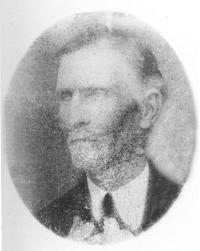
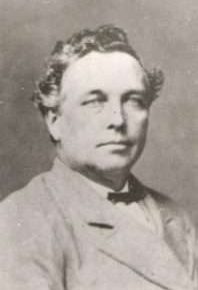
WILMER WHARTON BRONSON
(Excerpts from the Book “Bronson” published by Sarah B. Boden)

(1829-1907)
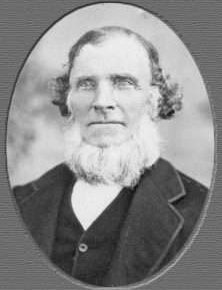
Wilmer Wharton Bronson was born October 20, 1829 in the town of Brownstown, Wayne County, Michigan. His father, Leman Bronson, was the son of Jesse Bronson and Ester Osborn. He was a native of the state of New York and at an early day emigrated to the state of Ohio where he became acquainted with and married Lucy Brass, eldest daughter of Gary Brass and Mrs. Lucy Mathews Brass. Subsequently, they both moved to the state of Michigan, which was then considered the pioneer state of the west. He located on a wild tract of land eighteen miles from where the city of Detroit now stands, in a southwest direction near the town of Fat Rock. On that spot on earth, as the above date shows, Wilmer Wharton Bronson began his life.
While Wilmer was still a young boy, two missionaries from the Church of Jesus Christ of Latter-Day Saints came into the neighborhood where his family resided. Wilmer’s father was a Methodist class leader and spared no pains in bringing all his logical and scriptural reasoning to bear against their doctrines. But, finding himself unsuccessful in every attempt, he began to take the matter into serious consideration, and the more he investigated the more harmony and union he discovered between their teachings and that of the old apostolic doctrines of the Church. He soon became convinced of the truth of a doctrine that he had but a few months previous been so zealously engaged in opposing. Wilmer’s mother also became convinced of the truth of the doctrines expounded by the two missionaries and applied for baptism. Gehial A. Savage who had been sent from Nauvoo to that state on a mission baptized her.
News of the horrible and unprecedented murder of Joseph and Hyrum Smith reached the vicinity of their home. After a time, Wilmer’s father sold his farm and determined to travel toward Nauvoo to join the other faithful saints. After a long and tedious journey of over four weeks, through the western part of Michigan and across the entire states of Indiana and Illinois, they arrived at a little town called Black Hawk on the Mississippi on the lowa side of the river, where Wilmer’s mother’s brother John Brass resided. They reached this point sometime in the latter part of February, 1846 where they intended to remain until spring opened and then proceed on their way westward. This little town in point of distance was about 75 miles above Nauvoo on the opposite side of the river.
After a time, the family left Black Hawk and headed for the town of Keokuk, Iowa on the Des Moines with the anticipation of intercepting the road leading west from Nauvoo in order to unite their fortunes and destiny with a people heading for the Rocky Mountains. They joined the wagon train headed by George Miller and eventually arrived in the valley of the Great Salt Lake in the fall of 1847.
Wilmer Wharton Bronson married Miss Olivia Andrews and they had six children. Their home was at Five Points near Ogden, Utah. He then embraced polygamy and took Elizabeth Fisher as his second wife. Their home was in Huntsville, Utah. They had five girls and four boys: James I., Mary, Elizabeth, Maggie, Leaman, Lucian, Rosabell, Maud Geneva, Arthur.
There came to Huntsville a Danish widow, Marion Fraengler, born at Studstrup, Denmark, April 2, 1848, and her little girl. Marion had been converted to the Church of Jesus Christ of Latter-day Saints and was baptized in Denmark in 1873 at the age of twenty-five years, and she came to America in 1876. She was scheduled to go to Lehi, but not being able to talk English she got sent to Huntsville where she worked for a family named Hammond. Wilmer decided to take her for his third wife although while courting her he had to have an interpreter along. Wilmer and Marion were married in the St. George Temple in 1877.
In September 1890 polygamy was abolished and the U.S. Marshals hunted Wilmer almost continuously. So, it was decided that he should go to England on a mission. His son-in-law, a man named Lindsay, made a false floor in a wagon and placed Wilmer between the floors. Then he loaded the wagon with straw to get him from Huntsville to Ogden. On the way the wagon was searched, but Wilmer was not discovered. He arrived safely in Ogden to board his train for the East and thence on to England.
In England, he labored under President B. H. Roberts and was assigned to a Lancaster District. His circuit was sixty miles long and when only half through his assignment his mission companion deserted him. Many times, he was hungry and at times rather than to ask for food he would eat wild berries. During his journey he came alone to a house where the lady, a Sister Carter, had cancer. The disease had made a hole in her face. She asked to be administered to and after offering a silent prayer, Wilmer anointed her and administered to her. Sometime later, when he returned, her face was considerably better. His second return found her cured.
On his return from England, he dared not go directly to his home in Huntsville because the marshals were still after the polygamists. So, he came to Huntsville by way of San Juan County, Utah. Several of his polygamist friends had moved to San Juan while he was in England. So, he visited them and decided this would be an ideal place to bring his family. At night, disguised as a woman and heavily veiled, he visited his two families in Huntsville to persuade them to move to San Juan County. Elizabeth refused, but Marion accepted.
In 1888 Wilmer and his eight-year-old son Wilmer traveled to Monticello from Ogden, Utah. They came by traveling with a team. Wilmer got logs from the Blue Mountains for a house. He cut poles for fencing a city lot. He staked out a farm and fenced it. By that time, winter was upon the settlers so he spent that winter in Bluff, a pioneer town on the San Juan River. In the spring of 1889, he, in company with Brother George Rust, planted a crop of wheat, oats, and corn which yielded a fair crop that fall. After planting he put up the log cabin and got his house in shape. Marion and the children joined him later in the year.
The history of this town on the far-flung fringes of civilization was much the same as that of many small pioneer towns. Many privations and hardships were in store for the settlers. In addition to the troubles, they had in getting supplies, they suffered from the depredations of lawless men, cowboys, miners, drifters and bad men who had fled from the consequences of their misdeeds somewhere. The town was shot up on several occasions. Monse Peterson’s store was literally shot to pieces and while this was in progress a Mr. Kelly, a cowboy, drew his gun and rode up to Wilmer Bronson saying, “Dance you old moss back.” Wilmer shoved his hands deep into his pockets and said, “Shoot and be damned to you!” At that the outlaw emptied his gun around the feet of Wilmer who did not budge an inch.
Wilmer Bronson became the teacher, counselor, and guide to the people in this town. He was an eloquent speaker, a spiritual minded man, honest and prayerful and true in every way to his family, his country and his God, whom he worshipped in sincere reverence.
Wilmer took his family to Mancos, Colorado where they stayed for a year in a log cabin among the big pines on a little stream called Mud Creek. This move was meant to make the family safe from the officers. Wilmer stayed in Monticello that year and raised a crop. But twice while the family was in Colorado, he fled with Brother Rust to a little dug-out in the cedars on the Montezuma Creek, while Bush and his aides were searching the town and the wide rolling country for outlaws and polygamists.
Wilmer came to Mancos to get Marion and the children home and just when he was nearing a clump of cedars east of town, about two miles, a horseman was seen to be coming toward him at full speed. This man was Perry Foy. He rode up and jumped to the ground, gave Wilmer his hand and said, “Bronson, you had better camp right here tonight; Bush is in town.” So, he camped there for several days and nights. Finally, Bush went back to Salt Lake City and the tired Bronson family came home.
Wilmer Bronson lived to see his family all grown, some married, and some sent on missions. He was in the bishopric for many years. He died in 1908 at Monticello. He and his wife Marion are interred in the Monticello City cemetery.
The following was submitted by LaRon Taylor from the SUP Library
The history of this town on the far-flung fringes of civilization was much the same as that of many small pioneer towns. Many privations and hardships were in store for the settlers. In addition to the troubles they had in getting supplies, they suffered from the depredations of lawless men, cowboys, miners, drifters and bad men who had fled from the consequences of their mis-deeds somewhere. The town was shot up on several occasions. Monse Peterson’s store was literally shot to pieces and while this was in progress a Mr. Kelly (cowboy) drew his gun and rode up to Wilmer Bronson saying, “Dance, you old moss back.” Wilmer shoved his hands deep into his pockets and said, “Shoot and be damned to you. At that the outlaw emptied his gun around the feet of Wilmer who did not budge an inch.


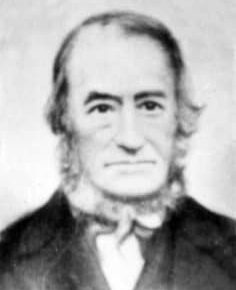
 Brother Joseph