 0
 1
Learning to Work is a Blessing
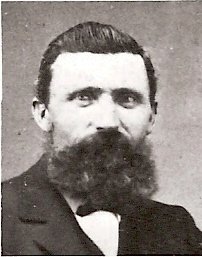
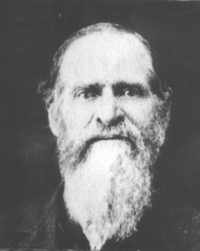
Orville Sutherland Cox was born in Plymouth, New York, 25 November 1814. He was one of a family of 12 children, ten of whom reached maturity. His father died when he was about 13 years old. He was then “bound out” to learn the trade of a blacksmith, under Deacon Jones, who was considered an excellent man, as he was a pillar of the church.

The agreement was that he was to work obediently until he was twenty-one and that Jones was to give him his board and clothes, three months of school each year, and teach him the trade of blacksmithing.
No schooling was given him and one pair of jeans pants was all the clothing he received during the first three years of his apprenticeship, and his food was rather limited. The women folks ran a dairy, but the boy was never allowed a drink of milk of which he was so fond, because the misses said it made too big a hole in the cheese. He was indeed a poor little bondsman, receiving plenty of abusive treatment. As to teaching, he was kept blowing the bellows, and using the tongs and heavy sledge.
When the Deacon sometimes went to distant places. Then, the boy secretly used the tools and practiced the things his keen eyes had watched his master do. During some of these hours of freedom, he made himself a pair of skates from pieces of broken nails he gathered carefully and saved. Also, he straightened a discarded gun barrel and made a hammer, trigger, sights, etc., to it so he had an effective weapon. These things he had to keep hidden from his master, but secretly, he had great joy in his possessions and once in a while found a little time to use them.
Occasionally, the monotony of the bellows was broken in other ways. For example: At one time, oxen were brought to the shop to be shod that had real hard hoofs, called “glassy hoof.” Whenever Deacon undertook to drive a nail in, it bent. Cox straightened nails over and over, as nails were precious articles in those days, and must not be discarded because they were bent. After a while, the boy said, “Let me.” He shod the ox without bending a nail. Thereafter, Cox shod all the oxen with one and all that came to the shop.
One other pleasant duty was his – that of burning charcoal, as coal was then undiscovered.
He learned much of the trade of woodsman while attending to the pits in the depth of the mighty New York forests, as well as having the opportunity to use his gun and skates a little. He acquired the nickname of “Deek” among his associates.
When he had worked for over three years, he came to the conclusion that all he would ever acquire was harsh treatment. So, during one of the Deacon’s visits to a distant parish, he gathered together his few belongings and a lunch, shouldered his homemade gun and hit “for tall timber.” That being the route on which he was least apt to be discovered.
He made his way toward the Susquehanna River. First he reached the Tioga River, which was a branch of the Susquehanna. He began looking for a way to either cross or go down the river and soon discovered a log “dug-out” as it was called, frozen in the mud. He decided to confiscate it as contraband of war and pried it up, launched it, and soon had it floating down the river toward the junction of the Tioga with the Susquehanna.
Shortly, he felt his tired feet being submerged in cold water. Stopping to investigate, he found the log was leaky and rapidly filling with water. He also found an old wooden firkin, a small barrel, that he at once began making use of. Bailing the water, alternately paddling, steering and bailing, he continued downstream keeping close to the shore in case the dugout should get the best of him.
The second day, he heard from the shore, “Hello there, will you take a passenger?” “Yes, if you will help bail and paddle.” “Barkis is willing,” answered the man on shore, so now there were two in the boat, which helped them make better time.
Nearing the confluence of the rivers, they saw a boat preparing to leave the dock for a trip up the river. It was a primitive stern wheel packet of those early days (1831). Frantically, he and his passenger applied themselves to their paddling, bailing and steering, signaling the boat to wait. Just as she started, he pulled himself up near enough to leap from the dugout to her deck – a free boy! – for now he was sure pursuit would not overtake him. His passenger called, “What shall I do with the canoe?” “Keep her or let her float,” shouted Cox. (If the owner of the dugout will send in his bill for damages, O.S. Cox’s children will cheerfully settle the bill.)
As for food on his trip with the big boat, he must have worked for his passage, for he had no money. On board with it’s cargo of southern produce, he saw his first orange. He remained on this little river packet some distance up the river, then landed and found employment in lumbering and logging and sometimes blacksmithing.


 Brother Joseph

 Pioneer John