0
 1

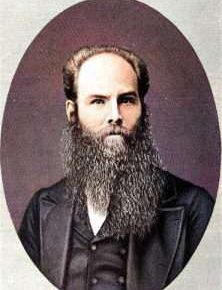
As Captain of Ten in the immigration of 1847, Elijah F. Sheets, the venerable Bishop of the Eighth Ward, came to Salt Lake valley in September of that year. During most of the time since, though he has colonized and lived in other parts of Utah, Salt Lake City has been his home. He was one of our earliest Aldermen, and has held various other positions of prominence, among them those of Traveling Bishop and Assistant to the Trustee-in-Trust.
A native of Chester county, Pennsylvania, Elijah Funk Sheets, son of Frederick Sheets and his wife Hannah Page, was born March 22, 1821. His parents were in moderate circumstances, and followed farming for a livelihood. He received but little education, either before or after their death, which double calamity came upon him when he was only six years old. Between the ages of eight and sixteen, he attended school about six weeks in each year. For two years after the death of his father and mother he lived with the parents of the latter, and then sought and found employment with Edward Hunter, the future Presiding Bishop, who became his life-long friend and associate. This was before either of them had heard of Mormonism.
He was employed for nine years at farming and stock-raising, and resided during that period in Mr. Hunter’s family. Thus early was he initiated into the duties that fell to him so abundantly in after years, when he superintended the live-stock interests of the Church. At seventeen, having quit Mr. Hunter’s employ, he apprenticed himself for three years to Taylor Dillworth, to learn the blacksmith’s trade. It was during his apprenticeship that Mormonism was preached in Chester county and the vicinity by Lorenzo D. Barnes, Edwin D. Woolley and other Elders from Nauvoo. He embraced the Gospel, as taught by them, and was baptized July 5, 1S40, by Elder Erastus Snow.
In 1841 he moved to Nauvoo, arriving there in September. He was one of a hundred men who volunteered to work free on the Nauvoo Temple for a period of six months, beginning with the spring of 1842. Having fulfilled this contract, he went on a mission to his old home in Pennsylvania, accompanied by Elder Joseph A. Stratton. He was gone twenty months. They baptized about sixty souls, and returned with a company of thirty to Nauvoo.
Mr. Sheets had only been home a few days, when, on May 21, 1844, he started upon a mission to England. Having fulfilled this mission, at the expiration of nearly two years he returned to Nauvoo in time to join the exodus of the Saints from Illinois. Owing to his long absence from home he was poorly prepared for the long journey that lay before him, but with one yoke of oxen, one eow and an old wagon of his own, with another yoke of oxen borrowed from Elder Stratton, he made a start about May 1st, 1845, following the trail of the companies that had preceded him to Mount Pisgah, Garden Grove and Winter Quarters.
At the last named place he tarried one winter, having a serious time with sickness, by which he lost his wife, Margaret Hutchinson, whom he had married January 1G, 1846, the day that he was released from his English mission. He also buried at Winter Quarters his first-born child. He married his second wife, Susannah Musser, April 6, 1847, and about the 1st of June started for the Rocky Mountains, following in the wake of the Pioneers.
He was a captain of ten wagons in Perrigrine Sessions’ fifty, Daniel Spencer’s hundred. Among the incidents of the journey, he mentions a vast herd of buffalo coming np to water at the Platte, and states that it was only after a great deal of labor, shouting and shooting that they were able to turn the tremendous herd and prevent the whole camp, women, children and all, from being trodden under foot. The date of arrival in Salt Lake valley was the 22nd of September.
After camping in the “Old Fort” and unloading his wagon, Mr. Sheets went into the canyon to help make roads and get out logs for a house and for fuel during the winter. He then began laboring at his trade (blacksmithing) with Burr Frost, and continued at that work until December, 1850, when he was called with George A. Smith and a hundred and twenty others to go south and settle Iron county. Upon the site of Parowan he and his family resided until the spring of 1851, when he was called back to Salt Lake City. Here he worked at farming and blacksmithing until he was appointed by the municipal authorities Watermaster and Street Supervisor. Soon he was elected a member of the City Council, during Mayor Grant’s administration, and subsequently was Alderman of the First Municipal Ward under Mayor Smoot for a period of twelve years.
On May 11, 1850, Elijah F. Sheets was taken from the Second Quorum of Seventies, of which he was one of the Presidents, and ordained a High Priest and set apart as Bishop of the Eighth Ward, which position he still holds. Associated with him as counselors have been such men as Jacob Houtz, George Woodward, Levi Stewart, Robert Daft, Alexander Pyper, Henry W. Lawrence, J. D. T. McAllister, Joseph McMurrin, Isaac Brockbank and others.
“In February, 1818, I was called with many others by President Young to Provo, to try and bring order out of chaos. On our arrival there, the Utah Stake was reorganized, with A. O. Smoot as President and William Miller and myself as counselors. I was also elected a city councilor. We commenced to build the Provo Woolen Mills, in which work I took an active part. I also, with A. O. Smoot, took a contract to help build the Union Pacific railroad. We organized a company of about seventy-five men on a co-operative plan, and contracted for fifty thousand dollars worth of work. We made a good profit. President Smoot and myself built by contract the Cooperative East Store of Provo. From October, 1869, I was absent on a six months’ mission to Pennsylvania and New York. In February, 1870, I was appointed Assessor and Collector of Utah county.”
In April, 1871, Bishop Sheets was again summoned back to Salt Lake, where he was appointed Traveling Bishop for Utah, Juab, Millard, Sevier, Sanpete and Tooele counties. It was his duty to take general supervision of the Church tithing in those districts, and see that it was forwarded, in kind as received, to the General Tithing Store, unless otherwise directed by the First Presidency. In August of the same year he was given charge of all the Church stock and pasture lands, succeeding Briant Stringham, deceased, in that place of trust. In the winter of 1872-3 he accompanied President Young, Colonel Thomas L. Kano and others to St. George, at which time the Temple at that place was located. In April, 1873, he was chosen by President Young an assistant to the Trustee-in-trust, which appointment was continued under the administration of President Taylor.
Bishop Sheets has always been a thrifty and substantial citizen, a promoter of worthy enterprises, ever interested in the welfare of the people and the State at large. As early as the “fifties” he was a Major in the Nauvoo Legion, and as late as the “eighties” as Alderman of Salt Lake City. He is a stockholder in Z.C.M.I., in the Provo Woolen Mills, the Provo National and Savings Bank, Zion’s Savings Bank and Trust Company and the State Bank of Utah.
His household is of a patriarchal character. He entered into the order of plural marriage in February, 1857, when he married Elizabeth Leaver. In December, 1861 he wedded Emma Spencer. He has had twenty-eight children, most of whom are living. Being liable to prosecution under the Edmunds Law, in October, 1887, he went into semi- retirement, as most of the Church authorities had previously done.
But it was not for long. Preferring to face the issue, on the 13th of October, 1888, he gave himself up to the United States marshal, and going before Chief Justice Sanford, in the Third District Court, there pleaded guilty to the charge of unlawful cohabitation—the living with, or having of more than one wife—and received his sentence, a fine of one hundred and fifty dollars and costs and eighty days imprisonment in the Utah penitentiary. About a Hundred and fifty other Elders of the Church were serving sentences for similar causes at me same time. Since his release from prison the veteran has lived a quiet, retired life, attending faithfully to his ecclesiastical and other duties, and devoting much time to sacred labors in the Salt Lake Temple, where he has been one of the regular workers since the dedication.


 Brother Joseph