 0
 1
from History of Utah, Volume IV, by Orson F. Whitney

(1862-1942)
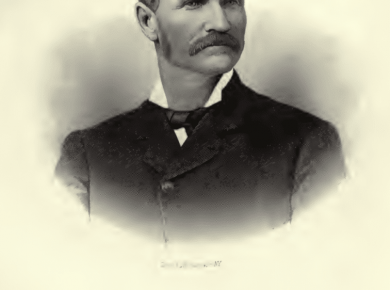
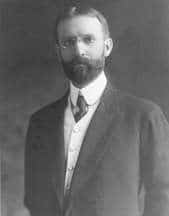
UTAH’S Representative in Congress from March 1901, to March 1903, was the Hon. George Sutherland, of Salt Lake City. He came to the duties of this important position as well qualified by education and experience as any man yet sent forth by this commonwealth to plead her cause in the councils of the nation. A lawyer of repute and distinction for many years, he had been a state senator prior to going to Washington, and had figured conspicuously in civic affairs almost from his youth. An intelligent and progressive thinker, of cultured mind, of broad and liberal views, amiable in spirit, and with polished address, he was in every way adapted to represent a community such as this, and to create the most favorable impression concerning it. That he made the best use of his opportunities in this direction, serving the people of Utah faithfully in the office to which their votes had lifted him, his record amply testifies.
Mr. Sutherland is not a native son of the land of the honey-bee, though he emigrated hither with his parents when he was little more than an infant in arms, and has over since made Utah his home. The place of his birth was Buckinghamshire, England; the date March 25, 1862. He was but two years old when he crossed the Atlantic and came to the Rocky Mountains. Until ten years of age he lived at Springville, in Utah county, his father at that time being engaged in mining and trading, taking supplies from Utah to Virginia City, then the principal mining town in Montana. In 1872 George went with his parents to Silver City, Tintic, which was his home during the next six years, with the exception of two years—1874 to 1876—when he was employed in the clothing store of O’Reilly Brothers, at Salt Lake City.
In 1878 he took up his residence at Provo, within almost a stone’s throw of his old home at Springville. Ambitious for an education, he looked about for the best available advantages in that line, and found them in the Brigham Young Academy, then recently established and as now, the leading institution of higher education south of Utah’s capital. While not connected with the dominant Church, whose leading spirits had founded the Academy, he was on the friendliest terras with his Mormon preceptors and fellow students, who in turn respected and admired him. Among his classmates were the men now known as Senator Reed Smoot, ex-Congressman William King, the late Judge Ervin A. Wilson and Representative David H. Morris.
After completing the course at the Brigham Young Academy, Mr. Sutherland studied law at the University of Michigan, and was admitted to practice in the supreme court of that State in 1883. Immediately thereafter he returned to Utah and began practicing ploy of the Ontario Mining Company, and met for the first time his friend and business associate, David Keith, who was foreman of Ontario shaft No. 3. Under him Mr. Kearns worked for some time. While laboring for others he prospected for himself, but not until he quit the Ontario and the Daly (the latter mine being opened up by the former) and launched forth entirely on his own account, did he strike anything very promising. In December, 1889, he finally quit those mines and went to work on the Woodside, which led to the making of his fortune. The Woodside mine was owned by Edward Ferry, who had leased it to the Wallmau Brothers, and from them Mr. Kearns took a contract for tunnelling. Noticing that the direction of the vein was towards the ground of the Mayflower, an undeveloped property adjoining, he consulted with Mr. Keith, who, representing both lessors and lessees, had charge of the underground work, and the result was the leasing of the Mayflower by Mr. Kearns, Mr. Keith, John Judge, A. B. Emery and W. V. Rice.
Work began on the Mayflower February 1st, 1890, but it was not until April that ore was struck at a depth of two hundred feet. The Mayflower mine gave to the world one million, six hundred thousand dollars, and out of this one hundred and eighty thousand dollars was expended in litigation with the owners of the Northland, who brought suit against the Mayflower people, originally for trespass, but eventually for right of title, in which the question of “apex,’ was to determine. The result was a victory for the Mayflower, after one of the longest and hardest fought legal battles in the history of mining litigation. The mine not only paid the expenses of this protracted and costly controversy, bnt paid for itself and four adjoining claims, known as the Silver King group, then owned by John Farrish and Cornelius McLaughlin (the locators), W. H. Dodge and Martin McGraw.
The Silver King ground was bonded by Messrs. Kearns and Keith,with their partners, in October, 1891, and was purchased by them in 1892. In July of that year the Silver King Mining Company was organized, with David Keith as president, Thomas Kearns vice- president and manager, A. B. Emery secretary, and James Ivers, W. V. Rice and W. H. Dodge as the other directors. Mr. John Judge, one of the owners, being in very poor health, requested that he be left off the board, and that Mr. Ivers be placed thereon to represent the Judge interest, he having previously been a silent partner with that gentleman. The Silver King claims were bonded for sixty-flve thousand dollars, and forty-six thousand dollars was spent in sinking and drifting, before the operators struck ore. When they did strike it, however, they “struck it rich.” and from that time handsome fortunes for the owners were assured. Within three months the mine paid the bond money and all its expenses.
Most of what was mado in 1892 and 1893 was put back into the mine; other claims were added, and the work of exploration steadily prosecuted. For every ton of ore taken out three tons were opened up, and today the Silver King is not only one of the largest but also one of the best developed mines in the West. It comprises one hundred and fifty-six claims, or over two thousand acres of patented ground, and is probably the greatest silver and lead mine in the world. The ore yields from forty to fifty per cent lead, and from fifty-six to sixty ounces of silver,with a bv product of gold. About seventy per cent of the entire output of crude ore is shipped to Pueblo, Colorado, to be treated by the celebrated Guggenheim smelters; the Silver King mill, a spendidlv equipped concern, handling the remainder. The dividends, which come with the regularity of clock work, are one hundred thousand dollars a month.
That much of the past success and present prosperity of the Silver King is due to the ability and enterprise of Mr. Kearns, who has been its manager from the beginning, is a simple statement of facts connected with the mine. Not only has he equipped it and purchased all the holdings connected with it; he has also largely shaped the policy pur- i sued by the directory, which is in perfect harmony with the management. Endowed with great energy and perseverance, a practical miner and a shrewd man of affairs, he has used all his ability in the development of this vast mine, which has proved a bonanza to all connected with it, and to which he points with pride as one of the greatest, if not the greatest among silver and lead producing properties.
An important change in the life of Mr. Kearns took place just as he was on the eve of entering, if he had not already entered, upon his success as a prominent mining operator. It was his marriage, on September 14, 1890, to Miss Jennie Judge, whose uncle, John Judge, was one of Mr. Kearns’ associates in the leasing of the Mayflower and the subsequent ownership of the Silver King. She was born at Port Henry, Essex county New York, November 30,1809, her mother, Jane Pattinson Judge, being American born, while her father, Patrick Judge, was a native of Ireland, though he had come to this country when he was but four years of age. He died when Jennie was two years old, and when she was ten, her mother, who had remarried and was Mrs. William Wilson, came to Utah, following her husband, who was working in the mines at Park City.
Thus Jennie’s childhood was passed at Fort Henry and Park City, at both of which places she attended school. Among her teachers at the latter place was Miss Mary Ferguson, who afterwards married David Keith. The youthful Tom Kearns saw little Jennie Judge grow to womanhood, loved her, and finally told her of his love. Their courtship began in 18S7. Both good Catholics, the ceremony uniting them as husband and wife was performed by Father Fitzgerald, the priest at Park City. Soon after their marriage, the young couple visited Mr. Kearns’ parents in Nebraska. The old folks were, still living upou their farm in Holt county. During a subsequent visit, and out of the first money released from his investments, their son purchased them a comfortable home in the town of O’Neil, the county seat, where they ended their days. A brother and sister of Mr. Kearns have since come to Utah.
The future United States Senator was in 1892 a member of the city council of Park City, and in the fall of 1894 he was elected to the Constitutional Convention which in 1895 framed the basic law of the present State of Utah. In politics he is a Republican. He ran for the State Senate in 1895, but was unsuccessful, his Democratic opponent, Mr. R. C. Chambers, being elected. This result in a Republican stronghold like Park City, could only have been due to the anti-silver sentiment then pervading the party in the East. In June, 1896, Mr. Kearns attended as a delegate the National Republican Convention at St. Louis, and was one of the resolute men who walked out of the convention after it had declared against bimetallism.
The next important event of his life was his election to the proud position of a Senator of the United States. He was chosen such by the Republican majority of the State Legislature in January, 1901. He has been very active and influential at Washington, has traveled much on both hemispheres, and acquired a wide reputation. He has met and won the friendship of many leading men, and in his European travels has been as far as Rome, where lie had an interview with the Pope, the late Leo XIII, and received his blessing. He has been a munificent donor to the Catholic church, especially in Utah, a notable monument to his generosity and that of his wife, being the Kearns St. Ann’s Orphanage, recently erected at Salt Lake City. A brief history of this worthy institution is here appended.
For almost a decade, St. Ann’s Orphanage, which was founded by Bishop Lawrence Scanlan, of the Catholic church, in 1890-91, had had its quarters in a rather dilapidated building at the corner of First South and Third East streets,where it endeavored to accommodate, regardless of sector creed, about one hundred orphan children, representing all classes of the community. Among those who took a deep interest in the institution was Mrs. Jennie Kearns, of Park City, who frequently contributed supplies for its sustenance. The orphanage, under the direction of the Sisters of the Holy Cross grew rapidly, and finally the good bishop was obliged to look for a more suitable location.
In June, 1898, a fifteen acre plot in a field fronting northward on Twelfth South, between Fourth and Fifth East streets, was offered for sale. Bishop Scanlan considered it an ideal spot for an orphanage, but hesitated to secure the option, not knowing where he could obtain the means to pay the purchase price. He finally accepted the option, depending on Providence, and paid one hundred dollars dowu. Soon afterwards, Mr. Kearns, learning of what had taken place, sent word to the bishop to hold on to the option. Later he called and told him that it was his intention, endorsed and encouraged bv his wife, not only to pay the purchase price—five thousand dollars— but to erect a suitable edifice on the ground. True to his promise, in May, 1899, Mr. Kearns, accompanied by his wife, visited Bishop Scanlan and informed him that fifty thousand dollars would he placed to his credit in McCornick’s bank for the building of the new orphanage. The cornerstone was laid August 27, 1899, and in due time a substantial stone and brick structure, capable of accommodating two hundred and fifty inmates, was completed and occupied.
Mr. and Mrs. Kearns are the parents of four children, two boys and two girls, all living but Margaret, their first born, who died in 1893, aged twenty-two months. The other children are Edmund J., Thomas F. and Helen Marie. Until the fall of 1899 the family continued to reside at Park City, usually spending their winters in California. They afterwards rented the Caine homestead on “B’’ street, Salt Lake City, but are now living in their splendid new mansion, a dream of architectural beauty, erected at the corner of “G” and South Temple streets.
Mr. Kearns’ wealth is invested chiefly in mines, real estate and bonds. He is the sole owner of the Pixton property on Main street, a frontage of eighty-seven feet, for which he paid ninety thousand dollars. He owns the Kearns’ terraces, at corner of Sixth South and State, and corner of First and “G” streets. In addition to his holdings in the Silver King, he is a part owner in the Grand Central, Raymond, Crown Point and other mines. His interest in the Silver King amounts to nearly one-fifth of its value. His wealth is constantly increasing, and he is a recognized power in the financial as well as the political world. His senatorial term expires March 4, 1905.


 Brother Joseph