HARMON, Appleton Milo: My Ancestor

0 1
Read Time:1 Minute, 54 Second

Submitted by John Freihofner, a student at Arrowhead Elementary School in Santa Clara, Utah.

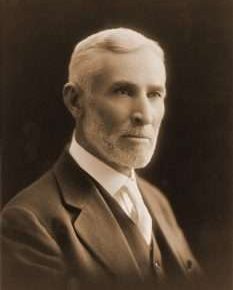
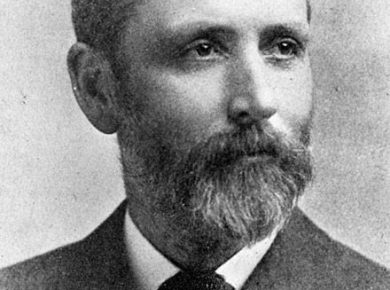
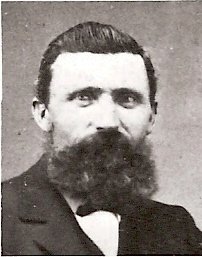
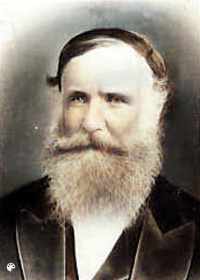
Appleton Milo Harmon (1820-1877)

I chose to research Appleton Milo Harmon because I was interested in the fact that as he was a pioneer crossing the plains he helped build an early version of the odometer. The “roadometer” was built in 1847 during the trek of Brigham Young’s vanguard company. It made it possible for the pioneers to count daily mileage by counting the number of wagon wheel 

Appleton Milo Harmon was born May 29, 1820 in Conneaut Pennsylvania. He was devoted to his religion and a leading pioneer in the immigration to Salt Lake City. He was a builder who constructed sawmills, a cotton gin, furniture, wagons and even helped build pony express roads. He was also a farmer and blacksmith. He was a successful missionary and led 200 people from England to Salt Lake City.

Appleton kept detailed journals of his trek west from 1850-1853. His journals were published in a book called Appleton Milo Harmon goes West. It was interesting and sad to read about his trek the cold hard winters, surviving sicknesses and burying his sister Sophronia on the Trek to Salt Lake City. I was even more surprised to read about fear of attack from the Indians called the Omhawas. In his journal he told a lot of wild stories, including one story of when the Omhawas attacked and killed many people and cut off their noses in revenge. It was cool to learn from his journals that my ancestor survived attacks from Native Americans as well as the Cholera epidemic.

In 1862 he was asked to settle in Southern Utah. He settled in Toquerville where he built a lumber mill farmed and made furniture. In 1869 Brigham Young asked him to help build a factory for producing cotton In Washington Utah and it is still there today.

He did all of that along with having 12 children to take care of. It has been a great experience learning about my ancestor and reading about his experiences makes me realize how easy my life is. Tonight I won’t have to worry about crossing the plains, freezing, or being attacked by Indians.

Happy
Happy
0 %
Sad
Sad
0 %
Excited
Excited
0 %
Sleepy
Sleepy
0 %
Angry
Angry
0 %
Surprise
Surprise
100 %
You May Also Like

BRINKERHOFF, Jesse: A Father’s Journey of Love

The flu epidemic of 1918 sometimes known as the Spanish Flu, reeked havoc across the world killing an estimated 100 million people, more than 500,000 in the US, and killed mostly strong healthy adults. Fear spread the country, along with the flu. Hospitals were full, health professionals died, Schools, churches, public buildings,etc, were closed, and people feared being around others. Little girls made up jump rope rhimes, and here is an example, "I had a little bird, it's name was Enza, I opened the window and in flu Enza.
View Post

WASDEN, James Brooks

Early day settler and pioneer of Northern Wyoming; Built the first house in Penrose, WY; Bridge builder in Yellowstone National Park; Met U.S. President Teddy Roosevelt; Lacked formal education however, excelled as a scriptorian and a prolific reader.
View Post

GASKELL, Elizabeth: A Forgotten Pioneer

Mature, single women who were early converts and emigrants to Utah have received short shrift in Latter-day Saint History.Although the two ill-fated handcart companies of 1856 suffered most of the deaths, several of the wagon companies that were bringing up the rear, including the one in which Elizabeth traveled, were also caught in the early winter storms that swept the barren highlands of Wyoming in October and November.
View Post

WOOD, George Lymer: An Incident in the Life

"The usual method of disposing of the dead was to weight the bodies and dump them overboard. When others and I asked the privilege of removing our dead and burying them on land, the Captain was hateful and mean about it. All of my dear ones except Samuel's wife I had to perform this last earthly service for. Others of the party had sustained like losses, and were as anxious as I to bury them as decently as possible. The Captain at last agreed to wait and we hired a Negro to help dig a trench big enough to put them in all together. We removed the dead from the boat and began our heart¬breaking task, but had it only partly done when the boat whistle blew and the boat began to get underway. All ran hastily back except the Negro, one woman and myself. She and I stood at the grave site of our dead and watched them go. What bitterness of spirit I experienced only God knows. Was this what I had come to America, the home of the brave, for? Here I was with two strangers standing beside the open grave of a group of strangers. Our common interests were all lying before us or fast receding from sight, subject to the whim of a heartless thing in human form. "Surges of emotion swept over me, sorrow, anger, love, fear, and despair, but my nearest duty was to protect these rapidly decomposing dear forms of mine from the ravages of wild beasts, heat, and other elements. Perhaps I had been blessed and spared to perform this last service. If! were dead with them our bodies would rot together. So I urged on my companions the need for work. I felt responsible for seeing this thing through.
View Post

CURTIS, Celestia

The people were screaming for they thought there was no help for them. Celestia’s father (Enos Curtis) raised his hand and commanded the wind to cease and for the boat to stand still in the name of the Lord. The wind did cease and the boat stood still until the men on the bank could get ropes to them to pull them to safety.
View Post