0
 1

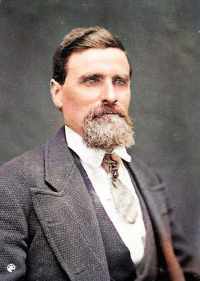
Melvin P Anderson was born March 7, 1932 and raised in Lehi, Utah. He has spent his whole life-time as a citizen of this community. His father, Evans L. Anderson was a true farmer, acquiring good land to raise crops and a herd of pure-bred Holstein cows. Melvin’s Great Grandfather, from church history, survived the Haun’s Mill Massacre and became Bishop David Evans of the Eleventh Ward in Nauvoo. He eventually moved his family to Lehi, Utah in 1851, where he served as the first Bishop for 28 years.
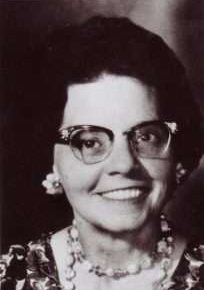
Melvin’s mother, Liliane Pernoux, came to America from Switzerland as a 3-year old, with her mother and grandmother. Because her mother had been widowed, she followed the suggestion of the missionaries, and her brother, to join the Saints in Utah. The Gospel of Jesus Christ was very important in her life.
With these parents and grandparents having the pioneer zeal to follow the teachings received from the Church of Jesus Christ, Melvin learned many practical, useful methods, teachings and examples as a young child and as a mature young man, he was fully prepared to follow and retain that pioneer spirit.
He learned about raising crops and was comfortable with cows, but as he moved into his “career”, he decided to raise cattle for good lean meat. Some friends had branched out to Beefmaster cattle and urged him to join them. This was a pioneer venture as he was surrounded by men with long-time generations of Herfords, Angus, Charolaise, and Holstein cows and bulls. There was considerable questioning and comments from his neighbors about these “different” cows. But Mel joined the Beefmaster Association, even became President for a time, and found satisfaction in his pioneering efforts with the Beefmasters.
When Mel’s Supply opened on Main Street, Melvin’s idea for this business was unique and he became a business pioneer. He created a showroom stocked with paint and building supplies, accepting orders for handmade household items he could build in his adjoining shop. And he stocked saddles, bridles, bits and tack for the horseman. It developed that if someone had a question or problem about building something or what a horse needed, Mel had an answer. He easily made many friends and enjoyed his association with the other businessmen. However, he found that being on Main Street, though convenient, was too confining, and so moved his business to a new building which he had constructed. His clientele expanded to building custom cabinets in kitchens and bathrooms, even a house or two, plus buildings on Main Street, a drug store and a bakery.
There was a crucial time when a call came for military service; he had joined the National Guard unit in Lehi. But when this call came, he reported to the Salt Lake Recruitment Center and spent the shortest time spent in the Army ever recorded—sworn in and released the same day. The Honorable Discharge Certificate states:
“This is to certify that Melvin “P” Anderson, Corporal in the 1457th Engineer Battalion Army was honorably discharged from the National Guard of the State of Utah and as a Reserve of the Army of the United States, 4 February 1954. This certificate is awarded as a testimonial of honest and faithful service.”
There is a lengthy explanation that goes with this event…(short version). Melvin had rheumatic fever at 11-12 years which affected his heart.
Now Melvin was always interested in the community where he lived. He felt good about his home, his neighborhood, his family and friends. When asked about Lehi, he always had a positive answer and said it was a great town. At about the time he had his business on Main Street, he served on the Board of Adjustments in regard to city growth. After serving on this board, he was released and received a service award stating: “…for unselfish service having contributed toward the growth and development of Lehi…”
He also joined the Chamber of Commerce, actively working with committees, even serving as president. He was involved with the annual Christmas Gift-O-Rama wherein shoppers in Lehi were given gift certificates with their purchases. These certificates were placed in a revolving barrel which Mel constructed and on the Saturday before Christmas, a drawing was held; those gift certificates that were drawn gave the named shopper a prize. He was always available for the projects initiated by the Chamber.
Melvin’s name came up when the organizers of UVIDA [Utah Valley Industrial Development Association] asked for a Lehi representative. From the experience of working with these leaders, he learned how, when, and where developmental opportunities were possible throughout the county (and sometimes state). His time spent with this progressive group was valuable for Lehi, as well as himself. And it was another chance to be useful for his community.
The city of Lehi had an original Band and Band Wagon. Band members rode throughout the town serenading the citizens on holidays. It was a tradition. The original Band Wagon was built in 1887. Everyone in Lehi looked forward to hearing the Lehi Silver Band and in seeing them in the Band Wagon. It was finally retired in 1976 after appearing in the Days of ’47 Parade in Salt Lake City. There were some who wanted to revive the tradition. Mrs. Kaye Collins, band instructor at the high school brought some band members together and Lehi had a Silver Band again. But they needed a wagon. Mel decided that he could build a new wagon and set about designing and then started to build. Melvin had played in the band for about 12 years, so this was close to him. After 8 to 16 hour days and six months, with considerable volunteer help, the wagon was completed with Upholstered seats and special suspension. Mrs. Collins said, “It rides like a Cadillac!” This was in 1997. They were invited to meet the incoming Wagon Train and Pioneers at the “This is the Place State Park” on July 22, 1997, in celebration of the original pioneer trek.
The Lehi Band Wagon is seen each year in the Lehi Roundup parades and also the Provo Freedom Festival Parade, and other city celebrations. All those involved said they had felt that pioneer spirit throughout this experience.
For many Christmas parades in December, Mel and Shotgun (now Sonny) pulled Mr. and Mrs. Santa Claus in the parade. The children were delighted to see their favorite couple in a horse-drawn buggy because there wasn’t any snow.
Another service Mel provided for the city was when new buildings were being built, and they held dedicatory services, a traditional ribbon was cut. Mayor Greenwood asked Mel if he could provide a pair of scissors for the occasion. Mel went into his shop and, in time for the dedications, the Mayor had his own pair of scissors. They were made of a pair of 30 inch hardwood sheers and they actually cut the ribbon.
When the new library and other city buildings were to be built, an old Church had to be dismantled. Before that building came down, an conscientious citizen the night before saved two stained glass panels, plus two doorway arches of similar glass. He wasn’t sure where they would go, but when the library was nearly completed, it was decided that the beautiful glass panels would make a perfect addition to the new building. Melvin was contacted and succeeded in mounting the panels where they could be seen and enjoyed. The glass arch was placed just inside the main doors where patrons entered the library (a bit of the old blended will with a bit of the new).
In 2003, when Lehi celebrated its 150 Incorporation Anniversary, Mel contributed a glass and wood display case where the items of a time capsule could be stored. He made a matching stand and the birthday committee presented historical items of the city and placed them within the case in a special ceremony. The theme of this celebration was “Keeping Our Pioneer Spirit Alive.” The original use of Mel’s glass case was to display the tiara the Miss Lehi Roundup queen wore during her reign.
In 1998, Melvin was presented with a plaque: “Outstanding Citizen Award… In recognition of your many acts of service to Lehi City.” It gives the name of Mayor Greenwood and members of the city council.
Even before these later improvements to the city, back in 1942, a group of businessmen organized the Lehi Civic Improvement Association to continue the pioneer celebrations that were held since Lehi was settled. Melvin was 17 years of age when he joined the advertising committee. Each year, he continued in volunteer service and was asked to join the Board of Directors in 1962. Chairman of the Queen Contest, Advertising Chairman, have been his assignments since then. Plus assisting with continued development of the rodeo grounds. He was named a “Silent Hero” in 1977.
Each year, Melvin pulls the Grand Marshal in his horse-drawn carriage or buckboard which he now builds. The Grand Marshal rides in the parades and is introduced in the arena each night of the rodeo. He also carries Miss Lehi and her attendants for their introduction to Rodeo fans.
Besides giving the Grand Marshal and Miss Lehi a special ride, there have been many, many people who have had the pleasure of riding in a horse-drawn buggy, or carriage. He has escorted the brides and grooms, anniversary and birthday guests have had special rides; two senior ladies who have “…always wanted to ride in a carriage” as well as a Make-a-Wish little girl got her wish to ride with Mel & Sonny; grandchildren and visitors from other parts of the country were pleased to ride. A brother & sister have enjoyed rides and at Christmas, they bring Sonny carrots. Sharing these opportunities is a very satisfying experience for Mel.
In 2005, because of his desire to keep the Western Heritage visibly displayed, Melvin made arrangements to have a bronze statue of a bucking bronc and rider placed in the center of a roundabout on Main Street and fifth west in Lehi. He had made friends with an artist, Tony Chytka, cowboy artist and sculptor who shows his work at the Western Trade show in Las Vegas, Nevada during the National Rodeo Finals. Tony sculpted the statue and delivered it to Lehi and spoke at the dedication ceremony when the cowboy was unveiled, Friday, June 16, 2006. Now everyone who passes through that roundabout is reminded that this is a town with western traditions.
Even before this event, in 2001, Melvin and his sister Marilyn Nielsen spear-headed a reunion for the posterity of Bishop David Evans. The reunion included the unveiling of a bronze statue of their pioneer ancestor and a full program of related activities. Melvin was in contact with artist Jonathan Bronson [having prepared bases for the artist’s sculptures] and engaged him to sculpt Grandpa Evans. He negotiated with Lehi Metal Letters Foundry to cast the completed sculpture.
Then Mel and a friend scoured the canyon above Alpine, Utah, for a granite rock [upon which]the ancestor’s statue would be mounted. They also chose three matching rocks upon which explanatory plaques would be placed. A special setting was prepared in the center of a giant wagon wheel, case in cement, with each spoke representing Bishop Evans’ six wives, in the Lehi Legacy park. He stands in a place where many people pass by him each and every day…fitting tribute to a faithful pioneer.
Melvin’s service in his ward and stake has been a special privilege and responsibility. He missed a foreign mission call (Korean war) but on March 21, 1962, he was called as a stake missionary. He was ordained a Seventy and continued as a missionary until October 5, 1985, when President Benson dismissed the Seventies in the stakes. During this time, he had many spiritual experiences and it gave him an opportunity to share his testimony of the gospel throughout Lehi and to introduce men and women and families to Jesus Christ. There was a deep commitment from him and his companion.
He has faithfully fulfilled several callings as a bishop’s counselor, priesthood leader, teacher, superintendent of Sunday School, and YMMIA President. He has recently enjoyed serving as Boy Scout Troop Committee Chairman. In this calling, he related to each boy and extended his ability to become their friend, showing personal attention and giving encouragement.
In 1966, a call came from the Timpanogos Temple open house and dedication committee to serve as Physical Facilities On-site and Logistic Specialists Director. Teams were organized for the hours 9 A.M. to 10 P.M. to take care of everything of a physical nature during the open house and dedication. “Everything” meant parking lots, porta-potties, escorting primary children from across the street at the Developmental Center to their place in front of the temple, every room in the temple from the Celestial Room to the baptismal font, lawns and walkways etc. During these days, Melvin probably walked 100 miles and wore out the soles of his boots. His natural talents in fixing things, making adjustments, and solving problems were necessary and helpful. He became Harry Peacock’s right-hand man. Harry was the tom man in keeping everything up and running. What an experience! The stories, events and experiences fill a large 8 ½ X 12 four inch loose-leaf. Miracles and happenings that built testimonies. He never worked harder, but never received so much satisfaction from any previous calling. Wonderful friendships were gained which are still enjoyed, and the spirit of the temple became very real and definite!
Since joining the Sons of Utah Pioneers in the Lehi Chapter, he has enjoyed the meetings and association with men of pioneers, and who are also pioneers in their own lives. Melvin was presented his life membership certificate September 4, 2007 and looks forward to the completion of a memorial marker at the Lehi Sugar Factory on Saturday, 26 April, 2008, which the Lehi Chapter has worked on this year.
Melvin’s jovial spirit and friendliness has gathered many friends. He loves to visit with others and the story is told about his ability to carry on a conversation with anyone, any time, any place. If he dials a wrong number on the telephone, he hangs up 30 minutes later.
Respectfully submitted, April 10, 2008 by Melvin’s wife, Dona H. Anderson.


 Brother Joseph