DIBBLE, Philo

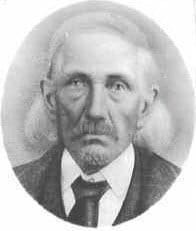
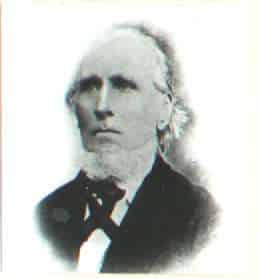
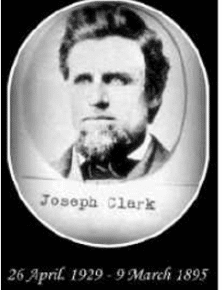
There he was shot and wounded by the anti-Mormon mob.  While he was bleeding to death, in fact almost gone, the prophet was sent for.  He and the prophet were very close friends.  The prophet laid his hands upon his head and blessed him to live and said he would go to the Rocky Mountains and be a useful instrument in carrying on the work of the Lord there, and would live to be of old age. 
0 1
Read Time:1 Minute, 6 Second

Philo Dibble lived in the state of Illinois.  There he was shot and wounded by the anti-Mormon mob.  While he was bleeding to death, in fact almost gone, the prophet was sent for.  He and the prophet were very close friends.  The prophet laid his hands upon his head and blessed him to live and said he would go to the Rocky Mountains and be a useful instrument in carrying on the work of the Lord there, and would live to be of old age.  He also promised him that not a hair of his head should ever change its color.

LeGrand saw and heard him when he was called to the stand in Springville, Utah, to bear his testimony, and he told of the blessing and promise of the prophet Joseph to him.  He had a long beard which hung clear to his waist and it was as white as the driven snow, but his hair was as black as it was the day the prophet laid hands on his head.

Brother Dibble traveled through the state with a moving picture show showing the persecutions of the saints in Illinois, Ohio, and Missouri.  It also included the Hawn’s Mill Massacre, the martyrdom of the prophet, and such pictures pertaining to the early history and trials of the church.

Happy
Happy
0 %
Sad
Sad
0 %
Excited
Excited
100 %
Sleepy
Sleepy
0 %
Angry
Angry
0 %
Surprise
Surprise
0 %
You May Also Like

ALLEN Jr., Daniel: A Life of Consecration

Having completed their assignment, Daniel and his committee returned to Nauvoo, only to find buildings burning, mobs raging, and the saints gone. Daniel hurried to his home to find that his family was still alive, but his wife Mary Ann had just had a new baby and was very ill. He pled with the mob to let him stay a few days so his wife could recover, but they said they would kill them all if they weren’t gone by the next day. They hurriedly loaded what they could in the wagon and made a bed for Mary Ann and the baby. The Allen wagon was one of the last three to leave Nauvoo. They traveled together for a short distance, but couldn’t keep up because of Mary Ann’s grave condition. Being left alone with only one other wagon, they trudged through the mud and snow as best they could until they reached the head of Soap Creek (it looks like this might be less than 100 miles from Nauvoo). Mary Ann had struggled so valiantly, but could endure no more, so she whispered her last words to her loving husband…”We’ll meet again dear love in a better world and I shall wait your coming”. She died on the trail in May, 1846, along Soap Creek, Davis County, Iowa with no one but her family and the angels in heaven to mourn her passing.
View Post

BARNEY, Lewis

He discovered that the Mormons were a religious people, however, at that time he cared nothing for religion. “The Methodists and the Presbyterians had been trying to convert me to their faith. I came to the conclusion that religion of every kind was a hoax, and that none was right, and that all preachers of religion were hypocrites, and were preaching for money and popularity.”
View Post

Life of James Kippen

Mr. Kippen was a firm believer in the teachings of his church regarding work for the dead, doing work along this line in the temple for members of his family who had died out of the faith of the Mormon Church, believing that by this means he would be able to save their souls. He passed all through the scenes of hardships and difficulties which the settlement of Utah made a matter of history, and during the Johnston Army troubles, he served as a guard in the Green River country and in Echo Canyon.
View Post