BRINGHURST, William Augustus

0 1
Read Time:2 Minute, 2 Second

Submitted by David Smith

  • Born: 26 January 1839, Lionville, Chester, Pennsylvania, United States
  • Died: 8 Mar 1912, Toquerville, Washington, Utah, United States

Originally published as “Eventful Life Closed,” Washington County News, 21 March 1912.

William A Bringhurst (1839-1919)

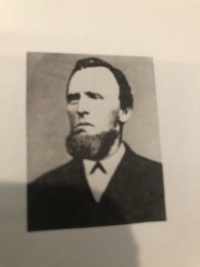
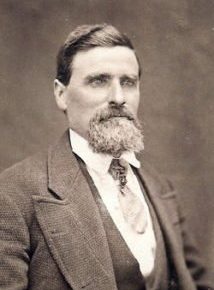
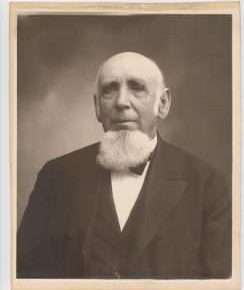
Bishop William A Bringhurst departed this life on Friday, March 8 1912 having presided over the Toquerville ward for more than thirty-eight years. The deceased was born in Lionville Chester County PA on Jan 26, 1839, his parents being Samuel and Eleanor Beitler Bringhurst.

In the year 1845, the family was removed to the city of Nauvoo Illinois having accepted the faith of the Latter-day Saints. In 1847 the family consisting of father mother and three children crossed the plains with an ox team arriving in the Salt Lake Valley in September of that year having endured the hardships and privations consequent upon such a journey. At the age of 16 years, he entered his father’s shop and learned the wheelwright trade.

In 1862 he entered the service of the United States as a volunteer upon a call made by President Lincoln to Governor Young for volunteers to suppress Indian trouble and guard the mails. He served under the late D D McArthur and in the famous Lot Smith company. In 1862 the subject of this sketch was married to Selinda D Palmer. In 1866 they were called to the Dixie mission settling at Toquerville Utah where he engaged in the mercantile business which he has followed since.

On the 15th day of Feb 1874, he was set apart as bishop of the ward and served in this capacity till his death. In 1867 he was married to Susanna Steele and in 1884 to Mary J Stapley who survive him. The deceased is the father of twenty-five children, twenty of which are living and seventy-three grandchildren and great grandchildren.

While his chances in early life for an education were limited and a great part of his life has been upon the frontier yet he was of a studious nature and progressive mind and has held many important state positions and has ever discharged his duties with fidelity and honor. Bishop Bringhurst served a term in the state penitentiary for conscience’s sake and was a pensioner of the government for services rendered. He goes to obtain the reward of faithful labor and died as he had lived in full faith of a glorious resurrection.

Happy
Happy
0 %
Sad
Sad
0 %
Excited
Excited
0 %
Sleepy
Sleepy
0 %
Angry
Angry
0 %
Surprise
Surprise
100 %
You May Also Like

WOOLSEY, Thomas: Journal Entries

[On arriving at the South Fork of the Platte River, they decided to follow along the bank, and passed an old deserted Indian village. An east wind blasted their faces, and the temperature plummeted. They were forced to take shelter under the bank of the river, where they slept on the ice. The weather was so cold that six inches of the tail of one of their mules was frozen.]
View Post

WOOLSEY, Jacob C. & son Joseph H. : 1848 Pioneers

Jacob C. Woolsey is the "brother-in-law who dug Abigail Lee's grave" at the "9th or Last Crossing of the Sweetwater" on 2 Sep 1848. Abigail Schaeffer is the widow of the above Joseph Woolsey and eight of her twelve children joined the Church and came to Utah! She was married to John D. Lee "for her protection and for convenience of traveling."
View Post

HURST, Philip

This biography originally appeared on pioneerstories.org Philip Hurst wrote the following to the “Salt Lake Herald” concerning Indian affairs in Sanpete County.  It was published on 1  January 1873.  Indian…
View Post

PICKETT, John – A Fully Converted Pioneer

In 1861 John and his family were called to move to Gunnison, Utah. Their first home was west of where Gunnison now stands. It was a dug-out near the Sanpitch River. It was located a little distance south of the “Rocky Point”. They soon found that the dug-out was not a good place to live. The first winter was a hard one with a lot of snow. The next spring when the snow melted the ground turned to deep mud. Some of the dug-outs filled with water and their chimneys collapsed. The whole place became a “Hog Wallow” and that is how that part of the valley got its name.
View Post

WRIGHT: John Pannell

In conversation with Bishop Maughan they were advised to try to find a suitable location on the Logan River, and accordingly set out again the 5th of June. They next formed a camp near the site of the old Brigham Young College and here they decided to remain. A survey of the land was immediately begun and the brethren cast lots for their locations. This was the beginning of our beautiful city of Logan, June 1859. Although John Pannell Wright was a member of the second group to locate on the site of Logan in June 1859, he is generally given credit by old historians as having been the father of our city. Apparently it was he who did the first surveying here and who designated the little settlement by the name of Logan. Apparently after Brother Wright and his son had surveyed a few blocks of land, which they did by only measuring with a tape or chain, there was a drawing or lottery for the purpose of acquiring home sites. ) They also helped build a bowery under which they held their meetings. They harvested their grain on Summit Creek (Smithfield). They often carried their guns in one hand and their shovels in the other. They succeeded in yielding good crops, as high as forty bushels of wheat to the acre. Mr. Wright left his tracks in the snow while cutting the last of the grain.
View Post