WALKER, Lovina Smith: Daughter of Hyrum Smith

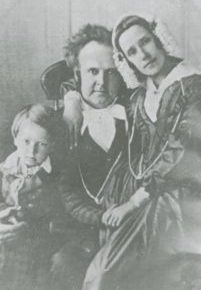
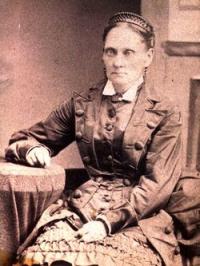
Lovina Smith was born on the 18th of September 1827 in Manchester, New York, just 3 days before her Uncle Joseph got the plates for the Book of Mormon. She is the oldest child of Hyrum and Jerusha Barden Smith.
0 1
Read Time:4 Minute, 2 Second
Lovina Smith (1827-1876)

Lovina Smith was born on the 18th of September 1827 in Manchester, New York, just 3 days before her Uncle Joseph got the plates for the Book of Mormon.  She is the oldest child of Hyrum and Jerusha Barden Smith.  She was not quite 4 when the family moved to Kirtland, Ohio.  Here she watched the growth of the Church and particularly the building of the Kirtland Temple.

She was barely 10 in October 1837 when her mother died.  On the advice of his brother, Joseph, Hyrum married Mary Fielding.  Lovina had mixed feelings about her father marrying so soon after her mother’s death, but she grew to love and respect her new mother.

It was in Nauvoo where Lovina’s life took some drastic changes.  To begin with, she met a young man, named Lorin Walker, and in the spring of 1844 she accepted his proposal of marriage and the two made plans for a fall wedding.  Then came the events of June 1844!  On Saturday, June 22nd, Joseph and Hyrum crossed the Mississippi in an unsuccessful effort to forestall mob actions.  This caused Lovina to make some changes to her plans for marriage; she realized that if she wanted her father to be there for her wedding, it would have to be soon.

On Sunday, June 23, Joseph and Hyrum returned from across the Mississippi; as they approached Hyrum’s home, Lovina came out to meet them.

Joseph, in his loving manner, chided her; “Lovina, when are you going to get married?”

To which she replied, “Uncle Joseph, we were just waiting for you.”

“Go get your beau,” Joseph responded.  Lovina and Lorin were married that evening with the family present.  The next morning Joseph and Hyrum left for Carthage.

Joseph had asked Lorin to take care of Emma if anything happened to him, so after the martyrdom Lorin and Lovina lived in the Mansion house with Emma and when the Saints left Nauvoo, they stayed with Emma to provide help for her.  They lived in the Mansion House until about 1849 when they moved to Macedonia where the Smith sisters, Catherine, Sophronia and Lucy were living.

It was there where Lorin’s brother William found them in the spring of 1856.  While Lorin and Lovina had wanted to travel west to be with the Saints, they had not yet been able to accumulate the needed supplies for that journey.  With William’s encouragement, they began their westward movement by traveling with him to Iowa City, the jumping off spot for the immigrant trains.  William had been asked to help with the outfitting of the trains as the groups came in and Lorin and Lovina stayed with him and helped in that work.  Lorin was good at working with wood and was soon busy helping to make a new device that the Church was experimenting with – the handcart.

Through the early summer they worked to get several trains on their way.  The travel season was about spent and the crews were getting ready to close down the camp when the Willie Company arrived having been delayed by transportation.  They also reported that another group, the Martin Company, was behind them and they all wanted to get to the valley that fall.  Everyone went to work and did their best to get these people ready for making the trip so late in the season.

By the time all the companies were on the trail and the camp was cleaned up ready for the next year’s efforts, it was too late for them to go across the plains, so they went as far as Florence, Nebraska and spent the winter there.

In the spring, Lorin’s brother, William, headed west, but Lorin’s skills were needed in Florence and he was prevailed upon to stay there for a while.

It was in the fall of 1859 when they had an unexpected visitor, Lovina’s brother, John, arrived in Florence having traveled from the Valley.  John’s plans were to go on east as far as Nauvoo, visit with Emma and other family members and then head west in the spring, hopefully with Lorin and Lovina with him.

So it was that in the spring of 1860, Lorin and Lovina with their six children crossed the plains in the John Smith Company, arriving in the Valley the 1st of September.

They settled in Farmington where they lived for the next several years.

In October 1876, Lovina was expecting her 13th child, but things were not going well.  On Sunday morning, October 8, the child was delivered, but Lovina gradually slipped away and died that afternoon.  She was buried in Farmington, but her remains were later moved to the Smith family plot in Salt Lake City.

Happy
Happy
0 %
Sad
Sad
0 %
Excited
Excited
0 %
Sleepy
Sleepy
0 %
Angry
Angry
0 %
Surprise
Surprise
100 %
You May Also Like

JENKINS, Jane: A Widow Supporting Her Family

In order to support herself and her family of small children, Jane made cookies, cakes, and bread which were put into small home made baskets and the children would sell them to regular customers and at the Southern Down Resort. In order to have a variety of cakes, the mother and children would go down to the seashore when the tide was out and gather larva from the rocks. This substance looked somewhat like lettuce. They washed the sand from it and put it into baskets and buckets. It was later baked as part of the cakes. These children thought nothing of walking three or four miles and selling this food for a schilling a pound. Sometimes Cecilia and Ann worked as nurse girls and as ladies maids.
View Post

EAGER, Anna: Pioneer Child & Mother

Anna is born in Virgin, Utah but a a very early age moved to Eagar Arizona, then Snowflake, Az, then Morelos, Mexico Where she went to school. Forced out of Mexico, she moved with her family to Woodruff, Arizona, then later to Hurricane, Utah. She married, raised her family, and died there.
View Post

HURST, Philip

This biography originally appeared on pioneerstories.org Philip Hurst wrote the following to the “Salt Lake Herald” concerning Indian affairs in Sanpete County.  It was published on 1  January 1873.  Indian…
View Post

JACKSON, Elizabeth Horrocks: Handcart Pioneer of 1856

“It will be readily perceived that under such adverse circumstances I had become despondent. I was six or seven thousand miles from my native land, in a wild, rocky, mountain country, in a destitute condition, the ground covered with snow, the waters covered with ice, and I with three fatherless children with scarcely nothing to protect them from the merciless storms. When I retired to bed that night, being the 27th of October, I had a stunning revelation. In my dream, my husband stood by me and said, 'Cheer up, Elizabeth, deliverance is at hand'. The dream was fulfilled.”
View Post

GLEASON, John Streator: The Martyrdom of the Prophet

“The scene through which I have been called to pass since I arrived in this place from the East has almost alienated me from my country. Almost one continual round of mobocracy by night and by day. When I contemplate the scene it almost makes me shudder, and my blood run cold in my veins. I have been an eye witness to almost the whole scene from the beginning. My life has been exposed—threatened from time to time. . . when they were filled with wrath …. About a week before the assassination of Joseph and Hyrum Smith I was arrested—marched to jail by a band of the desperate and could not even lay there in peace—was aroused about 12 o’clock by a rush of men into the yard and a loud rattleing [sic] and hallooing at the door of the jail. One of our men went down and opened the door, when they rushed up stairs and caroused about a while, and left us.”
View Post

CUNNINGHAM, Elizabeth: True Grit

“My father was a miner by trade and being a man of weak constitution was badly adapted for such a laborious occupation. Consequently, this threw the management of affairs nearly entirely upon my mother, and to speak of her in [a] phrase, I cannot do it better than by saying she was a rustler in the greatest sense of the word.” Elizabeth was the foundation and matriarch of the family. She was the force that carried the Cunningham family from Scotland to Utah."
View Post

ADAMS, Arza Madsen

A muggy evening added to Arza’s discomfort with the chills and fever. Malaria had driven him to bed for several days, even though he had much work to do on his farm located just north of the village of Carthage, Illinois. It was dusk when William and John Barnes, two non-Mormon acquaintances, knocked on the cabin door with devastating news: Joseph Smith and his brother Hyrum had just been murdered in Carthage. One of two survivors, Willard Richards, wrote a short letter describing the disaster and asked the Barnes brothers to deliver the letter to Arza Adams, one of the few Mormons living near Carthage. Although seriously ill, a surge of adrenaline permitted Arza to drag himself out of bed, saddle his horse, ride to Benjamin Leyland’s cabin and ask him to join in a dash to Nauvoo.
View Post

CROSS, Benjamin

Benjamin Cross, was chosen to be the first bishop of Peteetneet Creek ….October 26th, 1854 there was an article in the Deseret News of Israel Calkins having raised produce on nearly an acre belonging to Bishop Cross: 150 bushel of beets, 150 bushel of potatoes, 3 bushel of onions, 130 good cabbage heads and an additional 300 heads damaged by the grasshoppers, 3 barrels of pickle cucumbers, and quite a quantity of melons, squash, and peppers. Benjamin was assisting Charles B. Hancock financially to get a grist mill built in Payson. On November 15th George A. Smith came to Payson from Provo to speak in a meeting and stayed the night with Bishop Cross.
View Post