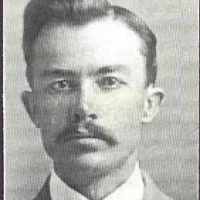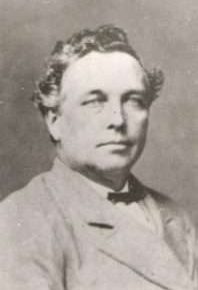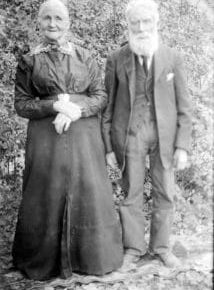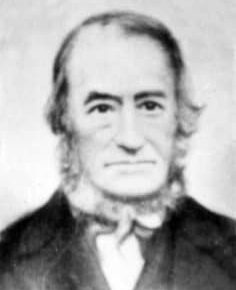
SMITH, Joseph Johnson

How happy they must have been to be in “Joseph’s City”. But the happiness didn’t last long. Within three months after arriving in Nauvoo, little Mercy became ill and died. Joseph’s wife, Mary, grieved with Joseph, but within two months, she and Joseph became excited again because she was going to have another baby. But again, the excitement was blunted by death as Mary died a week after her baby son, Joseph, was born and baby Joseph died twelve days later. Joseph now was left with just three year-old Caroline. His parents and two sisters and three brothers were still with him in Nauvoo, but how hard it must have been to have sacrificed so much in such a short time.
0 1
Read Time:4 Minute, 14 Second

Joseph Johnson Smith showed great courage while in Nauvoo, just as the Prophet Joseph Smith did. He and his wife, Mary, came from England in 1843 with two small children, Caroline 2 years and Mercy 8 months. It took them two months on the ship Montreal to sail from England to America. Often these immigrants were in very cramped spaces in the hold of the ship. Storms made the boat rock and often made the passengers very sick. Besides Joseph’s little family, Joseph’s parents and six siblings made the journey with them; twelve in all. After they arrived in New York in July 1843, they had to travel over 1,000 miles to Nauvoo, Illinois.

They traveled by boat down the rivers and on horse-driven carriage when the river ended. How happy they must have been to be in “Joseph’s City”. But the happiness didn’t last long. Within three months after arriving in Nauvoo, little Mercy became ill and died. Joseph’s wife, Mary, grieved with Joseph, but within two months, she and Joseph became excited again because she was going to have another baby. But again, the excitement was blunted by death as Mary died a week after her baby son, Joseph, was born and baby Joseph died twelve days later. Joseph now was left with just three year-old Caroline. His parents and two sisters and three brothers were still with him in Nauvoo, but how hard it must have been to have sacrificed so much in such a short time.

Joseph’s mother, Sophia, helped take care of Caroline, but a year later, Sophia also died leaving 6 motherless children for Joseph and his father to care for. When Brigham Young encouraged the Saints to leave Nauvoo and move West in 1846, Joseph heeded the call and took little five year Caroline with him. One of his younger sisters died in Nauvoo. His two older sisters also left Nauvoo, but his father and brothers stayed behind in Nauvoo and never joined the Pioneers in their move to Utah. Joseph was asked to stay in Iowa for three years and help build wagons for the Saints to travel west. His occupation as a blacksmith was very valuable as thousands of wagons wheels had to be constructed with iron rims for the journey west. In 1850, he married Ann Coleman, a woman from his old Nauvoo ward who was just 7 years older than 9-year old Caroline. Together the three of them crossed the plains and were invited by his former Nauvoo bishop, David Evans, to settle in Lehi, Utah.

Joseph build a log cabin on Dry Creek near the present Lehi Rodeo grounds. When Brigham Young advised the Lehi Saints to “fort up” to protect themselves from Indian attacks, Joseph moved his cabin and blacksmith to the fort area. His lot is now identified as Main Street and 4th North, just east of the railroad tracks. At first the cabins standing side by side became the fort protection, but then an eight foot wall began to be built around the entire area that turned out to be four blocks square. As Joseph’s family grew, he built onto his house adding a 2nd floor and an expanded kitchen.

Joseph and Ann had 14 children, 10 of whom lived to maturity. He married a second wife, Sarah Ann Liddiard, in 1865, shortly after she emigrated alone from England. Sarah had two children, one of whom lived to maturity. From the three wives Joseph had 19 children and 101 grandchildren. Today his descendants number over 4,000. In the 1880s, Joseph and Ann moved to northeast Lehi into an adobe home he called “the mansion”. He had homesteaded 160 acres in this area and besides fruit crops and grain, he raised sheep. He moved his blacksmith shop from downtown Lehi to his new home. Sarah, his third wife, stayed in the original home and she taught school. First a store and then a hotel were built where the blacksmith shop stood. Sarah and her daughter Florence ran the hotel for a few years before the property was sold. The Hotel and the original Smith home still stands in Lehi, as does the mansion house.

Joseph’s father, William, returned to England, remarried, and had two more sons. Joseph’s three brothers and one sister moved to British Columbia and were some of the early pioneers of this area. The remaining sister married in Salt Lake City, but died young in childbirth. One daughter grew to maturity from that marriage.

Joseph always relished his acquaintance with the prophet Joseph Smith in Nauvoo, and when Joseph died in 1901, his Deseret News obituary read “He Knew the Prophet Joseph”. He retained his testimony of the restoration even though his family did not join him in Utah. Courage and faith were his watchwords. One of our favorite Pioneer hymn is “Faith in Every Footstep”. Joseph Johnson Smith is a Pioneer who demonstrated that type of faith and courage when things got very hard.


Happy
Happy
0 %
Sad
Sad
0 %
Excited
Excited
0 %
Sleepy
Sleepy
0 %
Angry
Angry
0 %
Surprise
Surprise
100 %
You May Also Like

ANDERSON, Melvin “P”: A Modern Pioneer

Mrs. Kaye Collins, band instructor at the high school brought some band members together and Lehi had a Silver Band again. But they needed a wagon. Mel decided that he could build a new wagon and set about designing and then started to build. Melvin had played in the band for about 12 years, so this was close to him. After 8 to 16 hour days and six months, with considerable volunteer help, the wagon was completed with Upholstered seats and special suspension. Mrs. Collins said, “It rides like a Cadillac!” This was in 1997. They were invited to meet the incoming Wagon Train and Pioneers at the “This is the Place State Park” on July 22, 1997, in celebration of the original pioneer trek.
View Post

ALLEY, George H.

It is not difficult, then, to see this young man fitting perfectly into the scene, when, on April 3, 1860, the riders of the Pony Express began their mad, daring dash between St. Joseph, Missouri and Sacramento, California. He was ideally equipped for this adventure. His career as a "Pony Rider" began when he signed in at the Salt Lake City Station located on the east side of Main Street between First and Second South Streets.
View Post

JAMESON, Charles: Haun’s Mill Survivor

Charles Jameson was one of the Haun’s Mill victims that survived. “Oh, what a time that was! [Charles Jameson] was shot several [4] times. He crawled into the brush. The men followed him. One said, ‘Shoot him.’ Another said, ‘No, let him suffer. He’s dying anyway.’ But he did not die; he lived to go to Utah and lived to a good old age (6).” They were able to extract one bullet, but Charles carried the other three slugs with him for the rest of his life.
View Post

CARLISLE, Richard & Jane Field

Members of the family were baptized at various times in 1849 and 1850. Richard became the Presiding Elder of their branch. In 1851, on the “Good Ship Ellen,” they emigrated to America, except for their oldest son, Thomas, who came a year later. On their way up the Mississippi River, Jane died in St. Louis on 24 June 1851. She had done the washing for a woman afflicted with the dreaded cholera, so common among emigrants on that river. Jane caught the disease and died almost immediately. It must have been very difficult for Richard to manage his large family during the years following Jane’s death. First he had to get the whole family across the Plains, then provide a home for them in a new land. The bereft father and his motherless brood stayed to work in St. Louis during the remainder of the first year. The youngest son, Richard, hired out to a Mormon family and came west with them, the first of his own family to arrive in the Valley. The oldest son, Thomas, had by then joined the rest of the family in St. Louis.
View Post

WOOLSEY, Thomas: Mormon Battalion Volunteer

On 15 Jun 1856 they left their all to overtake the first covered wagon train of Mormons, to cross the plains that year. The oldest daughter was sick with chills and fever when the journey began, and had to be carried from the house to the wagon. Her father's brother who did not belong to the LDS church and was opposed to their leaving their home, predicted she would not live to go far, but Elder Hickerson promised her she would not have another chill, and she never did.
View Post

CHAPMAN Julia Ann

Other than for Julia's health, Isaac was well equipped to travel. In the heat of the late spring, Julia gained some weight and felt pretty well. Deciding that they could safely make the trip, Isaac loaded the wagon, making a special bed for his wife. At first she did very well, cheerful that at last they could go west and be with their relatives. But as the trip continued, the strain began to tell. Some mornings she was unable to get up. When they crossed Loup's Fork they again pulled out of the line, getting one of the Elders who lived at the Fork, Isaac and he administered to her. She seemed to relax and feel better, but during the night she lapsed into her last long sleep. After they buried her, Isaac was so grief stricken that he sat for days, staring in front of him, felled by his tragedy. One evening James Walsh came to his fire and said, "I have seen many tragedies along the trail, and I respect you for your grief, but life must go on. Now you owe your little ones an even greater responsibility than before. Now you must be both father and mother to them. Crying tears of anguish over your lost wife is right and proper, but you must never allow your grief to immobilize you. What would Julia want you to do? You have begun a great quest, which, unfortunately, she was too weak to finish. Now you must finish it for her." Out in the night Isaac walked for hours, asking why? Why? But with the coming of midnight, a peace enveloped him like a cloud. His beliefs taught him that although her body was dead, she, herself was still alive and would wait for him. He must not fail her. The next morning, 10 July 1852, he gathered a bunch of wild flowers and placed
View Post