0
 1
Born: Jan 22, 1804 in Bastard, Leeds, Ontario, Canada
Died: April 15, 1889 in American Fork, Utah
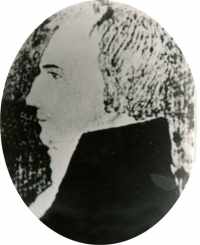
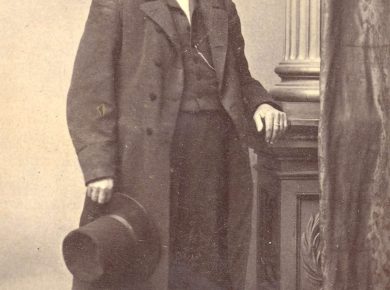
 Arza Matson Adams- Pioneer Flour Miller and Millwright Arza Matson Adams was born on January 22, 1804 in Bastard, Leeds County, Ontario, Canada. He was the oldest of thirteen children born to Captain Joshua and Elizabeth Chipman Adams.
Captain Adams served in the Canadian Militia during the Ward of 1812. Following the War, Captain Adams’ Family lived near the town of Stone Mills where the Captain learned the skill of being a flour miller. In 1817 Captain Adams moved his family to a new community of Perth and received a land grant for his service as an officer.
The Captain obtained a valuable mill site where he built a grist mill on the banks of the Tay River. A community grew up around the grist mill that was know as Adamsville. Arza, helped his father build the mill. He learned from his father to be a timberman and was known as an excellent axe man. He also learned the fine art of shaping mill stones and building flour mill equipment. Arza became a skilled carpenter and millwright.
At the age of 27, Arza was a well-established bachelor. He courted and married an 18 year-old maiden, Miss Sabina Clark, who had grown up in a nearby town. They began their family together in Adamsville. Nathan was born in 1832, Joshua in 1833 and George in 1835.
Elder John E. Page came to Canada as a missionary for the Church of Jesus Christ of Latter-day Saints. Elder Page taught Arza and Sabina Adams and they were baptized (according to Arza’s Journal at Christmas time 1836).
Sabina was 6 months pregnant with her fourth child, Sabina Ann, when a hole in the ice was cut for her to be baptized.
Gathering with other members of the Church of Jesus Christ of Latter-day Saints was important to Arza and Sabina. They and their four children left Canada in the summer of 1838 and traveled to Dewitt, Missouri. This move from the thriving village of Adamsville to join other Canadian Saints in Missouri was an adventure into the unknown.
Other members of Arza’s family to embrace the new religion and move to Missouri was his younger brother Barnabas Lathrop Adams and Stephen Chipman, the youngest sibling of Arza’s mother. A short time after arriving in Dewitt, Missouri, the Saints were forced to flee to Far West and then to escape extermination by going to Quincy, Illinois in March, 1839.
Arza was called to serve a mission in Canada. After planting crops at a small farm in Quincy and leaving his family in the care of Barnabas Adams, he left in July, 1839, to return to his Canadian home town to preach the gospel for eleven months. He baptized 25 people and returned to his family in June,1840.
Sadly Arza and Sabina lost their baby son Sidney Moses and 5 year old son George to dysentery. In March, 1841, the Adams family moved to Nauvoo.
Arza served a second mission for several months to Canada in 1843 baptizing 17 and organizing the St. Clare, Canada, branch. Arza rented a farm south of Nauvoo near Carthage, Illinois in March of 1844.
After the martyrdom of the Prophet Joseph Smith and his brother Hyrum, Arza was one of two men who carried letters from John Taylor and Willard Richards back to Nauvoo to inform the city about the deaths. Arza records in his journal:
“Many a rosy cheek was wet with tears both men and women in almost every house. The countenance of nearly all were fallen and all wept in deep anguish at the loss of two men of the greatest minds and best men that are on the footstool of God.”
Arza’s family returned to live in Nauvoo and was working to help build the Nauvoo Temple. In June, 1845, Arza became ill with the ague. He was given a blessing by Heber C. Kimball, one of the twelve apostles, that if he would go to work on the temple he would be healed. Arza records in his journal:
“I took my carpenter tools on my back and commenced work on the temple and although hard at first I gained strength and worked on the public works until in the fall.”
Arza and Sabina received their endowments in the Nauvoo Temple on December 31, 1845. On February 3, 1846, they were sealed together in the temple.
The Saints were forced to leave Nauvoo. Arza was appointed “Captain of Fifty” and was responsible for getting all the families in his group ready for the trek west. The Adams family left Nauvoo in the summer of 1846 and traveled 300 miles to the Council Bluffs area. They settled in Little Pigeon Creek, six miles north of Kanesville, Iowa and lived there until the spring of 1849.
During the years since living in Quincy, Sabina gave birth to Elizabeth Nancy in 1842, Theothan Penderman in 1845 and Joseph Smith Adams in 1846.
The Adams Family left Kanesville, Iowa on June 7, 1849 with the Samuel Gully/Orson Spencer Wagon Train Company consisting of 100 wagons. Arza and Sabina had 22 head of cattle and two wagons. The family consisted of Arza 45, Sabina 36 (she left 4 months pregnant with a new daughter who was born in October) and the six children, Nathan 17, Joshua 15, Sabina Ann 12, Elizabeth 7, Theothan 4, Joseph Smith 2.
Likely Nathan would have driven the second wagon’s ox team, Joshua would have tended the cattle, Sabina Ann was assigned to drive the milk cow and calf, Elizabeth would have helped her mother with meals and the younger children.
The wagon train company arrived in Salt Lake City on 25 September 1849. The Adams family established their first home on a small farm on Mill Creek in the Cottonwood area at the south end of Salt Lake Valley.
Arza’s uncle Stephen Chipman had arrived in Salt Lake City two years earlier and had settled in the Cottonwood area. Arza and Stephen were the same age. Each family had 6 children about the same ages. Arza found work at a new grist mill that had been built by John Neff. Arza’s experience with his father’s flour mill in Canada helped him obtain employment.
A month after their arrival Sabina gave birth to a daughter, Orpha Elzeta. In early summer 1850, Arza and his son Nathan together with Stephen and his son William Henry decided to travel to Fort Utah (Provo) in Utah Valley. On the way they stopped over night to camp on the American Fork Creek. The area was impressive.
They stopped again overnight on their return trip to Cottonwood and were more favorably impressed with the area. Upon returning to Salt Lake City, Stephen Chipman, Arza Adams and their friends John and Ira Eldredge went to Brigham Young and asked if it would be advisable to move to Utah Valley. Brigham told them to “take up what land they wanted”.
During the winter of 1850, Arza and Stephen were building log homes at what is now South Center Street in American Fork, Utah. The community was known as Lake City until 1860. Arza and Sabina’s family moved into their new home in the early spring of 1851. Arza also began building a small log cabin grist mill next to his home that was powered by a small stream of water.
Flour milling would be Arza’s primary family business for many years. In 1853, communities in north Utah valley were advised by Brigham Young to build forts for protection. Troubles were developing with the Native Americans. Lake City residents began to build a fort and citizens were asked to move their log homes inside the fort. Arza Adams moved his grist mill workings and enlarged the mill building on the north side of the fort.
The same stream of water was harnessed to turn a water wheel and mill stones. This Adams Flour Mill operated for the next 20 years. (The 48 inch granite mill stones mark the location of Arza Adams’ grave in the American Fork City Cemetery today.) Later in Arza’s life he built a third grist mill one mile north of American Fork. Arza
Adams participated in plural marriage. He married four other women. Two of his wives, Editha Anderson and Elizabeth Gaskall were know as “spiritual wives”. They did not live with Arza and bear his children. Two other wives, Marillah Olney and Catherine Cunningham, became sister wives to Sabina and each bore Arza’s children.
The children became a large close family and supported one another throughout their lives. Arza Matson Adams became the father of 28 children. Arza died on April 15, 1889 at 85 years old. Seventeen of Arza’ children grew to adulthood. A large posterity continues to revere Arza Adams as their pioneer ancestor. Arza’s youngest child, Daniel Erwin is my grandfather.
Submitted by Daniel K Adam


 Brother Joseph