MAUGHAM, Peter

1 1
Read Time:4 Minute, 39 Second

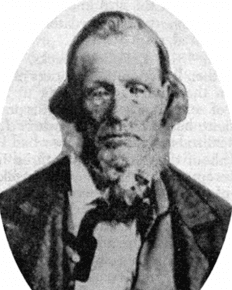
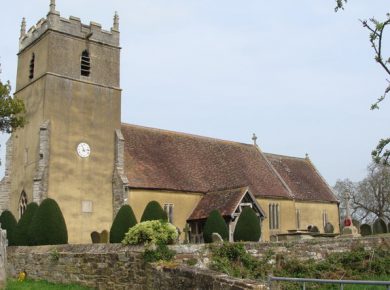
Because of his prominence, much has been written about Peter Maughan, the great pioneer colonizer of Cache Valley. This account will serve only as a vignette, summarizing his life. John was the progenitor of the Mormon Maughans, and was my own great great-grandfather on my mother’s side of the family. Born in the little village of Milton in Cumberland County, Northern England on 7 May 1811, Peter grew to manhood in humble circumstances. From the age of fifteen, he worked in the lead mines.

Peter was married at age twenty to Ruth Harrison, age nineteen, on 1 October 1831. Almost immediately they were the parents of several children. They lived faithfully together and were baptized into the LDS Church. Peter was soon recognized as one of the Lord’s favored disciples and served in important callings all his days.

Ruth’s time on earth was cut short by her death just after the birth of her sixth child, baby Ruth, on 26 March 1841. She went to her grave while making plans to emigrate to America with her husband and family. Brigham Young advised Peter to go forward with these plans, and the motherless family together launched out across the deep in company with Brigham Young, Heber C. Kimball and five other apostles returning from their famous mission to Britain. The little baby Ruth died from malnourishment and was buried at sea off the coast of Newfoundland.

In Nauvoo, Peter met and married a young widow, Mary Ann Weston Davis, who became a wonderful mother to his five surviving children. She bore eight more of her own, all of whom were given the middle name of Weston. Peter later married Elizabeth Preator, who bore three children. This brought the total number of Peter’s children to seventeen. Many of these had large families of their own, and the posterity of Peter Maughan has grown to very large numbers, most of whom have faithfully retained their blessings in the Lord’s Church.

Peter worked on the Nauvoo temple, where he and Mary Ann were endowed on 2 February 1846. Peter joined the Nauvoo Legion. He purchased a lot, built a home and stayed in Nauvoo until the spring of 1844, just before the martyrdom of JosephSmith. The Prophet sent him north to Rock Island to mine coal. A year later, the coal enterprise was closed and the family returned to Nauvoo to prepare to flee west with the Saints. But sickness in the family intervened and they were unable to get ready in time. Instead, they went north to Wisconsin to mine lead — a skill Peter was expert at. Peter said the Lord showed him where to mine, and during the following four years, until April 1850, the family provided for themselves and obtained the necessary outfit and supplies for their journey west.

In Utah, the family was first assigned to Tooele, where Peter became the county clerk and assessor, then Recorder for Tooele City, then county treasurer and finally a member of the Territorial Legislature. He also was called to preside over the Church in E. T. City, near Tooele. Poor soil, crickets, diseases in their crops and hostile Indians made this a difficult pioneering enterprise. A lesser man than Peter and a lesser woman than Mary Ann might have given up. But they overcame all difficulties and prepared themselves for their next assignment. This came early in 1856, when Brigham Young asked Peter to head a company of pioneers in settling Cache Valley.

In September, the settlers camped on a stream in the south end of the Cache Valley and decided to make this their home, and to call it “Maughan’s Fort.” The severe winter and the invasion of Johnston’s Army in 1857 caused a temporary evacuation. In 1859, the settlers had returned and the little city became Wellsville. Soon many families began flocking to the lovely valley. Logan, Providence, Mendon, Smithfield and Richmond were soon established. Peter Maughan was named Probate Judge for Cache County, which office at that time was the chief executive. Hewas also called by the Church as “Presiding Bishop,” a calling similar to that of later stake presidents. He and Apostle Ezra T. Benson, who had also moved to Logan, worked in close harmony with each other. Peter and his family were asked to move to Logan in 1860, where he could better work with bishops in the whole area, and with other Church and civic officers. By the time they moved into their new three-room log house, Mary Ann was ready to deliver her eighth and last child.

A lifetime of service cannot be told here. Peter Maughan became a giant among the leaders of the new Utah Territory, respected and relied upon by Brigham Young and other leaders, as well as by the people he served. He learned to deal with the Indians so successfully that peace prevailed throughout most his lifetime. When Peter died on 24 April 1871, the Logan Tabernacle was filled with friends and admirers, including many Indians. It is interesting to read the order of march for the procession to the cemetery: Brass and Martial Bands, Company of Cavalry, The Hearse, Family and Relatives of the deceased, Bishops and Priesthood, Citizens in Carriages and (at the last) a company of Shoshone Indians.

The sons and daughters of Peter Maughan and his three wives became the forebears of a noble posterity. Their names are held in honorable remembrance by all who knew of them, most of all by those who claim them as grandparents.

Happy
Happy
0 %
Sad
Sad
100 %
Excited
Excited
0 %
Sleepy
Sleepy
0 %
Angry
Angry
0 %
Surprise
Surprise
0 %
You May Also Like

CARLING, John Witt

Wagons for Fleeing SaintsJohn Carling and his son Isaac worked at making and mending wagons for the Saints who were being driven from Nauvoo. The mob violence became so intense that the Carling family decided to leave with the main body of saints. Brigham Young sent Heber C. Kimball to inform John that if he would stay until all of the Saints had been provided with good outfits, not a hair of their heads would be harmed. They remained as requested, though some wives complained that they would all be killed. “The morning they were to leave, they were counseled to get to the ferry boats before the mobs were astir, and upon arriving at the ferry, the captain hurried them onto the boat and admonished them to be quick because they could see the mobs coming. Some were on horses, and others were running, but all with guns in their hands, and they were cursing. As the saints left the shore, they could hear the leader of the mob ordering his men to shoot. But as the men came to the shore, they stood still. It is told by some that two shots were fired but they missed the people in the boat.”
View Post

CROSS, Benjamin

Benjamin Cross, was chosen to be the first bishop of Peteetneet Creek ….October 26th, 1854 there was an article in the Deseret News of Israel Calkins having raised produce on nearly an acre belonging to Bishop Cross: 150 bushel of beets, 150 bushel of potatoes, 3 bushel of onions, 130 good cabbage heads and an additional 300 heads damaged by the grasshoppers, 3 barrels of pickle cucumbers, and quite a quantity of melons, squash, and peppers. Benjamin was assisting Charles B. Hancock financially to get a grist mill built in Payson. On November 15th George A. Smith came to Payson from Provo to speak in a meeting and stayed the night with Bishop Cross.
View Post

WOOLSEY, Joseph Henry and Abigail Schaeffer

When her daughter Agatha Ann Woolsey, the first wife of John D. Lee, introduced her to the Gospel, she embraced it whole heartedly, remaining faithful from her baptism 17 Jun 1838, in Vandalia, Fayette County, Illinois, until her death on the cold dreary plains of Wyoming, just before “Rocky Ridge” on the way to the summit of the Rockies.
View Post

ARMSTRONG, Francis

From this humble beginning began the rise of one of Utah's greatest entrepreneurs of his day or any other day. He obtained his own saw mill, then a lumber company, then a construction company. As the years went by, he purchased a flour mill, several huge ranches, and developed sugar companies, banks, savings and loan operations, railroads, transfer companies, insurance companies, and eventually electric street cars (the second in the world) and the supporting electricity production company.
View Post

COX, Amos

Sister Brady Englestead has told me of how her sister who was about 14 years old had been sick for months, and got so she wouldn’t eat, and although they had the elders administer many times, still she seemed to get worse. One day she said “If you will have Amos Cox administer to me I think I will get well.” Father was only 17 years old at the time and had never administered to anyone in his life, but they sent for him out in the field where he was scything grain. He said he was dumb founded, but told them he would come. There in the field he asked Heavenly Father what to say and said he believed it was one of the most humbling experiences of his life. He went to the house, washed his hands, and sealed the anointing. He promised the girl that she would get well, then when he looked at her and saw how frail and pale she looked, he was scared and so weak that he sat down.
View Post

WOOLSEY, Thomas: Mormon Battalion Volunteer

On 15 Jun 1856 they left their all to overtake the first covered wagon train of Mormons, to cross the plains that year. The oldest daughter was sick with chills and fever when the journey began, and had to be carried from the house to the wagon. Her father's brother who did not belong to the LDS church and was opposed to their leaving their home, predicted she would not live to go far, but Elder Hickerson promised her she would not have another chill, and she never did.
View Post

RUCK, Elizabeth Collett

That is the date when Wilford Woodruff was at Leigh (about 9 miles from Redmarley) baptising Thomas and Ann Oakey (Elizabeth’s sister) among others (9 in all) when the dog was thrown in the pool as recorded by Wilford Woodruff himself.
View Post

KARTCHNER, William Decatur: Man of Steel, True to the Faith

The only time for any kind of play was at night, and on one occasion in the Spring of 1836 he stayed at play until after nine p.m. When he went to the house the doors were locked so he had to sleep in the hay in the stable. In the morning he went with the other hands to breakfast and to his surprise Mr. Miles, the old boss had prepared a large whip which he used on William’s back so unmercifully that it raised a solid scab half the length of his back. His cries were heard by all the neighbors, and then he was sent to work without breakfast. His oldest brother, Peter, came from the western country to visit him. Upon hearing his grievances, they laid a plan for William to run away and go with Peter. William had saved up five dollars and asked Peter if that was enough to bear his expenses. Peter told him that he could go without a cent.
View Post