NEFF, John II: The Money Belt

0 1
Read Time:4 Minute, 56 Second
This biography originally appeared on pioneerstories.org

Born: 19 September 1794, Strasburg, Lancaster, Pennsylvania, USA

Died: 9 May 1869, East Millcreek, Salt Lake, Utah Territory, USA

The Money Belt

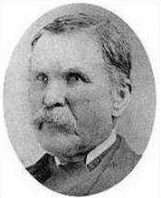
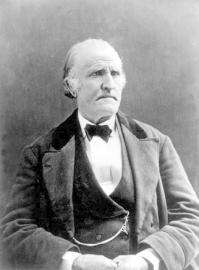
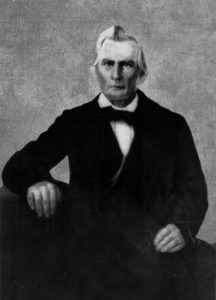
John deserves a place in every gallery and history where the makers of the State are commemorated. Before joining the Church he was a wealthy and influential manufacturer, being intimately acquainted with James Buchanan (afterwards President of the United States). Thaddeus Stevens and other political chieftains; and he remembered the visit of Gen. Lafayette when the chivalrous Frenchman made his triumphal tour of the Atlantic coast states at the beginning of the last century.

John was a pioneer who came to Utah in 1847. He joined the Church of Jesus Christ of Latter-day Saints in 1944, and went with his wife Mary Barr, and oldest daughter, Barbara, to Nauvoo to meet the prophet.

After meeting the prophet, they returned home and began selling their properties. They were quite wealthy, with a large farm and several businesses.

When he began travelling west, he missed the adversity of Kirtland, Missouri and Nauvoo, and as a result, when he travelled west, he had with him a lot of money. Most of the Saints coming west had lost their wealth as they were driven out of home after home in their progress west.

John had a leather money belt made with a number of pockets in it, and had his son wear it across the prairie. Each pocket was filled with $20 gold pieces, and worn around his waist. The legend has it that John had his wagon made with a false bottom in it, and placed his extra money in between the false bottom and the actual bottom of the wagon.

Actual money belt worn full of $20 gold pieces by one of John Neff’s sons as he crossed the plains in 1847. The John Neff family had not joined the church early enough to join them and be stripped of their money in Kirtland, Missouri or Nauvoo. They had successful farms, brewery and mills in Pennsylvania and sold some of that for a good price when they left in 1846. John and his four big boys each carried part of the money in these money belts to protect it. They helped the poor and sick who were still in Nauvoo when they arrived in August of 1846 and took them with them to Winter Quarters.

John and his sons helped the poor and sick who were still in Nauvoo, after they arrived in August 1846. He bought the flour mill Brigham Young had built to pay of the debts many of the Saints had, and fed thousands of them, then took them with them to Winter Quarters. Brigham Young would say of him, “Do you want to know how many of you survived in Winter Quarters? Well, I’ll tell you so you won’t forget. It was the money that John Neff brought from Pennsylvania which saved the lives of thousands of men and women, and children.”  He helped in outfitting the original band of Pioneers, his representative in that gallant band being Orrin Porter Rockwell.

He moved out of the Old Fort in Salt Lake City to the mouth of Mill Creek canyon in 1848, and built there his grist mill. It was the first grist mill south of Salt Lake City, and the founder of Mill Creek in this county. John built the 1st road into the canyon to obtain wood to build his home, and so the canyon was named after him. He was active in developing the agricultural resources of the Territory, and was a man of great benevolence. Orson Pratt said of him, “that during the famine year of 1856, when flour was worth $1.00 a pound, he refused to accept more than 6 cents per pound, the regular tithing office figure, and declined to sell at any price except to those who were in need. “

John and Mary purchased two children from Ute Slave Traders, and raised them to adulthood.  These children could be found feeding on the grasshoppers and crickets, and was a source of difficulty for the Neff’s.  These two wonderful children, at the time of their purchase, were on the verge of starvation, and were very thin, with protruding bellies.  They grew to be productive and contributing adults, and honored their benefactors.

A friend from Pennsylvania wrote about John, saying:

“He has nearly 3,000 acres of land…He has cattle and sheep by the thousands, that can at all times be seen grazing on the mountain benches; he is considered one of the wealthiest men in the Territory, has no desire to return to Lancaster, is exceedingly happy in his religion, has never had but one wife, and she is a perfect lady, one of the sweetest women of her age I have ever seen. Mr. Neff told me with more sincerity than ever I have heard that he had everything his heart could desire – happy man in his desert and mountain home.”

It certainly helps to have money to be as content as John was, and it helps to live in a beautiful area as he did, but even more than that, his giving is what brought him a particular kind of happiness. That is what made John and Mary happy, sweet and satisfied with life.  He was loved by all who knew him.  That love followed John at his death in 1869. His funeral procession was more than a mile long.


  • First Name: John
  • Last Name: Neff II
  • Spouse(s): Mary Barr
  • Mother: Barbara Herr
  • Father: John Neff
  • Birth Place: Strasburg, Lancaster, Pennsylvania
  • Pioneer Type: Early Pioneer
  • Birth: 19 Sep 1794
  • Arrived in Utah: 1847
  • Death: 09 May 1869
  • Virtues exhibited in this story: Charity, Commitment, Faith, Integrity, Leadership, Love, Obedience, Stewardship
  • Profession: Manufacturer, Farmer,
Happy
Happy
0 %
Sad
Sad
0 %
Excited
Excited
0 %
Sleepy
Sleepy
0 %
Angry
Angry
0 %
Surprise
Surprise
100 %
You May Also Like

WALKER, John

This article originally appeared in the Mar/Apr 1980 issue of Pioneer Magazine THE JOHN WALKER FAMILY—EARLY CHURCH STALWARTS by Rowland P. Corry The following is about John Walker, my great…
View Post

CURTIS, Celestia

The people were screaming for they thought there was no help for them. Celestia’s father (Enos Curtis) raised his hand and commanded the wind to cease and for the boat to stand still in the name of the Lord. The wind did cease and the boat stood still until the men on the bank could get ropes to them to pull them to safety.
View Post

ASHBY, Nathaniel

The Ashbys were seaman and ship wrights until after the War of 1812. Nathaniel however, was apprenticed to a shoemaker at an early age to learn the shoemaking trade. He became expert in the making of fine shoes and started his own business.
View Post

JACOBSEN, Christian Jensen: Frontier Craftsman

Another life altering experience occurred in 1854 when L.D.S. missionaries introduced the Jensens to a new religion. After a short investigation Christen and Kirsten were baptized on a cold day in December and became the first members of the church in their local area. Soon after, Christian was called to be a local missionary and also to preside over two branches of the church. In the fall of 1857 he was assigned to open a mission on LæsØ, an island located midway between Jutland and Sweden. As a missionary he received frosty receptions but soon encountered some inhabitants in need of his clock repairing skills. This led him to adjust his strategy and avoid the topic of religion until he had the family’s clock dismantled. Once the family knew him as a clock repairman, they were more prone to discuss religion with him. Using this strategy, and after visiting the island several times, Christian baptized a dozen or so members and organized the Byrum Branch there.
View Post

HURST, Philip: Letter on Indian affairs in Sanpete County to the Salt Lake Herald

If government wants to know if there has been any Indian trouble here, let men be sent here to inquire; talk to the widows of Jens Larsen and David Jones, the widowed mothers of Thomas Jones and Nathan Stewart; visit the graves of the entire Given family; talk to the men who have rode night and day for hundreds of miles, trying to bring these marauders to Justice;
View Post

HASKELL: George Niles

President Young told the men; "There would be no death from fighting befall you, if you keep the Lords Commandments. "There shall be no fighting except with wild beasts." The wild beasts turned out to be wild bulls of which there were several injuries and mules gored. The Battalion shot over twenty bulls before they quit charging the men, mules, and horses. George Niles Haskell enlisted at the age of 49. They journeyed on to Winter Quarters where he took his wife, one girl and a son and proceeded on to Kegs Creek, where he left them with friends and acquaintance. Malinda had married prior to this time. The men then left for Fort Leavenworth where they received their gear and proceeded toward Mexico. The family was to await the return of George Niles Haskell and the military pay from the Army was used to help to support them. President Young made arrangements with the Army and Govt. to remain here on Indian Land for the duration. George was Private #46 of Company B. Many of the Mormons traveled to the Missouri River with the enlisted men. He had enlisted for a year, 16 July 1846 to 16 July 1847.
View Post

GREEN, Robert Kenyon: Biography (1806-1884)

Winter in Ponca CampOn July 1st, 1846 a ferry was completed to cross the Missouri River. On the western side, a place called ‘Cold Spring Camp’ was established on recommendation of Bishop George Miller. It was late in the year, and the Green family pioneers had been delayed by heavy rains. They waited for instructions to either press on to the Rocky Mountains or find a place to spend the winter. Companies organized by Brigham Young and Heber C. Kimball at the Cold Springs Camp combined with Bishop Miller's Company and became the advance party for the church.
View Post

HILL, George Washington: Stalwart Convert and Missionary to the Indian People

The missionaries were "to labor among the Indians in Oregon country." They were instructed leave their homes and families and " to settle among the Flathead, Bannock or Shoshone Indians….teach the Indians the principles of civilization; teach them….to live in peace with each other and with the whites;….to settle down….to build houses…" (7) This mission became known as the Salmon River Mission.
View Post