0
0
 1
1
The following was submitted directly to SUP Online by Mark Shurtleff.
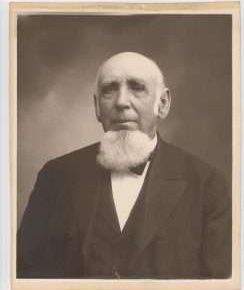
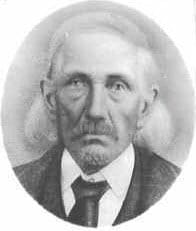
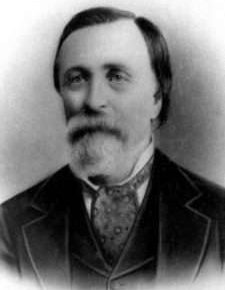
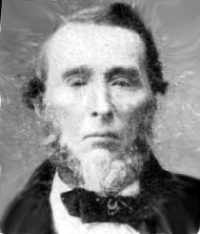
William Adams Hickman, born April 16, 1815 in Warren, Knox County Kentucky; died August 21, 1883.
SUMMARY
For over a year, I have been studying the life of the “infamous” William Adams “Wild Bill” Hickman. He is my GGG Grandfather through my mother’s line. Throughout my life, I was fascinated, but somewhat embarrassed, to be descended from the “apostate” who was excommunicated for testifying against Brigham Young in federal court and writing the “tell-all” book, “Brigham’s Destroying Angel.” Several years ago, Grandpa Hickman’s baptism, priesthood and temple blessings were restored. He has been forgiven of his sins. I wondered why I should hold onto any embarrassment or judgment.
I had a strong impression to study his life and contributions and was very pleased to learn of his vast talents, education, callings and jobs, and in particular the extraordinary contributions he made to the Church and members in establishing Zion in the Mountain West. His numerous contributions were downplayed and nearly forgotten because he turned against Brigham Young, while those of his friend and colleague, Orrin Porter Rockwell, who didn’t, are celebrated and praised. I was inspired to write a poem detailing his life and contributions. I certainly don’t celebrate the killings, but believe they should be considered in light of the times and his (and the early Church’s experience) with persecution, expulsion and murder, I hope you enjoy it.
“Wild Bill” Hickman (1815-1883)“WILD BILL” HICKMAN: A POEM
The Western Trails have their frontier tales, of the Good, Bad and Ugly and such.
Stories are told of the knave and the bold, like Bart and Wyatt and Billy and Butch.
Gamblers and gunslingers were good with their fingers but died if not quick enough on the draw.
Rustlers and train robbers stole other people’s coffers and lived well on the other side of the law.
Sheriff’s and Marshals stood up to the “arse-holes,” like the Earps did at the OK Corral.
They wore a tin-star, bore many a scar, risking their lives for the public morale.
One man was both, who lived by an oath, for his people he was willing to kill.
Backwoodsman and soldier, sheriff and lawyer, a hero, a villain called “Wild Bill.”
When Bill was a child, before they called him “Wild,” he was raised in the Missouri outback,
He was solid and tough, but life was so rough, constant animal and Indian attack.
In the new place named Franklin, they built a log cabin, 1818 the town furthest West.
Just six years his senior, Kit Carson, his neighbor, Bill followed his exploits with zest.
From the time he was ten, his heroes were men, who personified Westward Expansion:
He added to Carson: Boone, Crockett and Jackson, examples of Frontiersmen in action,
He was brave to his core, killed a cougar and boar, with a knife and rare teenaged will.
Headstrong and plucky, skilled but quite lucky, called a “medicine-man” Indians couldn’t kill.
The “Best and the Worst.” his dad called him at first; folly, zeal and piety were rife.
At work he was at “best, naughtier than the rest,” father’s words followed him all of his life.
At wilderness survival, Wild Bill had no rival; he could trap, hunt, build, guide and protect.
A fierce champion for rights, land and beliefs at their heights, of great leaders earned trust and respect.
The family moved Northward; ‘midst bear and bison herd. Built the first grist-mill in Central Missouri.
Apprenticed to a doctor, and then to a lawyer, but often as naught outdoors Bill would scurry.
Homesteaders flooded in, many of whom did begin, to consume whisky, race horses and brawl.
The boy was surprised, how much fighting was prized, “proving manhood” losing body parts in a squall.
Educated in-home, now his mind he did roam, of his knowledge and intellect he was sure.
Bill loved history a bunch, got him through many a crunch, as a soldier, guide and entrepreneur.
Fell in love at 16 – with Bernetta, 19. “Prettiest black-eyed creature that ever lived.”
One year later they wed, their parents filled with dread, but fifty years later died beside his beloved.
Being outdoor was his heart, but with books he was smart. As a teen studied medicine and law.
Grandpa was a preacher, Bill’s first “job,” a teacher. The children learned and listened in awe.
After an Indian attack, came a call to fight back. He was “anxious” to join them but stayed back.
The kids needed learnin, though Bill’s heart was burnin, he taught kids, instead of killing the Sac.
He decided to farm, provide by his arm, soon had hundreds of acres of crops.
His place bordered the road, where East-West traffic flowed, Hickman Farm was the best of all stops.
He was known for compassion, after Christ his life fashioned. Sharing well water and his [corn]bread of life.
He studied religion, each denomination, and became a Methodist like his wife.
Each day in ‘34, Mormons passed by his door, migrating to Jackson County.
Engaged them in debate, at his table while they ate and felt of their spiritual bounty.
He studied and prayed, his concerns were swayed, to salvation the Church was the true path.
“My motives were pure.” “My conviction” was sure. Joined and suffered the Missourians’ wrath.
When Governor Boggs, treated Mormons like dogs and ordered them to leave or be killed.
Wild Bill was impressed how they endured this test, sold his farm and swore Zion he’d build.
Joined the Saints in Nauvoo, met the Prophet and knew – he was the mouthpiece of God on the earth.
Hunting since he was young, and handy with a gun, as the prophet’s guard he would prove his worth.
Away in Missouri, rode home in a hurry, when he learned Joseph and Hyrum were shot.
Felt heartsick at the loss, not defending his boss, to Brigham Young vowed an oath on the spot.
To stand up against all, and as firm as a wall, defending the Saints’ Constitutional rights.
For most of his life, midst hardship and strife, Wild Bill proved his worth in numerous fights.
As described by George Bates, Bill’s “fists were iron” weights, an “immense mass of muscle” “about six feet high.”
Short dark gray, “bristling hair, like a Comanche cut square.” Blue eyes, one bloodshot, the left bright as the sky.
“Heavy brows, dark skin,” square jaw, bearded chin. 240 pounds with a “head … like a bull buffalo.”
He was a rough bloke, but some “Gentiles” spoke, of a kind, helpful, very “jolly” fellow.
As the people fled West, his oath was put to a test. Young called him to return and assist the poor.
Returned to the city and fulfilled his duty. Led the artillery in the Nauvoo Mormon War.
To protect the needy, from a mob that was greedy, built two cannons from a steamboat shaft.
Fixed on wagon bed, with shot forged from pig lead, kept the mob at bay with his handicraft.
Surrendered and jailed when his defense failed but escaped with his ball and chains.
With his family Wild Bill, joined the Saints at Kanesville to prepare for the trek ‘cross the plains.
Again asked to wait, he accepted his fate, for two years helped thousands prepare.
He tended the livestock, of the Lord’s poorest flock; built wagons and joined them in prayer.
For Zion his heart burned, to trek West his feet yearned. In ’49 it was his family’s turn.
While crossing the plains, with ice in his veins, Bill’s heroic stripes he would earn.
They killed a buffalo, were attacked by the Crow, and chased when they fled on their steeds.
One man fell behind, his life in a bind, Bill shot the raiders, saved him with his deeds.
When he got to Salt Lake, holstered guns, got a rake, and answered the call to farmlands.
He went back to his roots, pulled on his boots, got another kind of dirt on his hands.
With Sam Bennion he’d toil to cultivate the soil. South Jordan to make the desert bloom.
Great, great grandkids of peers, wed after one hundred years: Bill’s Sandra the bride, Sam’s Leonard the groom.
Indian raids to thwart, he built Hickman Fort; swam neighbors across flooded Jordan to shore.
Left crops to herd cattle, then called to do battle, during the Utah Valley “Walker War.”
Using his cunning, sent Chief Old Elk running, into Rock Canyon to meet his defeat.
Herding cows back home, his thoughts would roam, the military victory tasted so sweet.
So he couldn’t abstain, from leading a train, of wagons to California gold fields.
They came under attack, and Wild Bill fought back, his Colt and Yaeger revolvers their shields.
After panning for gold, he returned to the fold, to lead Young’s “Minute Men” falsely called “Danites.”
His job to detect, defend and protect, Church members’ lives, their property and their rights.
“Used-up” was his word, right and wrong lines blurred, as he went after rustlers, thieves and killers.
He admitted he killed. Said his duty fulfilled. Never found guilty midst justice’s pillars.
In ’53 sent North, his mission set forth: purchase or build new ferries across the Green.
He saw he could make more, by constructing a store. At resupplying immigrants, he was keen.
At Pacific Springs, he did many things: housed, fed, sold provisions, and traded livestock.
One healthy for two sick, quite a lucrative trick. Doubling profits selling revived horse and ox.
In Salt Lake he passed the bar, back to Green River to spar, with Jim Bridger and other Mountain men.
Sheriff, prosecutor, marshal, tax collector, resolved conflict with a new weapon – his pen.
Helped purchase Bridger Fort, for Mormons a safe port. Convinced mountain men to give up the ferry.
To Church coffers an influx. For each wagon thirteen bucks, from Gentile pilgrims who had crossed the prairie.
Always looking for a change, explored Wind River Range, panned for gold and Shoshone he befriended.
From Brigham Young he would get, a Shoshone, Margaret, 7th wife – her cabin stands at This is the Place Park.
Elected a member, of the Legislature, from Green River, Bill focused on Indian affairs,
At Fort Bridger in buckskin, he and Margaret met her kin, for the Mormons with Chief Washakie made repairs.
Returned to his home base, wed 9th wife Martha Case. Grandma Avilda was their second child.
Their dugout homes were rough, on Jordan River’s bluff, not very pretty but when teased he smiled;
To his neighbors, he’d retort, it’s my “Little Hickman Fort.” The peace he’d helped create no longer needed walls.
His roaming spirit sang, and soon the clarion rang, from Brigham Young he was about to get more calls.
Due to his name and fame, when Johnson’s Army came, Bill and Porter were again called to serve.
The Saints fled the valley, while Bill helped to rally, against trained soldiers, men with enough nerve.
“Scorched earth” was the plan, by a wild “bogeyman,” guerilla tactics, reputation and spies.
Out of the woods his domain, burned Fort and supply train, destroying a half million pounds of supplies.
Due to his nerve, and the God he did serve, a hard Winter the stalled army endured.
Gave Brigham Young a chance, for a political dance, which saved lives and Deseret’s future insured.
In ’63 he went forth, led the Army to the North, where California, Mormon and Oregon trails meet.
Where soda water springs, and Trumpeter Swan sings. Built Camp Connor which became the County seat.
Befriended General Connor, (to his ultimate dishonor) who had led the massacre at Bear River.
But what is little known, like a magnet to lodestone, lead him to mines – a billion dollar giver!
Cruel rumors were rife, many sought Bill’s life. Lot Huntington swore he’d give Bill a “ball.”
He got into a fray, ’59, Christmas Day, outside Townsend Hotel by the Assembly Hall.
Lot and gang let balls fly, struck Hickman in the thigh, returned fire with his guns, and hit Lot in his “rear.”
More than OK in Tombstone, at least forty shots were thrown. From one that hit Bill, to death’s doorstep he came near.
Excommunicated, Bill was hated, for testifying against Brigham Young.
“Wild Bill“ was a curse word, a hiss and a byword. His accomplishments forever unsung.
For years he hid in fear. The death threats coming near. For safety lived at Fort Douglas and Camp Floyd.
From family separated, a lonely future fated. Odd jobs and strong drink he used to fill the void.
Avilda Hickman, married John Dickson, in ’76 on a trip to Southern Utah.
In her heart was a void, so they stopped at Camp Floyd, to visit a man she barely knew as her Pa.
He gave love and remorse, a saddle and a horse. His last words, the gift she’d never forget:
“I don’t know, but we’ll see, how it will be with me. The Gospel is true, and you be true to it.
He lived out his days, poor and with malaise. Reduced to “skin and bones” he craved peace with his Lord.
So his family took him North, to Wind River they set forth. To live out his days in the mountains he adored.
High meadows that were rocky, not far from Fort Washakie, with first wife Bernetta and a few of his kin.
Back home in the wild, Bill probably smiled, closed his eyes and let his Hereafter begin.
Some people still judge, and some hold a grudge, for Nineteenth Century “barbarity.”
But consider the facts, that but for their acts, we’d not have our comfort and prosperity.
Now how would you paint, Bill as sinner or saint, if his whole life you asked to distill?
Well, I feel no shame, and am proud to claim, the ancestry of Grandpa “Wild Bill!”
- Mark Leonard Shurtleff, Salt Lake City, Utah 2021
Family Tree:
Edwin Temple Hickman – William Adams Hickman – Avilda Diena Hickman Dickson – Bartlett Davis Dickson – Ola Dickson Wilcock – Sandra Wilcock Shurtleff – Mark L. Shurtleff


 Brother Joseph