WEEKS, Allen

0 1
Read Time:1 Minute, 35 Second
Submitted by Keith Lawrence

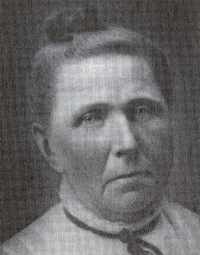
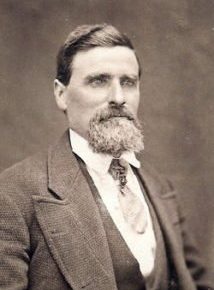
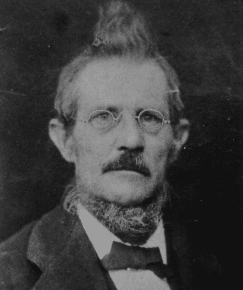
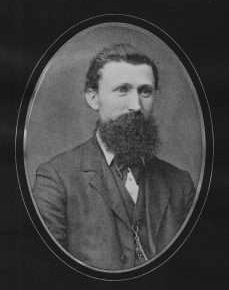
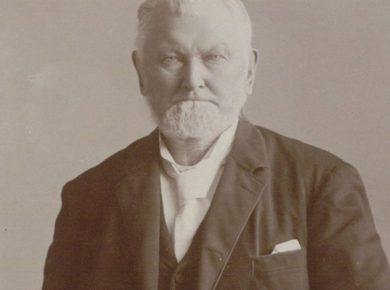
In 1852 the Weeks Company, led by Allen Weeks crossed the plains with 241 Latter-day Saints.  In the company were Allen Weeks’ wife, Sarah Jane Bennett and members of her family, including Sister Weeks’ mother and her younger brother, Eli, and Eli’s new bride, Louisa.

When Allen Weeks was called to settle at Cedar Valley in Utah County, Sarah’s family, which had traveled over the plains in the Weeks Company, accompanied Allen and Sarah.

Sarah’s younger brother Eli Bennett and his wife Louisa May Zufelt were excited to pioneer northwest Utah County because they had been assured “it abounded in fine land, timber, and grass.” Upon arrival in Cedar Valley in November, 1852, Eli and Louisa were profoundly challenged.  Still a couple of weeks away from his twenty-first birthday and his wife barely nineteen, Eli struggled to construct makeshift cabins on wagon beds and to prepare food and shelter for animals before the onset of winter.  In the spring of 1853, the Walker War forced evacuation from Cedar Valley to a temporary site in Lehi where the couple’s first child, Eli Jr., was born in June.  The settlers returned to Cedar Valley later that year.

On August 8, 1854, Allen and Sarah Weeks’ teenage son was murdered while getting a load of wood, apparently by renegade Indians. This event caused Brigham Young to stress greater watchfulness throughout the colonies and to hasten fort building and other protective measures.

The Weeks and Bennett families endured additional challenges, including difficult winters, illness, and failed crops, but eventually established themselves comfortably.  Allen Weeks became the first bishop of the Cedar Valley (later Cedar Fort)  Ward and Eli Bennett would become the third bishop of the Ward in 1882, serving in that position for twenty-four years until his death in October 1906.  What a dedicated commitment to a Church calling!

Happy
Happy
0 %
Sad
Sad
0 %
Excited
Excited
0 %
Sleepy
Sleepy
0 %
Angry
Angry
0 %
Surprise
Surprise
100 %
You May Also Like

STEPHENS, Evan

This article originally appeared in Vol.50, No.1 (2003) of Pioneer Magazine. by Janet Peterson Evan Stephens‘s philosophy of Mormon music, “that which breathes optimism and not pessimism, “1 permeates the…
View Post

ALLEN, Joseph

Joseph was one of the Pioneer teamsters who went east to assist immigrants to come to Utah. He was also engaged in the freighting business. He hauled freight from Corinne, Box Elder, Utah to Montana and Idaho.
View Post

HURST, Philip

This biography originally appeared on pioneerstories.org Philip Hurst wrote the following to the “Salt Lake Herald” concerning Indian affairs in Sanpete County.  It was published on 1  January 1873.  Indian…
View Post

John Adamson

Two other children, Andrew and Margaret, were professional dancers in Scotland and danced for the entertainment of the passengers during the voyage. When they reached America they traveled to Florence, Nebraska where they were met with teams and wagons sent by President Brigham Young to help them cross the plains.
View Post

RIDING, Christopher Lister: Tinsmith

Christopher's skills were needed in St. George because the temple was under construction there and he was the only sheet metal worker in the Dixie mission at that time. However, there was not enough business in St. George to provide him work, so he secured a little four-wheeled cart and an ox. He loaded the cart with tin ware and tools and visited all the towns in southern Utah, exchanging his ware for flour, potatoes, butter, cheese, etc. He made most of his wares from waste cans as it was difficult to ship in sheet tin. People saved empty cans and metal ware of all kinds for him. His store of wares consisted of buckets, milk pans, tin cups and plates, lamps, canteens, coffee pots, wash boards, etc. The ball on the St. George temple and the one on the St. George tabernacle are Christopher Riding's work, as is the metal work on all the public buildings erected before his death. The tin-covered sphere on the temple remained until October 25, 1994, when it was replaced with a fiberglass model as part of a renovation project. Christopher was a loyal member of the church although he was never active in public affairs due to the fact that his work kept him away a great deal of the time. He was a great reader, spending every evening in this way.
View Post

ALLPHIN, Israel Dodge

A TURBULENT TIDAL WAVE RAGED THROUGH THE CREEK CHASM DESTROYING EVERYTHING IN ITS PATH. THERE WOULD BE NO ACCOUNTABILITY AS TO WHAT WOULD TAKE PLACE AT THIS TRAGIC MOMENT…A CENTURY LATER, HISTORY BOOKS WOULD CHRONICLE THE EVENTS OF THE JULY 16, 1863 PINE VALLEY FLOOD.
View Post

ROBERTS, Levi

After travelling over the mountains one day we met with some of our brethren from the Valley. This was a time of rejoicing. Captain Brown who left us at Santa Fe with the sick which went by the way of Fort Kearney and a few brethren with him from the Valley, brought news that we were not to go to the Valley, and told us we had better stay another year in California. So the company divided right where we met each other; some went on to Winter Quarters; some to the Valley, and some turned back. Daniel Browett, Slater, Cox, Levi Roberts and myself turned back to Sacramento and went to work for Mr. Sutter who treated us very kindly. I sent a mule to my wife with Brother Harris, which she got…. We all went to work at the same place for Captain Sutter. We took the work of cutting a millrace. Brother Browett went [p.379] to work with the millwright, this was in September and later on in the fall, I and two others took sick with the bilious fever. We were so sick we couldn't help each other to a drink of water. We lay under some ties and had to crawl around with the sun to keep from making us chill…. Our appetites were very poor, and our food was flour, water and squash. Had it not been for the thoughts of my wife and family I could have died, but we all three recovered after awhile and went to work on the millrace again and worked all winter. Sometime in the winter two of the brethren who were working for Mr. Sutter in the mountains found gold in a tailrace they were making. Mr. Sutter let me see the first gold they found before sending it to San Francisco to get it tested. In May 1848 some of the brethren and myself made a trip in the mountains to try and find a road over (instead of going down Truckee River, as we had to cross it about 20 times) but when we got in the mountains we found so much snow we had to return, and on our way back I stopped at what we called the Mormon Island, where there was some of the brethren at work getting gold, Brother Sidney Willis and his brother; also Brother Hudson. I stayed here for a short time and got some gold.
View Post