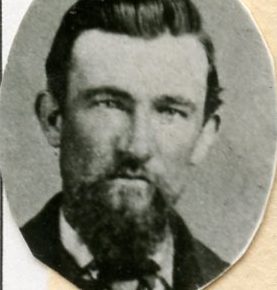
STEPHENS, Evan

0 1
Read Time:4 Minute, 1 Second

This article originally appeared in Vol.50, No.1 (2003) of Pioneer Magazine.

by Janet Peterson

Evan Stephens‘s philosophy of Mormon music, “that which breathes optimism and not pessimism, “1 permeates the dozens of hymns for which he composed music and/or written lyrics.

Called the “tithing” child by his father, Evan Stephens was the tenth child of a Welsh family that had already embraced The Church of Jesus Christ of Latter-day Saints.

He was born on June 28th, 1854, in Pencader, Wales. When Evan was five years old, the Stephens family made the journey to Zion and settled in Willard, Utah. Soon Evan joined the ward choir and was so thrilled with the experience that he asked to take a music book home with him. With this book in hand, he taught himself to read, play, and write music. Though as a young man he had to labor as a herd boy, farmhand, woodcutter, hod carrier, and railway section hand, Evan’s life was devoted to music.

When his older brother bought a four-octave organ, Evan eagerly learned to play it without instruction. With this instrument, he experimented with composing complicated works. He later studied organ with Joseph J, Baynes, the Tabernacle organist. A dream was realized for Evan when he enrolled at the New England Conservatory of Music in Boston. 4 A faculty member at the University of Deseret for seventeen years, Evan taught thousands of choral, vocal, opera, and organ students. He loved teaching young people and wrote a hymn, especially for the youth of the Church, the story of which is as follows. Evan hiked up City Creek Canyon and pondered what President Joseph F. Smith had said in his address on “The Third and Fourth Generations.” While sitting on a stream bank, he “observed how the rock he was resting on remained firm despite the pressure of the rushing waters.” Words came rapidly to his mind, and he wrote the lyrics of the stirring song ‘True to the Faith.” Then ruling off a few staves of music on a piece of paper, he composed the music. The song was first sung at the general Sunday School conference in 1905, and on the original copy was written ‘Lovingly dedicated to my 20,000 pupils of Zion.”

In 1890, Evan was named conductor of the Tabernacle Choir and served in that capacity for twenty-six years. Evan’s leadership garnered the choir second prize at the 1893 Chicago World’s Fair, for which they received $1,000, and he, a gold medal.6 During his tenure, he more than doubled the size of the choir and brought it into national prominence.

A prolific composer, Evan penned nearly ninety hymns, as well as writing anthems, cantatas, operas, vocal solos, duets, trios, and quartets.? He served on the General Church Music Committee which compiled The Latter-day Saints’ Psalmody. To help Utahans celebrate the long-awaited granting of statehood he composed “Utah, We Love Thee,” sung by a thousand children in a Tabernacle program.8

Evan loved spending time in the mountains, especially near Brighton. J, Spencer Cornwall recalls hiking with him to a certain spot, where Evan would lead an imaginary choir of pines. His many happy hours spent in the nearby canyons prompted him to write with Emmeline B. Wells the hymn “Our Mountain Home, So Dear.”

Never married, Evan Stephens died on 27 October 1930, in Salt Lake City.

Eighteen of Evan Stephens’s hymns are included in our current hymnal. He composed the following:

  • “What Was Witnessed in the Heavens?”(music)
  • “The Voice of God Again Is Heard”(text and music)
  • “We Ever Pray for Thee” (text, musical adaptation)
  • “Our Mountain Home, So Dear” (music)
  • “For the Strength of the Hills” (music)
  • “Lo, the Mighty God Appearing!” (music)
  • “Raise Your Voices to the Lord” (text and music)
  • “Praise Ye the Lord” (music)
  • “Father, Thy Children to Thee Now Raise” (text and music)
  • “Ye Simple Souls Who Stray” (music)
  • “Lean on My Ample Arm” (music)
  • “In Remembrance of Thy Suffering” (text and music)
  • “Today, While the Sun Shines” (music)
  • “Awake, Ye Saints of God, Awake!” (music)
  • “Let Us All Press On” (text and music)
  • “True to the Faith” (text and music)
  • “See, the Mighty Angel Flying” (music)
  • “O Home Beloved” (text)

Notes

  1. Spencer Cornwall Stories of Our Mormon Hymns (Salt Ltipe City: Deseret Book, 1975), 173.
  2. Carol Cornwall Madsen, “Our Heritage of Hymns, ” New Era, Noe. 1975, 12,
  3. Cornwall, 755.
  4. Wendell J. Ashton, “Evan Stephens: Monarch in Mormon Music, ” Pioneer, Winter 1995, 23.
  5. Madsen, 4.
  6. Pat Graham, “Maying Music for the Church, ” Friend, OcL 1987, 36.
  7. Gerald L. Homer, ”George Careless/ in Encyclopedia of Latter-day Saint History, ed. Arnold K. Garr, Donald 0. Cannon, and Richard O. Cowan (Salt Lal(e City: Deseret Book, 2000), 1192.
  8. Ashton, 23.
Happy
Happy
0 %
Sad
Sad
0 %
Excited
Excited
0 %
Sleepy
Sleepy
0 %
Angry
Angry
100 %
Surprise
Surprise
0 %
You May Also Like

ALSON, Thomas

At the time there were no free schools held in Utah, so students were required to pay tuition, which was rather difficult to provide; while attending with Peck, my tuition became considerable in arrears, therefore, he proposed that I assist him with classes at a salary of $1.00 per week and my tuition, (in all about $1.35 per week) the $1.00 per week to apply on deferred payments.I engaged to teach the Hoytsville School early in January 1876, at a salary of $45 per month. The school house consisted of one log room about 30 by 40 feet, heated by a stove in the center. The teacher was also the janitor etc.
View Post

KILLIAN, Captain John

When the Elders administered to me, Brother Killian being mouth, I was in bed. He poured the oil on my forehead and I jumped right out of bed and put on my clothes. On hearing that Robbins was going to Quincy in the morning, I walked up to his house, three-quarters of a mile, and went with him in his carriage to Quincy, remained all day and returned with him at night.”
View Post

CARLISLE, Richard & Jane Field

Members of the family were baptized at various times in 1849 and 1850. Richard became the Presiding Elder of their branch. In 1851, on the “Good Ship Ellen,” they emigrated to America, except for their oldest son, Thomas, who came a year later. On their way up the Mississippi River, Jane died in St. Louis on 24 June 1851. She had done the washing for a woman afflicted with the dreaded cholera, so common among emigrants on that river. Jane caught the disease and died almost immediately. It must have been very difficult for Richard to manage his large family during the years following Jane’s death. First he had to get the whole family across the Plains, then provide a home for them in a new land. The bereft father and his motherless brood stayed to work in St. Louis during the remainder of the first year. The youngest son, Richard, hired out to a Mormon family and came west with them, the first of his own family to arrive in the Valley. The oldest son, Thomas, had by then joined the rest of the family in St. Louis.
View Post

CALL, Helaman Pratt

My father had done a little experimenting. We had a large bathtub in one of the bedrooms in our home—it hadn’t been remodeled. They had just put in a bathtub and a toilet and a hand bowl in one of the bedrooms so there was quite a bit of room in there. It was a large oversize tub. I thought my father was going to baptize me but Charles Jones was going to baptize me. He had experimented how full he could fill the tub without running it over and still get me and him both in the tub. They put a stopper on the overflow so that the water would come up higher than the normal overflow would allow.
View Post

ALLEN, Andrew Lee

The family moved to Provo, where Andrew and his sons helped to build the Provo Fort. Andrew taught his sons to work and take care of their animals. The sons worked quite often as teamsters. Andrew was an excellent rope maker and knew how to make dyes from plants. He made tassels and decorations for his teams.
View Post

WALLACE, George Benjamin

July 4 Sunday – Rain this morning. Public meeting. Elders P. P. Pratt, Taylor and Father Smith spoke against growing cold and careless, and neglecting to pray. They urged all to give thanks to God, who is blessing us all the time. They also spoke against swearing and taking the name of God in vain. They gave strong warning and spoke of some of the law which will be put in force hereafter. They exhorted to union, obedience, etc. and exhorted the fathers concerning their children, how to bring them up, etc. They said if we forgot God it would go with us as it did with the Lamanites, etc. We must not set fire to the prairie for it is a signal for the Indians to gather together. We have now come 175 miles. The conclusion is to travel each company of 50 by itself and to have it encamp and herd by itself.
View Post

SMITH, Joseph Johnson

How happy they must have been to be in “Joseph’s City”. But the happiness didn’t last long. Within three months after arriving in Nauvoo, little Mercy became ill and died. Joseph’s wife, Mary, grieved with Joseph, but within two months, she and Joseph became excited again because she was going to have another baby. But again, the excitement was blunted by death as Mary died a week after her baby son, Joseph, was born and baby Joseph died twelve days later. Joseph now was left with just three year-old Caroline. His parents and two sisters and three brothers were still with him in Nauvoo, but how hard it must have been to have sacrificed so much in such a short time.
View Post

RIDING, Christopher Lister: Tinsmith

Christopher's skills were needed in St. George because the temple was under construction there and he was the only sheet metal worker in the Dixie mission at that time. However, there was not enough business in St. George to provide him work, so he secured a little four-wheeled cart and an ox. He loaded the cart with tin ware and tools and visited all the towns in southern Utah, exchanging his ware for flour, potatoes, butter, cheese, etc. He made most of his wares from waste cans as it was difficult to ship in sheet tin. People saved empty cans and metal ware of all kinds for him. His store of wares consisted of buckets, milk pans, tin cups and plates, lamps, canteens, coffee pots, wash boards, etc. The ball on the St. George temple and the one on the St. George tabernacle are Christopher Riding's work, as is the metal work on all the public buildings erected before his death. The tin-covered sphere on the temple remained until October 25, 1994, when it was replaced with a fiberglass model as part of a renovation project. Christopher was a loyal member of the church although he was never active in public affairs due to the fact that his work kept him away a great deal of the time. He was a great reader, spending every evening in this way.
View Post