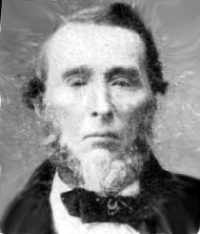
SAVAGE, David Leonard: Indian Peacekeeper

In twenty minutes, he was decked out in war paint and feathers and riding through Cedar Fort giving his terrifying war cries and soon the mountains rang with the death call of these desperate people. They were on the war path for sure, assembling their forces they hid in a ravine near Lehi. When the stage coach passed, the driver and all the passengers were massacred.
0 1
Read Time:4 Minute, 54 Second

INDIAN PEACEKEEPER

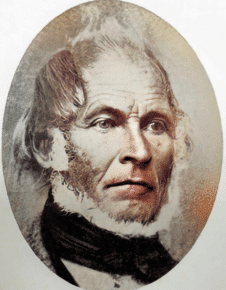
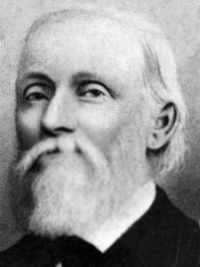
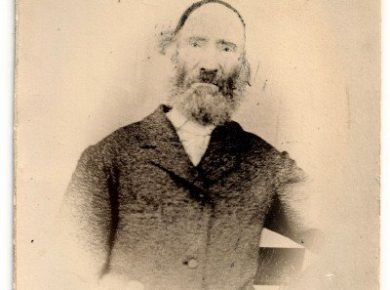
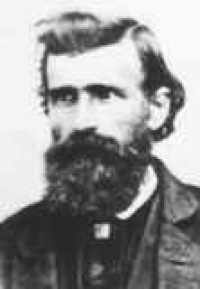
David Leonard Savage (1810-1886)
David Leonard Savage was born July 25, 1810 in Leeds, Canada, converted to the Church (The Church of Jesus Christ of Latter-day Saints) there, eventually went to Nauvoo where he worked on the temple, and arrived in the Salt Lake Valley with the Second Company of Saints September 24, 1847. David was sent to many towns in 4 states to help settle them, including Lehi, Cedar City, Cedar Springs (Holden), San Bernardino, Cedar Fort, Bear Lake, Hiram, Goshen, and 4 towns in Arizona. He was a kind faithful man and a friend and helper to others. He was often called upon by the apostles and prophets to take folks to and from places in early pioneering. This versatile pioneering experience placed him among the local natives of the land where he had many dealings with them. The following Indian stories written by a granddaughter are recorded at the end of two different biographies of David, one written by his wife Mary and the other by his daughter, Mary Theodocia Savage. The stories all appear to be written by the granddaughter. The following instance took place while the family lived at Cedar Fort. One evening while Johnson’s Army was at Camp Floyd a small company of soldiers were riding in the foot hills of Cedar Fort when they came suddenly upon a few Indians while they were eating their evening meal. Unwisely they fired into their midst killing one Indian. An Indian witnessed the act, he shot an arrow at the soldiers and ran for a horse. In twenty minutes, he was decked out in war paint and feathers and riding through Cedar Fort giving his terrifying war cries and soon the mountains rang with the death call of these desperate people. They were on the war path for sure, assembling their forces they hid in a ravine near Lehi. When the stage coach passed the driver and all the passengers were massacred. At Cedar Fort anxious moments followed the men keeping close watch for the Indians. Finally, they were seen advancing to the attack. Wishing to avoid bloodshed, some men went to see them under a flag of truce but were rebuked by the redskins. Then my grandfather who had heard of the trouble while in route with his freight had gone to see if he could help his friends and he said, “I am sure if I go out alone I can make peace.” Against protest, he gave his gun to his companions in sight of the Indians and holding his arms high as the friendship signal went calmly forth to meet them. There seemed to be no relenting on the part of the Indians. They met my grandfather with spears raised and arrows drawn. He spoke to them in their own language with coolness and great dignity. He told them the Mormons were their friends and had nothing to do with the ones who had offended them and that the great spirits would be displeased with them if they killed their white brothers. Finally spears were lowered and arrows sheathed and the Indians dispersed. Grandfather’s daughter, Amanda Polly, also knew the Ute and Paiute languages. When the Indians would come and they would have trouble making them understand they would ask for Savage’s Papoose, meaning Amanda, who had no trouble conversing with them. David Savage was a great friend to the Indians. He learned to speak their language fluently, which came in handy many times.

A Few Incidents of Early History:

The Mormons had become such dear friends of the Indians that they did not want to kill any of them and would often look to see if garments (knowing them to belong to Mormons) were there before they would harm white people. If they were not the Indians would kill. There were many trains fired on as they journeyed to California by the Indians. Grandfather Savage’s services were in great demand as a protection to them. A company would often wait weeks. On one occasion a rich company came through going to California about the year 1851 or 1852. They stopped and asked Brigham Young what they could do to be safe from the Indians. He told them he could fix it so they would be perfectly safe until they got to Cedar City. He said he would send a letter to David Savage at the above place who was a great Indian Scout and much loved by them and that David Savage would see them safely through. The country they were passing through was hostile. They arrived in Cedar City safely and delivered the letter from Pres. Young. David Savage went with them through the Indian country, riding a mule along by the side of the wagons so the Indians could see him. The first night they camped in Indian territory, the people with him were very much frightened to see such numbers of Indians coming toward them. They had recognized their friend, Savage, and had come to greet him. The word would be sent along the line by Indian runners to tell the Indians their friend was coming. He was met at every stop by bands of Indians who came to see him. The captain of the train asked grandfather what they would do with the horses to keep the Indians from stealing them. Grandfather told him, “We will just let the Indians take them and herd them and they will bring them back all right.” The Captain said, “Oh, if we do that we will never see them again.” But Grandfather said that an Indian never breaks his word. The Indians took the horses all away. Grandfather told them to bring them back just at sunrise, which they did to the surprise of the Captain and all the company.
Happy
Happy
0 %
Sad
Sad
0 %
Excited
Excited
0 %
Sleepy
Sleepy
0 %
Angry
Angry
0 %
Surprise
Surprise
100 %
You May Also Like

FREESTONE, Thomas and Ann Fall: Perseverance!

Their journey across the plains was an arduous one, but late in 1853 they arrived in American Fork. One year later the family moved to “Mountainville” (later named Alpine) where they lived in the fort for protection against the Indians, while they began to re-establish their affairs. Exerting all their efforts, they partially overcame their hunger by eating roots, pigweed and wild onions, and beat back enough crickets to raise a full crop of grain. In spite of their many trials the hardy family hung on to their testimonies and endured.
View Post

ATKIN, Thomas

Mary became seriously ill with a "rupture" in her side. The doctors could do nothing to help her. Thomas, watching her suffer, resolved he would be more devoted in serving the Lord, if only the prayers and desires of his heart and those of his children regarding his beloved wife would be granted. Eventually, Mary was healed. He did not forget the resolution and promise he had made with the Lord and commenced in earnest to inquire of his spiritual advisors.
View Post

ASHCROFT, Henry

In those days, the Saints in each settlement were instructed by the General Authorities to have dramas and other amusements for entertainment. In the field of music and drama, Henry was especially gifted. He was a member of the first dramatic organization of Hyde Park. He, Rachel Seamons (Hancey), and Eliza Seamons (England) received much praise for their stage work. Henry had a wonderful bass voice and sang in the choir.
View Post

HATCH, Meltiar

Submitted by Will Allphin, Chapter member.  This information came from:  The Hatch Genealogical Society, Prominent Men of Utah, Family histories. Meltiar Hatch was born in Farmerville, New York, July 15,…
View Post

MAUGHAN, Harrison Davenport & Mary Freestone

Education had already become a high priority in the mind of this teenager. After twelve or fifteen months of employment she had saved enough money to enroll in the new Brigham Young Academy in Logan. Where had she learned what she needed to know to get admitted? How was she able to make her way in the environment of an academy? She may have attended school briefly as a small girl and perhaps for one year just after returning from Franklin Meadows. Mary left one little school workbook, labled “Alpine City, Utah.” It is filled with evidence of studies in math, geology, grammar (including diagraming sentences) and a lot of theology from the Bible. She also left another workbook in penmanship and a series of well-written essays on a variety of subjects. These showed good spelling and extraordinary penmanship, a beautiful script worthy of a highly educated person. Mary attended Brigham Young Academy for perhaps only three months, or maybe asmuch as two semesters. At the end of the spring term in 1882, the students exchanged messages in little autograph books, with one greeting per page in the form of a poetic sentiment. Each page is written in beautiful script – a very impressive exhibit, when compared to twenty-first century handwriting, which is often illegible at the college level!
View Post

ANDREWS, Amos Betts

They were surrounded by an armed cavalry of vigilantes who asked for the leader of the group. Amos Andrews stepped forward. The leader of the vigilantes asked if they were Mormons and Andrews confirmed his question. The leader then told them to prepare to die. Andrews looked around and saw that they were out-numbered and out gunned. Andrews then requested if he'd be permitted to sing a song. He sang the whole song to "A Poor Wayfaring Man of Grief "then sang another song and another. Andrews wife, Keturah, was nursing an. 18 month old baby, the baby stopped nursing and joined its father in singing the song. Overwhelmed with emotion at seeing the baby do such a thing, a member of the mob lowered his rifle, and swore an oath saying, “They all can sing, even the child at the breast." The mob removed their hats and rode away. The story is an example that "the hymns of the righteous are a prayer unto me."
View Post

JAMESON, Charles: Haun’s Mill Survivor

Charles Jameson was one of the Haun’s Mill victims that survived. “Oh, what a time that was! [Charles Jameson] was shot several [4] times. He crawled into the brush. The men followed him. One said, ‘Shoot him.’ Another said, ‘No, let him suffer. He’s dying anyway.’ But he did not die; he lived to go to Utah and lived to a good old age (6).” They were able to extract one bullet, but Charles carried the other three slugs with him for the rest of his life.
View Post