MAXWELL, John Lambert

0 1
Read Time:4 Minute, 56 Second
By Susan Lofgren

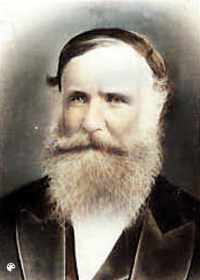
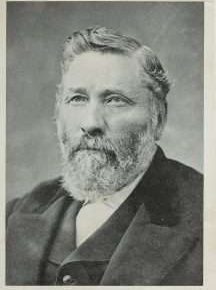
Born on October 27, 1837, in Yorkshire, England, John Lambert Maxwell discovered his love for the land early. When he was only 18, he became an apprentice gardener, florist, and nurseryman, and after completing his apprenticeship, he began working on some of the area’s largest and most beautiful gardens.

In 1859 he exhibited flowers at the Peel Park United Grand Floral Fete and received a prize for the best display in his class. He also earned the appointment of head gardener at the Harris Mansion, one of the largest estates in Yorkshire.

Peel Park, Salford England

On January 1, 1860, John Lambert was baptized in the ocean. His life history records, “As I rose from the waters of baptism, a white dove hovered over me and seemed to symbolize a feeling of peace.” He married Jane Hird on March 6, boarded The Underwriter on May 1, and headed for the promised land.  After braving the tossings and turnings of ship life for a month and 12 days, the Lamberts landed in New York.

“From there, we started our long trip across the plains,” John’s history reports. “We had to walk most of the way and suffered as did many others. We were a part of Captain Brown’s Company, which arrived in the Salt Lake Valley on August 9, 1860. We camped at a spot called the Eighth Ward Square.”

Shortly after his arrival in the valley, he began working as a gardener for President Brigham Young. He was responsible for a large vegetable garden to the west of the temple, and he also landscaped the Prophet’s residence. Later he would design gardens for President John Taylor and other recognized men of the day, such as William Jennings and John Clark.

In 1862, John and his family moved into a home owned by President John Taylor (at South Temple between West Temple and First West), and John began his florist business—one of the first in the valley. He loved spending his time growing gorgeous flowers and luscious fruit and is credited for raising the first head of celery ever grown in Utah (in 1865)—sold for 60 cents a head!

In addition to his florist business, John began experimenting with “hot beds,” a venture that became the beginning of his greenhouse work. He rented one and a quarter acres of additional land, where he experimented with other fruits, vegetables, and flowers.

“On this land I planted my first English Damson plums,” his history records, “which grew from stones which I carried with me from England. This was the first of this variety ever raised in this country and came to be called the Maxwell Damson.”

Colonel R. T. Burton lived nearby and dearly wanted a lawn. However, he feared the grass would never grow because of the lack of water. He discussed the matter with John, who felt sure that a solution could be found.

“Grandfather Maxwell had the determination and the faith in himself that this project could be accomplished,” reports his granddaughter-in-law Isabelle Randall Maxwell. “He was told a lawn would not grow because there was no way to sprinkle it [but] through his ingenuity was able to grow a beautiful lawn by watering [it] from an irrigation ditch.”

John grew beautiful trees and was one of the first in the area to offer trees for sale. In 1870, a Mr. Wade from Kaysville ordered 174 of his trees for planting in that area. The trees grew well and were beautiful. Some even survive to this day. They made such a difference that John received many more requests for trees. He also furnished the grove of trees at Fort Douglas.

Potatoes were one of his specialties. Samples of his potatoes were sent all over, from Tooele to Summit. An entry in his diary reports that he once grew 180 pounds of potatoes from one pound of seeds, which was received from the East. “It took a little patience,” his history points out. “I would cut the sets very small and plant them in [small] boxes in the greenhouse. As they grew, I would split them and transplant them. When they were ready to send up tubers, and reached about 3 inches long, I would take these cuttings off and obtain new roots from them.

“We raised a squash so big it took three men to roll it up a board onto a wagon,” his history continues. “Now that sounds like a ‘fish story,’ but it was true. It took first place at the Territorial Fair that year.”

The Deseret Agricultural Society awarded him a diploma for the finest specimens of flowers, and he received numerous medals and prizes for his flowers, fruits, and vegetables for many years.”

His diary indicates that he manufactured brooms made from birch limbs and willows (later he raised a broom corn that made even a finer broom), raised sugar cane, and often traded his stock for molasses and other merchandise.

He was a member of the Deseret Militia and served as secretary of the Deseret Agricultural Society. History gives him credit for introducing many new varieties of flowers; the Martha Washington Palagonia is the one he was most proud of.

John Lambert Maxwell died July 28, 1905, after only two days of illness. Many mourned the passing of one who had made such a significant contribution to the beauty of the earth.

“It made me feel good to be a part of the building up the community, to do what I could to make the desert bloom,” he reportedly said. “The land was my life. It is my hope that some of my children will learn to love the good earth as I did and gain from it what I gained from it.”


This article originally appeared in Vol.60 No.2 of Pioneer Magazine.
Happy
Happy
0 %
Sad
Sad
0 %
Excited
Excited
0 %
Sleepy
Sleepy
0 %
Angry
Angry
0 %
Surprise
Surprise
100 %
You May Also Like

ALLEN, Jude

In May 1845, the company turned west from their northwestern trek and moved across western Iowa to Fort Vermillion, a French trading post in the present south-eastern part of South Dakota. This group of Mormons was probably the first Anglo American settlers in South Dakota. Jude and the others in the company spent the next ten months hunting buffalo, herding cattle, putting up log cabins, raising vegetables and putting up hay.
View Post

WOOD, George Lymer: An Incident in the Life

"The usual method of disposing of the dead was to weight the bodies and dump them overboard. When others and I asked the privilege of removing our dead and burying them on land, the Captain was hateful and mean about it. All of my dear ones except Samuel's wife I had to perform this last earthly service for. Others of the party had sustained like losses, and were as anxious as I to bury them as decently as possible. The Captain at last agreed to wait and we hired a Negro to help dig a trench big enough to put them in all together. We removed the dead from the boat and began our heart¬breaking task, but had it only partly done when the boat whistle blew and the boat began to get underway. All ran hastily back except the Negro, one woman and myself. She and I stood at the grave site of our dead and watched them go. What bitterness of spirit I experienced only God knows. Was this what I had come to America, the home of the brave, for? Here I was with two strangers standing beside the open grave of a group of strangers. Our common interests were all lying before us or fast receding from sight, subject to the whim of a heartless thing in human form. "Surges of emotion swept over me, sorrow, anger, love, fear, and despair, but my nearest duty was to protect these rapidly decomposing dear forms of mine from the ravages of wild beasts, heat, and other elements. Perhaps I had been blessed and spared to perform this last service. If! were dead with them our bodies would rot together. So I urged on my companions the need for work. I felt responsible for seeing this thing through.
View Post

History of Robert Wiley and Sarah Darling Wiley

Later Sarah decided to give up her business in Liverpool and join her family in Utah. Sarah had the means enough for a very comfortable trip across the plains. She had three teams and wagons fixed up for her trip. She brought many nice things from England. For herself she rode in a carriage across the plains.
View Post

James Henry Rollins, Faithful Pioneer

The San Bernardino colonizers were called back to Utah by Brigham Young when Johnson’s Army threatened. Henry and his family heeded the call, leaving behind still another home. In Utah, they settled in Minersville where he opened a lead mine and served as postmaster. He spent most of his life there serving faithfully in the church as a Bishop and in other callings well into his 80’s. He spent his last years in Lyman Wyoming to be near his children, where he passed away February 7, 1899.
View Post

KENDALL, Elizabeth Clements

While the wagon train was stopped one day for a rest Elizabeth and her girlfriend had taken their knitting and gone down alongside the creek to set in the sun. They looked up from their chattering and laughter to see an Indian watching them. Then he disappeared. Upon their return to camp, the Indian was in consultation with Captain Zebriski. Then later the Captain reported to Elizabeth their conversation. The Indian, attracted to Elizabeth had said to the Captain, “Heap wino squaw, she knit socks, me want her.”
View Post

BLAIR, Seth Millington

No power on earth shall stay thine hand, thou shalt rebuke the waves of the sea, and like Enoch turn rivers of water out of their courses, cause streams to break forth in dry places to give drink to thy people, feed a multitude in the wilderness by the same power that Jesus fed the multitude when he was in the flesh, shall do every miracle that your heart desires, live to see Zion established in peace on the Earth.”
View Post

George Alley

They traveled by "steam cars" to upper New York state, by canal boat to Buffalo, by lake boat to Cleveland, Ohio, by "steam cars" again to Portsmouth, by river boat down the Ohio and up the Mississippi to Quincy, Illinois, and thence by hired teams to Nauvoo. The exultation felt by George upon their arrival there is expressed by a note he made in his Bible at this time:
View Post

ALSON, Thomas

At the time there were no free schools held in Utah, so students were required to pay tuition, which was rather difficult to provide; while attending with Peck, my tuition became considerable in arrears, therefore, he proposed that I assist him with classes at a salary of $1.00 per week and my tuition, (in all about $1.35 per week) the $1.00 per week to apply on deferred payments.I engaged to teach the Hoytsville School early in January 1876, at a salary of $45 per month. The school house consisted of one log room about 30 by 40 feet, heated by a stove in the center. The teacher was also the janitor etc.
View Post