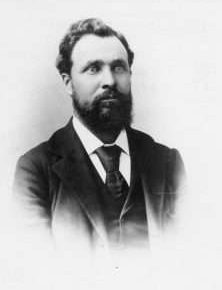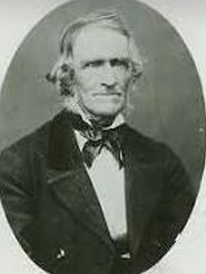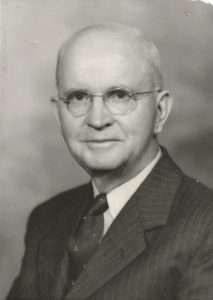
ROMNEY, Junius – Juarez stake president

0 1
Read Time:1 Minute, 51 Second

This article originally appeared in Vol. 65 No.1 (2018) of Pioneer Magazine

by Joseph B. Romney, grandson.
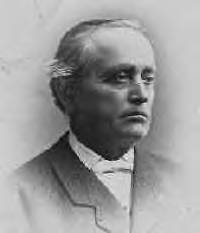
Junius Romney
(1878-1971)

In his role as the young stake president of the Juarez Stake in Mexico, Junius Romney is the central figure in the last great Mormon exodus. It follows in the series of exoduses, which began in Kirtland, Ohio, and continued through Missouri and Nauvoo to the Great Basin. He, with many others, lost virtually all of their material possessions in that final exodus from Mexico in 1912.

Romney’s life exemplifies the lives of pioneer Latter-day Saints who made the desert blossom as a rose. Bom in 1878 in St. George, Utah, he moved with his family to Mexico in 1885 where they contributed to the founding of Colonia Juarez. This was one of nine Mormon colonies founded in the states of Chihuahua and Sonora.

He attended school in the Juarez Stake Academy, with some additional studying in Salt Lake City. Junius began his career as an educator, but later he became a successful businessman. He held several callings in the Church in the colonies before being called as president of the Juarez Stake when only 30 years of age. The last two years of his tenure as stake president were during the Mexican Revolution, As the religious leader of the colonists, he was also their de facto political leader. As such, he played a central role in the colonists’ struggles during the Revolution, which eventually led to the members of the entire stake evacuating their homes in the summer of 1912.

After the exodus, Junius’ family lived in El Paso,Texas, for several months, then moved to Los Angeles, California, before finally moving to Salt Lake City. He and his wife Gertrude raised a family in Salt Lake City of six children— three boys and three girls.

Junius was known for his sense of humor and respected for his integrity. He was a successful businessman, and a generous provider for his immediate family, his extended family, and others who were trying to find their way after the exodus from Mexico. Junius died in 1971 at the age of 93.

Happy
Happy
0 %
Sad
Sad
0 %
Excited
Excited
0 %
Sleepy
Sleepy
0 %
Angry
Angry
0 %
Surprise
Surprise
100 %
You May Also Like

HIOTT, John: An Overlooked Pioneer

As far as history is concerned he was a faceless cipher who passed through life leaving few tracks and no one to mark his grave. It is easy to overlook that John and thousands of other forgotten Utah pioneers like him were critical in settling the Intermountain West. They dug the irrigation ditches, herded the cattle, built the shelters, attended meetings, maintained the roads, cut fire wood, tended the ill, mostly followed orders, and buried the deceased without fanfare. The accomplishments of their famous leaders would not have been possible without the blood, sweet, and tears of humble people such as John Hiott.
View Post

RIDING, Christopher Lister: Tinsmith

Christopher's skills were needed in St. George because the temple was under construction there and he was the only sheet metal worker in the Dixie mission at that time. However, there was not enough business in St. George to provide him work, so he secured a little four-wheeled cart and an ox. He loaded the cart with tin ware and tools and visited all the towns in southern Utah, exchanging his ware for flour, potatoes, butter, cheese, etc. He made most of his wares from waste cans as it was difficult to ship in sheet tin. People saved empty cans and metal ware of all kinds for him. His store of wares consisted of buckets, milk pans, tin cups and plates, lamps, canteens, coffee pots, wash boards, etc. The ball on the St. George temple and the one on the St. George tabernacle are Christopher Riding's work, as is the metal work on all the public buildings erected before his death. The tin-covered sphere on the temple remained until October 25, 1994, when it was replaced with a fiberglass model as part of a renovation project. Christopher was a loyal member of the church although he was never active in public affairs due to the fact that his work kept him away a great deal of the time. He was a great reader, spending every evening in this way.
View Post

George Alley

They traveled by "steam cars" to upper New York state, by canal boat to Buffalo, by lake boat to Cleveland, Ohio, by "steam cars" again to Portsmouth, by river boat down the Ohio and up the Mississippi to Quincy, Illinois, and thence by hired teams to Nauvoo. The exultation felt by George upon their arrival there is expressed by a note he made in his Bible at this time:
View Post

ALLEN, Elihu Moroni

About 1863 the Allen family settled in Huntsville, Weber, Utah where the last 7 children were born. Their first home in Huntsville was a two-story log house. Elihu made a lot of the furniture they used. He made chair frames from pine trees and made the seats from braided leather that he cured to a very soft pliable seat.
View Post

GASKELL, Elizabeth: A Forgotten Pioneer

Mature, single women who were early converts and emigrants to Utah have received short shrift in Latter-day Saint History.Although the two ill-fated handcart companies of 1856 suffered most of the deaths, several of the wagon companies that were bringing up the rear, including the one in which Elizabeth traveled, were also caught in the early winter storms that swept the barren highlands of Wyoming in October and November.
View Post