 0
0
 1
1
by Jeffrey D. Nichols, History Blazer, July 1995
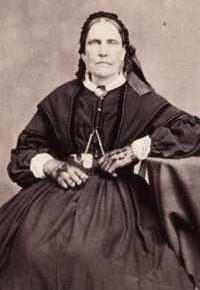
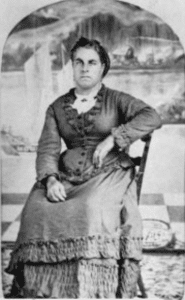
 Emma Batchelor was born in Sussex County, England, on April 21st, 1836. Along with thousands of other English men and women, she and her friend Elizabeth Summers were converted to the Latter-day Saint faith by Mormon missionaries and were convinced to emigrate. Emma suffered the hardships of a handcart pioneer, crossing the plains and mountains to Utah with the Willie and Martin companies. These two groups, which got a late start from Iowa City in 1856, suffered perhaps 200 deaths when early winter conditions struck. Emma survived, however, and on December 27th, 1857, she met John Doyle Lee, a prominent Mormon pioneer, colonist and aide to church president Brigham Young. On January 7th, 1858, Young sealed the two as man and wife.
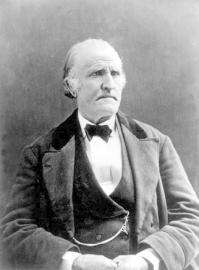
At the time, Emma was apparently ignorant of the fact that her new husband was in serious trouble. Only months before, in September 1857, Lee had participated in— many said directed—the infamous Mountain Meadows massacre in which 120 members of the Fancher immigrant party—on their way to California—had been attacked and killed by Indians and Mormon militiamen. John and his 19 plural wives, especially Emma, would spend much of the next two decades in an ultimately vain attempt to keep him out of reach of the law.
By the late 1860s, external pressures were mounting on Utah. Federal officials and others demanded justice for the Mountain Meadows massacre, and John D. Lee was the man most wanted.
In 1870, Brigham Young officially excommunicated Lee, although the church continued to assign him important tasks. In late 1871, Lee was requested to establish a ferry crossing on the Colorado River, approximately 15 miles south of the present Utah/Arizona border, near where the Paria River entered the Colorado. The site soon became an important link between southern Utah and the Mormon settlements in Arizona and beyond. Emma and John built their home here at a site they called Lonely Dell, reflecting its isolation.
Over the ensuing years, Emma, along with Lee’s wife Rachel and 13 children made many improvements, including a substantial house and gardens. Lonely Dell became an important re-supply point for thousands of immigrants and explorers; in July 1872 the Lees entertained members of John Wesley Powell’s Colorado River exploration party. Lee was frequently absent from Lonely Dell, however, sometimes fleeing from the law and sometimes visiting his other homes and wives. Emma and her family were left to manage the ferry and homestead.
In the summer of 1873 Lee went into hiding, but the noose was tightening. He was finally captured in Panguitch on November 7th, 1874. Emma remained loyal to him for the three years of his confinement and through his two trials; she brought food to him in the Beaver jail and was even accused of helping to plot his escape. On March 23rd, 1877, John Doyle Lee was executed by firing squad at the site of the Mountain Meadows Massacre—the only person to pay with his life for this notorious crime.
Emma continued to operate the ferry, as she so often had during her husband’s absences. In 1879 the LDS Church purchased the service from her and operated the ferry until 1909. Emma married a prospector named Franklin French and moved to Winslow, Arizona. For the remaining years of her life she put her childbirth experiences to use as a midwife; many of her loyal “customers” called her “Dr. French.” Emma died on November 16th, 1897.
This article previously appeared in Vol.60 No.1 of Pioneer Magazine
Sources:
- Utah History Encyclopedia, ed. Allen Kent Powell (Salt Lake City: University of Utah Press, 1994);
- Juanita Brooks, Emma Lee (Logan: Utah State University Press, 1975);
- Richard D. Poll et al., Utah’s History (Provo: Brigham Young University Press, 1978).


 Brother Joseph