OLSEN, James Peter (Jens): An Honorable Pioneer

0 1
Read Time:3 Minute, 16 Second
James Peter “Jens” Olsen

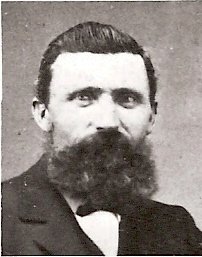
James Peter Olsen was born in Viemose, Kalvehave, Praesto, Denmark, on the 14th of May 1841. His father was Rasmus Olsen and his mother was Ingeborg Hansen or Sorensen. James was called Jens for short.  The family owned and lived on a beautiful estate, which was on high ground overlooking the ocean. In 1852 the family became acquainted with Mormon missionaries and was taught the gospel. Jens’ father was baptized on July 12, 1852. 

Later, on November 19, 1853, Jens and some of his siblings were baptized. Soon after the family joined the church they started making plans to gather to Zion.  The day after Christmas, December 26, 1853, the family boarded the steamship Eideren at Copenhagen with 378 other passengers. The family arrived at Liverpool, England on January 9, 1854. There many of the company became sick. The illness was so bad that twenty-two children and two adults died. 

When it was time for the immigrants to board the ship, Benjamin Adams, an examining physician declared fifteen from the group unfit for the voyage and would not permit them to sail with the rest of the company. While on the ship from Liverpool to America Jens’ younger brother, Hans Rasmus, became ill. He died on March 9, 1854 and was buried at sea. 

When Jens and his family arrived at the New Orleans ship docks they saw Negro slaves being held in corrals like animals. They were being sold for about $25.00 each. At New Orleans the family boarded the steam ship L.M. Kennet and went up the Mississippi River, arriving in St. Louis, Missouri on April 3, 1854. They then continued on to Kansas City where they prepared for the journey to cross the plains.

Jens was about 13 years old at that time and would have been a lot of help on the journey as they made their way to the Salt Lake Valley.  He would have gathered fire wood, milked the cow, brought water to the camp, even drove the oxen some of the time. On October 5, 1854 the Olsen family finally entered the Great Salt Lake Valley.  They did not get to stay there very long because many of the company they traveled with were asked to move on to the Sanpete Valley to help settle that area and teach the Indians how to raise crops. 

Twenty eight wagons with these Scandinavian Saints left Salt Lake and headed for Fort Ephraim. It took them close to another week to travel to where their new home would be.   In the spring of 1864, just before Jens turned 23 years of age, he was asked to go to Omaha, Nebraska with ox teams to help bring emigrants to the Salt Lake Valley. It took him six months to make the round trip. 

While on these trips Jens met Annie Catherine Christensen and they were married after they arrived in Utah. He was sealed in the Endowment House to her and his second wife,Ane kirsten Nielsen on 24 Feb 1865 He and Ane had five children.  

Jens was called to go to St. George to work on the construction of the temple. That was a one year assignment.  He also helped on the construction of the Manti temple.  Jens held the rank of Lt. In the guard during the Indian wars.  He was a good mediator with the Indians and Chief Blackfoot visited his home many times. He would bring pine gum for the children.  On October 16, 1882 Jens left home, his wives and children, for a mission to Denmark. He labored there for ten months, being ill most of the time. He was then released to go home. He lived only two months after arriving home. His death was at the age of 42 on the 13th of October, 1883.

Happy
Happy
0 %
Sad
Sad
0 %
Excited
Excited
0 %
Sleepy
Sleepy
0 %
Angry
Angry
0 %
Surprise
Surprise
100 %
You May Also Like

ALSON, Thomas

At the time there were no free schools held in Utah, so students were required to pay tuition, which was rather difficult to provide; while attending with Peck, my tuition became considerable in arrears, therefore, he proposed that I assist him with classes at a salary of $1.00 per week and my tuition, (in all about $1.35 per week) the $1.00 per week to apply on deferred payments.I engaged to teach the Hoytsville School early in January 1876, at a salary of $45 per month. The school house consisted of one log room about 30 by 40 feet, heated by a stove in the center. The teacher was also the janitor etc.
View Post

JOHNSON, Benjamin Franklin

Every house was a hospital, but without nurses. There were hardly enough men to bury the dead. As Benjamin had cared for the sick at the Kirtland Poor Camp, he knew what should be done and was immediately called upon by Joseph to help. He reported: “I had come to Nauvoo on horseback and as the houses of the brethren were scattered for some distance up and down the river, I kept my horse under the saddle and rode from house to house giving medicines and caring for the sick, and for six weeks did not take off my boots or coat for one night of sleep.”
View Post

COX, Orville Sutherland

Being successful in disposing of their chairs, and securing loads of bacon and corn, they were almost home when an Iowa blizzard, or Hurricane, or cyclone, or all in one, struck them. Clouds and Egyptian darkness settled suddenly around them. They had no modern "tornado cellars", to flee into and no manner of shelter of any kind. The cold was intense; the wind came from every direction; they were all skilled backwoodsmen and knew they were very close to their homes; but they also knew that they were hopelessly lost in that swirling wind and those black clouds of snow. They and their oxen were freezing, and their only hope of life was in making a fire and camping where they were.
View Post

CHAPMAN Julia Ann

Other than for Julia's health, Isaac was well equipped to travel. In the heat of the late spring, Julia gained some weight and felt pretty well. Deciding that they could safely make the trip, Isaac loaded the wagon, making a special bed for his wife. At first she did very well, cheerful that at last they could go west and be with their relatives. But as the trip continued, the strain began to tell. Some mornings she was unable to get up. When they crossed Loup's Fork they again pulled out of the line, getting one of the Elders who lived at the Fork, Isaac and he administered to her. She seemed to relax and feel better, but during the night she lapsed into her last long sleep. After they buried her, Isaac was so grief stricken that he sat for days, staring in front of him, felled by his tragedy. One evening James Walsh came to his fire and said, "I have seen many tragedies along the trail, and I respect you for your grief, but life must go on. Now you owe your little ones an even greater responsibility than before. Now you must be both father and mother to them. Crying tears of anguish over your lost wife is right and proper, but you must never allow your grief to immobilize you. What would Julia want you to do? You have begun a great quest, which, unfortunately, she was too weak to finish. Now you must finish it for her." Out in the night Isaac walked for hours, asking why? Why? But with the coming of midnight, a peace enveloped him like a cloud. His beliefs taught him that although her body was dead, she, herself was still alive and would wait for him. He must not fail her. The next morning, 10 July 1852, he gathered a bunch of wild flowers and placed
View Post

WALKER, John

This article originally appeared in the Mar/Apr 1980 issue of Pioneer Magazine THE JOHN WALKER FAMILY—EARLY CHURCH STALWARTS by Rowland P. Corry The following is about John Walker, my great…
View Post

WALLACE, George Benjamin

July 4 Sunday – Rain this morning. Public meeting. Elders P. P. Pratt, Taylor and Father Smith spoke against growing cold and careless, and neglecting to pray. They urged all to give thanks to God, who is blessing us all the time. They also spoke against swearing and taking the name of God in vain. They gave strong warning and spoke of some of the law which will be put in force hereafter. They exhorted to union, obedience, etc. and exhorted the fathers concerning their children, how to bring them up, etc. They said if we forgot God it would go with us as it did with the Lamanites, etc. We must not set fire to the prairie for it is a signal for the Indians to gather together. We have now come 175 miles. The conclusion is to travel each company of 50 by itself and to have it encamp and herd by itself.
View Post

BLANCHARD, Amelia Jane Davis

The Davis family, being among the first settlers to Cache Valley, suffered untold privations and hardships. Amelia remembered the trials they had with the Indians, and how frightened she was. They would come to the door begging for food and no one dared to turn them away. As Ann H. fixed food for them, the Indians would play with the white children. When coming out of the house with food one day, Ann H. discovered the Indians had exposed her children to the black smallpox. The twins soon came down with the illness. The settlers were all so frightened of the deadly disease that a log shelter was hurriedly built a short distance north of the Logan Cemetery. The Davis family, including the stricken twins, moved there in isolation. Amelia told of rats, mice, and snakes so thick that the healthy children took turns with willows, brushing the snakes from the beds of the sick children. Their beds located on the floor were made with a straw tick. The weather was severe coming through the open cracks of the shelter. The family was badly neglected and almost starved to death. Remarkably, the twins recovered from the smallpox epidemic, but after being home only a short time, diphtheria struck, taking the lives of both twins, Henry and Catherine. Childhood days were very strenuous and hard. These early settlers had lots of troubles, yet they had some thrilling and good times too. Amelia often told stories of the exciting sleigh rides, dances and house parties they enjoyed. How she loved her church activities! Amelia's greatest desire was to do good for others and scatter sunshine wherever she went.
View Post

GREEN, Elizabeth Jane

Candace asked Hamilton about his mother’s pictures and he answered “I don’t know, I’ve never touched them.” Candace asked if she could get them and he gave his consent. She went into the other room and came out with some pictures carefully wrapped in tissue and brown paper. It was such a thrill to find a picture of Elizabeth Jane Green as a young mother and five of her sons, a picture of my grandfather James Copeland Orr, taken before he left on a mission, a picture of Charley, Walter, Richard and Earnest. Some of these pictures had been taken up at Mercur, probably when the boys had taken some produce to market or gone up to Mercur on a date or to a dance. Mercur at this time was one of the biggest towns in Utah and the people of Clover and St. John sold nearly all of their produce at Mercur.
View Post