 0
0
 1
1

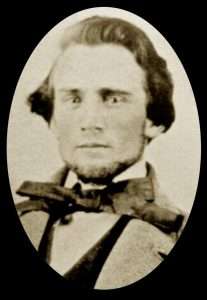
Andrew Wood Cooley was a descendant of Benjamin Cooley, a settler in Springfield, Massachusetts in the 1640s. His ancestors had moved westward through the years until they arrived in Michigan in the mid 1800’s. It was from here that Andrew left for California in 1863, but stopped in Utah to visit an aunt who had joined the Mormon Church in New York. He learned about the Church, was baptized in 1864, and never did reach California. In 1866 he married Mary Asenath Huntington. The new family settled in an area on the west side of the Jordan River in Salt Lake County called Brighton. The land was arid and alkaline. Water was scarce, but Andrew worked as a farmer to eke out a living. In 1867 he was called as bishop of the Brighton Ward. His ward clerk was an English immigrant, Robert Hazen. As bishop, he was encouraged to enter into the sacred order of polygamy, and in 1868 he married Jane Jenkins and Rachel Coon as his second and third wives. In 1870 he married his fourth wife, the daughter of his ward clerk, Ann Hazen.
Andrew had 32 children by his four wives between 1867 and 1887. In 1871 he moved his growing family to Huntsville in Ogden Valley. The family of his third wife, Rachel Coon, had spent time in this valley and encouraged the move. There he herded sheep and built charcoal pits. The winters were severe, and disease among children was very common. Four of his children died in Huntsville, and he had the task of taking their bodies to Salt Lake for burial. The mothers had to stay behind. Pictures of the babes in coffins were taken and sent back to the grieving mothers.
Finally, in 1874 the Coons and Cooleys returned to the Salt Lake area. After a brief stop near Tooele, Andrew returned with his family to Brighton and built houses for three of his wives. His first wife, Mary, stayed with her parents near downtown Salt Lake. The political atmosphere surrounding polygamy became increasingly hostile at the National level. In 1882, the Edmunds Act was passed by the United States Congress that made it a crime for a person to practice polygamy. Many men, including some church leaders, went into hiding to evade capture. Others moved to other areas such as Idaho, Arizona and even Mexico. Andrew was not a wealthy man, and he did not want to leave his families or have to choose one and abandon the others. The federal officials became more persistent in their searching and finally, in October 1885, Andrew was convicted and sent to the Utah Penitentiary in Sugar House for six months. He was among the first men convicted and sent to prison.
The family was faced with the difficult challenge of going forward without the assistance of its patriarch. Several letters from Andrew to one of his wives. Jane, and from Jane to Andrew have miraculously survived. They paint a poignant picture of a man who loves his wives and children, who values them above his own freedom, and who tries to reassure Jane while he is forced to be away from her. The following excerpts from these letters illustrates the inner feelings of one of these men who were following the Prophet in their practice of polygamy and who demonstrated faith and love during their confinement. (Spelling and grammar edited for clarity)
December 25, 1885. I wish I could have had the privilege of spending Christmas with you at home, but it is our lot to spend it apart. I hope you have spent it in a different way from what I have. We had a good dinner. The warden did the best he could to make the prisoners happy, but when a man’s liberty is gone, he can’t be happy when he has a family at home. I have thought of home the whole day long and so I do every day. I shall never be a happy man if I cannot enjoy the society of those that are my own flesh and blood which my family is. Things look dark to me, but I must hope for the best. God is at the helm
Are the children all well? … Be careful about the children going with wet feet. Keep them in the house in bad weather. Is your house warm? Don’t try to fetch the children up here. I would like to see them, but I am so afraid they will be sick. Try and pacify them and leave them at home if you have to go. Tell them that pa wants them to be good children and when he comes he will get them lots of candy and nuts. Kiss them for me and I wish them a Merry Christmas. Jane, try to be good to your children. Don’t scold them more than you can help.
January 13, 1886. Everything looks dark to me. If there isn’t some change, I will have to stay here the rest of my life for I can’t disown one of you. You are all as dear to me as my life. I can’t relinquish my claims to one of you, for if I do, I will lose you in eternity, and this life is nothing compared to eternity.
February 3, 1886. Jane, you say you hope that I will treat you as well as I do the rest. (the other wives). Jane, haven’t I always done so. If I haven’t always done so, it was done through a mistake and you must forgive me… I want you all to act in unison together. Don’t separate yourself from the rest. Try to be one family. God bless you. You say that Brother Alford has lost his wife and that you think it is harder for him to lose her than it would be for a man who had two or three. Jane, wouldn’t you feel as bad to lose one of your children as if you had but one? …I told one of the brethren today that if I couldn’t have the privilege of supporting my wives and their families, I didn’t want to stay on the earth. I wanted to go behind the veil with those who have gone before. As for death, it is a blessing to me if I have to be separated from my wives and children. They are all I want to live for. I am thinking of you all the time…
While Andrew was in prison, one of his teenage daughters, Maretta (Net), contracted pneumonia and died. Andrew had been permitted to visit her under guard the day before her death. His presence seemed to rejuvenate her, but when he was able to return the next day, she had passed away just before his arrival. Andrew petitioned to attend her funeral, but this was denied. A week later he completed his six month confinement and returned to his family. The Deseret News in its April 10 edition reported his release. “This morning we received a call from Brother Andrew W, Cooley, who emerged the other day from the penitentiary after serving a six month sentence for having lived with his wives. His health was at time quite precarious while in prison, and the strain upon his mind on account of sickness and bereavement in his family was so great as also to tend to reduce him somewhat, physically. He was respected by his fellow-prisoners on account of the kindly and accommodating disposition he displayed. He comes out with a full determination to keep clear of everything not in unison with the spirit of the Gospel.”
Andrew’s trials were not over. A second charge of polygamy was brought since he returned to his wives upon his release. After lengthy hearings, Andrew again pled guilty to living with more than one wife, and was the first polygamist to be incarcerated for a second time. Less than a year after his release, he was back in prison. But this time, he would not fill the entire six months. His health steadily deteriorated, and on August 1, 1887 after a five month imprisonment, he was released to go home and die. Just over two months later, Andrew Wood Cooley died of kidney failure. He was just fifty years of age. He left his four grieving widows and twenty children; his last child, Walter, was born just a month before his death.
The desire for unity among his family came to pass as the four wives banded together and raised their children in a spirit of one big family. Two of the wives took their families to Cache Valley where some of the Coon family had moved. The other two wives, including Jane, stayed in Salt Lake with family except for occasional visits to the North. The children continued to stay in touch with each other and always felt that regardless of which wife they came from, they were all brothers and sisters. This spirit has been passed down through the succeeding generations. Andrew Wood Cooley could not choose among those he loved. The family responded by keeping his plea for family unity. Two published histories have helped pass these pioneer values on to his over 3,000 descendants.


 Brother Joseph