 0
0
 1
1
This biography originally appeared on pioneerstories.org
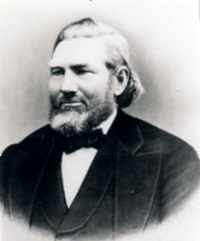
Owen Roberts was born 21 June 1818 in Llandysilio, Anglesey, Wales. He was the son of John Roberts and Jane Jones. Owen was a miner and he worked quarrying limestone in the village along with his father and brothers as this was the main industry in Llandysilio and Llandulas, Wales.
Owen was converted to the gospel of Jesus Christ from hearing Dan Jones, the famous Welsh missionary who converted many people. Owen’s wife, Mary Martin, was the first to join the church as records indicate she was baptized in 1847 and Owen was baptized in 1850. Their daughter, Jane Price Roberts was baptized in July 1856.
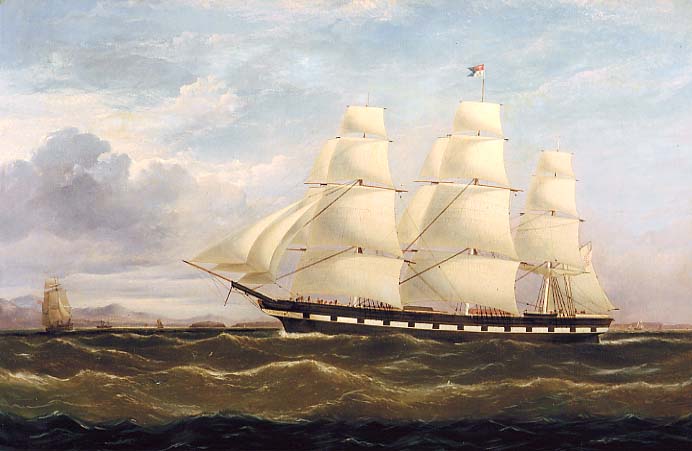
They set sail for America on 11 April 1859 on the ship “William Tapscott” sailing from Liverpool, England to New York. Owen was age 37, Mary was 32 and their daughter, Jane, was 11. Accompanying them on this voyage was Mary’s mother, Gwenllian Williams, who had been a widow for one year as her husband, Thomas Martin, had died on 8 July 1858 and so she is making the trip with them. The sell most of their possessions in order to finance the trip.

On Monday, the 11th day of April 1859 the ship “William Tapscott”, a triple-decked square-rigged ship, lifted anchor and was tugged out of the Mersey River into the open sea with 726 souls on board. Elder Robert F. Neslen was appointed president of the company.
Elder Neslen writes that he felt it quite a task when he was appointed to take charge of a company composed of people from so many countries, speaking nine different languages and having different manners, customs and peculiarities and thrown together under such close circumstances.
Thirty-three days later they landed at Castle Garden, New York. On Thursday, May 12th, they cast anchor in New York harbor at 7 p.m. and next morning landed in Castle Garden. They stayed there until Saturday, the 14th. In the afternoon Owen and his family started up the Hudson River on a steamboat to Albany, New York where they arrived on the 15th.
In the morning Owen and family were transferred to the railway for Windsor, Canada where they arrived next morning. On Tuesday, the 17th, they left on the railroad for Chicago and arrived there the next morning where they changed cars again for Quincy, Illinois and arrived there on the morning of the 19th.
A steamboat named “Pike” was then their conveyance on the Mississippi River to Hannibal, Missouri where they landed the same evening. On Friday, May 20th, they started on the railroad for St. Joseph, Missouri where they arrived safely; from thence they proceeded on their way up the Missouri River on the steamboat “St. Mary”.
Here they were treated roughly by the crew and others. They had nowhere to sleep or sit, but were almost constantly compelled to stand on their feet night and day until May 26th where they landed on the banks of the Missouri River below Florence, Nebraska at which place they lodged for a while so they could fit up their teams and baggage to cross the plains to the Rocky Mountains.
Owen and his family were in the Neslen Company so they traveled in wagons pulled by oxen carrying all their earthly possessions.
They arrived in Salt Lake City on 15 September 1859 and camped in Emigration Square that first night. They stayed in Salt Lake City for six months and in April 1960 headed north with 60 other families to a settlement on the Cub River or “Muddy River” as it was known. (Now know as Franklin, Idaho) They built small cabins along the Cub River and commenced farming. The families drew numbers to distribute town and farm lots.
A fort was laid out and logs were brought in to build cabins, facing inside and serving as walls of the fort.
Owen could speak English so he was able to converse with other settlers. Their long journey was over. They had left Wales in April 1859 and now it is the Spring of 1960.
The years go by and the work is hard. He is no longer engaged in mining but has become a farmer/laborer to support his family. His daughter, Jane, has met a young man named Thomas Hull who lived a few cabins away. They get married on 2 April 1864 in Franklin, Utah Territory.
Owen Roberts lives to be 80 years old and his wife, Mary, is 77 when she passes away. Owen died in 1898 and is buried in the Hillcrest Cemetery in Shelley, Idaho. His wife, Mary Martin Roberts, dies in 1904 and is also buried in the Hillcrest Cemetery in Shelley, Idaho.
- First Name: Owen
- Last Name: Roberts
- Spouse(s): Mary Martin
- Mother: Jane Jones
- Father: John Roberts
- Birth Place: Llandysilio, Anglesey, Wales
- Pioneer Type: Early Pioneer
- Birth: 21 Jun 1818
- Arrived in Utah: 15 Sep 1859
- Death: 1898
- Sources: Submitted 2/3/17 by Mavanee Steele


 Brother Joseph
 Pioneer John