0
0
 1
1

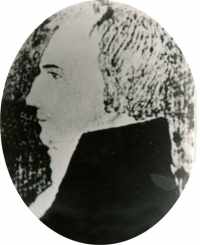
The pioneer mill-builder of Utah, also a prominent colonizer in California and in Arizona, Charles Crismon was known as a man of ability and enterprise. He was it born December 5, 1805, in Christian county, Kentucky, and remained there until the year 1830, when ho married and moved to Jackson county, Illinois, where he settled down to farming and building mills. The maiden name of his wife was Mary Hill. Mr. Crismon joined the Church of Jesus Christ of Latter-day Saints in 1837.
Early in 1838, during the Mormon exodus from Ohio to Missouri, he went with his team to assist the Prophet Joseph Smith in moving to the latter State. He then sold his property in Illinois and took his family to Missouri, arriving near Far West about the last of August. Later in the year, when the persecution against the Saints was raging, he moved into that city and remained there until the general expulsion.
In the early part of 1839 he was in Morgan county, Illinois, and in 1842 settled at Macedonia, Hancock county, about twenty miles in an easterly direction from Nauvoo. He there engaged in mill building, and was the owner of a carding machine at that place. In December, 1845, he took up his abode at Nauvoo, where he resided until the Mormon exodus from Illinois.
Crossing the Mississippi on the 8th of February, 1846, he and his family joined the camps on Sugar Creek. They were connected with Bishop George Miller’s company, which was in advance of the others most of the way to the Missouri River. Mr. Crismon was captain under Bishop Miller, and remained in that position until after the founding of the settlement of Ponca, to which point the Bishop led his detachment in disobedience to the instructions of President Young. The latter desired him to establish a temporary settlement at or near Grand Island, along the line of travel, but Miller, who was becoming disaffected, led his company out of the line of travel, across the country to the junction of the Running Water and Missouri rivers, about one hundred and fifty miles north of Winter Quarters. After wintering there and enduring many hardships, most of the company, the Crismons included, having lost confidence in Miller, found their way back to Winter Quarters, where they joined the main body of the Saints.
Mr. Crismon had returned from Ponca in advance of his family, and in the winter of 1846-7 was sent by President Young on a mission to Mississippi, to visit some families in that State and make arrangements for their emigration to the West. He was accompanied on this mission by Bryant Nowlen, and returned with John Brown, who was chosen one of the Pioneers. The Mississippi Saints joined the Pioneers at Fort Laramie and accompanied them to Salt Lake valley.
His family having joined him, Mr. Crismon, with his son George, made two trips with teams into Missouri to obtain supplies for the westward journey. At Winter Quarters they were detained while getting their grain ground, and consequently were the last of the season’s emigrants to cross the Elk Horn and connect themselves with the companies then moving. They reached the Horn the day that Jacob Wetherby was killed by Indians. They joined Jedediah M. Grant’s hundred, and were in Willard Snow’s fifty and Jacob Gates’ ten, all the way to Salt Lake valley.
Among the exciting incidents of the trip was a stampede of cattle, about two hundred and fifty miles west of the Missouri. In this stampede Mr. Crismon lost an ox, which returned to Winter Quarters. It was taken from the estray pound there, by a friend of the owner, and delivered to him in Salt Lake valley in the fall of 1848. This was rather remarkable, considering the distance the ox had to travel back to Winter Quarters, over country covered with buffalo and infested by Indians. The estray pound bill was five cents—another remarkable circumstance, in view of the rates that now prevail.
During the latter part of 1847 Mr. Crismon, while living in the Old Fort, built a small grist mill at the mouth of City Creek canyon, near the point where Third Street now crosses the bed of that stream. It was the first mill built in this region. On the same creek, a short distance above, he put up a saw mill, and this was one of the first saw mills erected here. In the fall of 1848 he sold both mills to President Brigham Young, who operated them for many years. About the same time he built a home near the site of the present Penitentiary, and resided there until he removed to California.
It was in the latter part of April, 1849, that Charles Crismon and his family set out for the land of gold. They took the Humboldt route and arrived at Sacramento on the 3rd of July. At that time there was but one house in the town, though there was a number of tents. He was engaged in mining at Mormon Bar on the north fork of American River, for a few months, and during the following winter lived at Mission Dolores, San Francisco. In July, 1850, he removed to the Clieno Ranch in the southern part of the State, and assisted to found, in 1851, the city of San Bernardino. He built the first sawmill south of Santa Cruz, and one of the first grist-mills in that place. In the Stake organization at San Bernardino he was a member of the High Council.
He returned to Utah in 1858, locating in the Fourteenth Ward, Salt Lake City. He built the Husler mill in 1865 and during the next twelve years was engaged in freighting, railroad contracting, stock-raising, coal-mining and gold and silver mining. He is said to have introduced into Utah the transitory system of sheep-herding, moving camp on wheels from desert to mountain, with the alternation of the winter and summer seasons.
In 1878 Mr. Crismon removed to Arizona. He was one of the early settlers of Salt River valley, and built the second grist mill there. His home was near Mesa City, and he was a member of the High Council of Maricopa Stake. He died March 23, 1890. Among his sons are the well known Crismon brothers, George, Charles, John and Scott. He had three families in Arizona.
From History of Utah, Vol. 4, by Orson F. Whitney.


 Brother Joseph