 0
0
 1
1
https://www.familysearch.org/photos/artifacts/5192094?cid=mem_copy
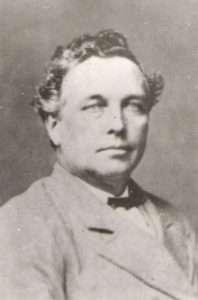
by Thomas G. Alexander

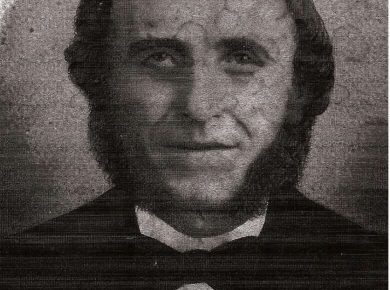
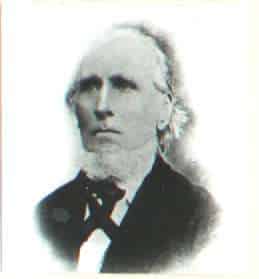
Henry Hughes was born to Robert Hughes, born 1785, died 1845, and Martha Read born 1786, died 1857 in Mold, Flintshire, North Wales on Christmas day in 1825. At the age of nine he began working in a coal mine near Mold. At age twelve he was trapped with other workers when water broke through from an old abandoned pit next to the mine in which he was working. The rushing water drowned seven of the miners, and 22 of them including Henry rushed to the highest point they could find in the mine. Two of those huddled around him died in the first two hours, and in the three days and two nights they were trapped in the mine, 12 of the miners died. After the rescue party broke into the mine, one of the first to enter was Henry’s brother John.
Afterward, the mine near Mold closed, and the family moved to Hanley a district in Stoke-on-Trent in Staffordshire, England, and then to Newcastle. There Henry met Ann Howell, and the two were married at Easington, Durham, England on November 4, 1850. In 1850, Mormon missionaries contacted the two of them. Henry joined the church in 1851, and Ann in 1852.
Henry and Ann sold their possessions, borrowed money from the Perpetual Emigrating Fund, and, in 1853 they sailed on the ship Falcon for New Orleans. They traveled up the Mississippi to Council Bluffs, Iowa. In June 1853 they left from the Missouri River for Utah in a wagon train led by Appleton Milo Harmon. They arrived in Salt Lake City in October. They settled first in Salt Lake City, then in Mill Creek, then in Big Cottonwood Canyon.
In 1857 Henry joined the militia to stop the advance of the U. S. Army in Echo Canyon during the Utah War. In 1859 Henry traveled with the early settlers to Cache Valley, and in 1862 he moved Ann and his family to Mendon. He served as Bishop in Mendon from 1870 to 1872 under appointment of Elder Ezra Taft Benson, and in 1872 Brigham Young ordained him as bishop.
Among his first acts as bishop, he wrote a letter to the editor of the Deseret News dated April third. In the letter, he offered forty acres of land to four volunteers who would come to Mendon to sing in the ward choir. He said they need a base, tenor, alto, and soprano.
While serving as bishop, he engaged in a number of other activities. He farmed in Mendon. In 1869 he and his associates opened a cooperative store under a program begun by Brigham Young. He married Sarah Ann Goatman polygamously in 1868. He served a mission in Wales and England from 1873 to 1875. In 1887 he was arrested and imprisoned for five months and fined $100 for unlawful cohabitation. We would call it polygamy. He refused to give up polygamy, and was under indictment in 1893 when President Benjamin Harrison issued an amnesty for those who practiced.
In 1894 he was elected as one of the representatives from Cache County to the Utah State Constitutional Convention that began meeting in March 1894. I have believed that the Utah Constitutional Convention had a larger collection of ex-convicts than any in the United States.
He was released as Bishop in April 1900 after serving for 30 years, and he continued to live in Mendon until his death on May 28, 1904, in Mendon.
Sources: Henry Hughes, Autobiography (various dates); Dorothy J. Schimmelpfennig, The Reluctant Bride (2012); Church of Jesus Christ of Latter-day Saints, Family Search.


 Brother Joseph