BRACKENBURY, Joseph: The First Martyr of the Latter-day Dispensation

0 1
Read Time:2 Minute, 50 Second

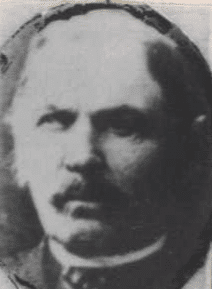
It has long been held in the Church that Joseph Murdock, infant adopted son of Joseph and Emma Smith, was the first martyr of this dispensation. In March 1832, he developed pneumonia through exposure after the mob dragged the Prophet Joseph Smith out of the Johnson home in Hiram, Ohio. However, one particular individual has been forgotten and overlooked through the years whose life was stopped short just a couple months before the tragic death of the infant Joseph Murdock.

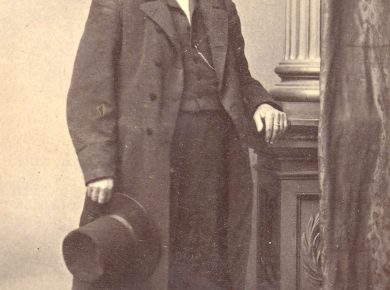
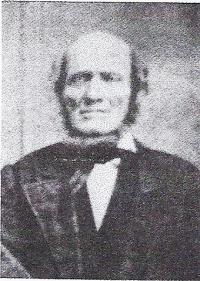
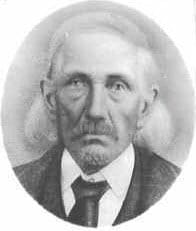
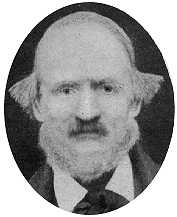
Joseph Brackenbury was bom in Lincolnshire, England in 1788 and immigrated to the United States in 1818 to New York City where he met and married Elizabeth Davis Goldsmith, a widow, with whom he had six children. In 1830, upon hearing about Joseph Smith and the recently organized Church, the Brackenburys moved to join with the Saints in northern Ohio.

At the October 1831 Amherst, Ohio conference; Joseph Brackenbury stated that he “consecrated all to God before he was baptized, he was also determined to go on to the end of his life.” At the conference, Oliver Cowdery ordained him to the High Priesthood and then called for elders desiring to preach the gospel. That December Joseph left with Edmund Durfee on a mission to the East

While proselytizing in the town of Pomfret, New York Elder Brackenbury was taken seriously ill which was later ascertained to be a case of lethal poisoning administered by the local mob. Elder Brackenbury was confined to bed at the Joel Johnson home where he “remained in great distress, which he bore with [the] fortitude of a saint for one week and expired with an unshaken confidence in the fullness of the gospel which he had preached, and a firm hope of a glorious resurrection among the just.” Joseph Brackenbury died the 7th of January, 1832.

Later in the evening following the burial of Brackenbury, at “about half past eleven o’clock” Joel Johnson “dreamed that some persons were digging up Brother Brackenbury’s body, and was so exercised about it that he called up some of the brethren” to go with him to the grave. Upon their arrival the brethren “found a party of doctors at work, who had nearly cleared the grave of earth” and that they were planning to either dissect or otherwise mutilate the body. The men fled but young David Johnson (who was large for his age) “took after the largest one who was caught.” The culprit was “bound over in one thousand dollar bonds for his appearance at court, but was never tried.”

On the death of Elder Brackenbury, Benjamin F. Johnson wrote in his journal:

Now it seemed as though Satan was permitted to try both our faith and our fortitude, for after a few weeks of the most powerful and successful preaching, in the midst of ridicule, scoffing and persecution. Elder Brackenbury was taken sick and within a few days died Our enemies now felt they had a great triumph; for where now were the gifts of the gospel when our strongest man could die, and my sister, though she had embraced the gospel, was yet upon her crutches? These things seemed at the time a great trial, yet in no decree did it dampen the faith of any, and while listening to the ravings of our enemies, the truth, with the love of it became the more deeply planted in my heart.

Happy
Happy
0 %
Sad
Sad
0 %
Excited
Excited
0 %
Sleepy
Sleepy
0 %
Angry
Angry
0 %
Surprise
Surprise
100 %
You May Also Like

BINGHAM, Erastus

Erastus Bingham stood up on his wagon wheel and talked to the Saints, telling him that he proposed to obey the council of president Brigham Young, that he and his family would remain until Spring and invited all to join with him in accepting the invitation of the Indians to share their camping ground. About one half of the company remained with Erastus Bingham; the others decided to attempt the journey Westward with their commander, Bishop Miller. They pushed on Westward but met with a great many losses. The Indians stole some of their animals; and they suffered from the cold and lack of food and were compelled to return, some of them camping near Erastus Bingham’s camp. The Ponca Indians were very kind to the families who were sharing with them their camping ground, even bringing meat for some of the most destitute families. They wintered with the Ponca Indians, living in their wagons and a wickiup the friendly Indians provided for them.
View Post

ALLEN Jr., Daniel: A Life of Consecration

Having completed their assignment, Daniel and his committee returned to Nauvoo, only to find buildings burning, mobs raging, and the saints gone. Daniel hurried to his home to find that his family was still alive, but his wife Mary Ann had just had a new baby and was very ill. He pled with the mob to let him stay a few days so his wife could recover, but they said they would kill them all if they weren’t gone by the next day. They hurriedly loaded what they could in the wagon and made a bed for Mary Ann and the baby. The Allen wagon was one of the last three to leave Nauvoo. They traveled together for a short distance, but couldn’t keep up because of Mary Ann’s grave condition. Being left alone with only one other wagon, they trudged through the mud and snow as best they could until they reached the head of Soap Creek (it looks like this might be less than 100 miles from Nauvoo). Mary Ann had struggled so valiantly, but could endure no more, so she whispered her last words to her loving husband…”We’ll meet again dear love in a better world and I shall wait your coming”. She died on the trail in May, 1846, along Soap Creek, Davis County, Iowa with no one but her family and the angels in heaven to mourn her passing.
View Post

TAYLOR, Allen: Captain

Allen’s company of 445 people was twice as large as any of the other four companies that traveled that year. Apparently, Allen had earned his reputation as an effective leader when he had led rescue teams and wagons back to Nauvoo to rescue stranded saints who could not go on by themselves. There were two groups of wagons and Allen’s group traveled twice as fast as the other.
View Post

MOLEN, Jesse: The Life and Struggles

Upon arrival in Salt Lake City they had very little food or other provisions. They were required to subsist on plant roots to supplement the little other food they had. The next year they experienced the cricket infestation and lost most of their crop. The rigors of the struggle to travel west plus chills and other conditions had taken their toll on Jess’s health.
View Post

WOOLSEY, Jacob C. & son Joseph H. : 1848 Pioneers

Jacob C. Woolsey is the "brother-in-law who dug Abigail Lee's grave" at the "9th or Last Crossing of the Sweetwater" on 2 Sep 1848. Abigail Schaeffer is the widow of the above Joseph Woolsey and eight of her twelve children joined the Church and came to Utah! She was married to John D. Lee "for her protection and for convenience of traveling."
View Post

CALL, Helaman Pratt

My father had done a little experimenting. We had a large bathtub in one of the bedrooms in our home—it hadn’t been remodeled. They had just put in a bathtub and a toilet and a hand bowl in one of the bedrooms so there was quite a bit of room in there. It was a large oversize tub. I thought my father was going to baptize me but Charles Jones was going to baptize me. He had experimented how full he could fill the tub without running it over and still get me and him both in the tub. They put a stopper on the overflow so that the water would come up higher than the normal overflow would allow.
View Post

BLANCHARD, Amelia Jane Davis

The Davis family, being among the first settlers to Cache Valley, suffered untold privations and hardships. Amelia remembered the trials they had with the Indians, and how frightened she was. They would come to the door begging for food and no one dared to turn them away. As Ann H. fixed food for them, the Indians would play with the white children. When coming out of the house with food one day, Ann H. discovered the Indians had exposed her children to the black smallpox. The twins soon came down with the illness. The settlers were all so frightened of the deadly disease that a log shelter was hurriedly built a short distance north of the Logan Cemetery. The Davis family, including the stricken twins, moved there in isolation. Amelia told of rats, mice, and snakes so thick that the healthy children took turns with willows, brushing the snakes from the beds of the sick children. Their beds located on the floor were made with a straw tick. The weather was severe coming through the open cracks of the shelter. The family was badly neglected and almost starved to death. Remarkably, the twins recovered from the smallpox epidemic, but after being home only a short time, diphtheria struck, taking the lives of both twins, Henry and Catherine. Childhood days were very strenuous and hard. These early settlers had lots of troubles, yet they had some thrilling and good times too. Amelia often told stories of the exciting sleigh rides, dances and house parties they enjoyed. How she loved her church activities! Amelia's greatest desire was to do good for others and scatter sunshine wherever she went.
View Post

KARTCHNER, William Decatur: Man of Steel, True to the Faith

The only time for any kind of play was at night, and on one occasion in the Spring of 1836 he stayed at play until after nine p.m. When he went to the house the doors were locked so he had to sleep in the hay in the stable. In the morning he went with the other hands to breakfast and to his surprise Mr. Miles, the old boss had prepared a large whip which he used on William’s back so unmercifully that it raised a solid scab half the length of his back. His cries were heard by all the neighbors, and then he was sent to work without breakfast. His oldest brother, Peter, came from the western country to visit him. Upon hearing his grievances, they laid a plan for William to run away and go with Peter. William had saved up five dollars and asked Peter if that was enough to bear his expenses. Peter told him that he could go without a cent.
View Post