REBER, Ernest: My grandpa from Santa Clara

0 1
Read Time:3 Minute, 28 Second

Submitted by Hank West, as student at Heritage Elementary School in St. George, Utah.

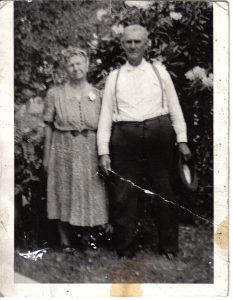
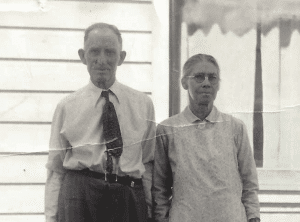
Ernest and Rosina Reber

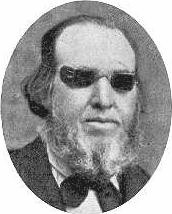
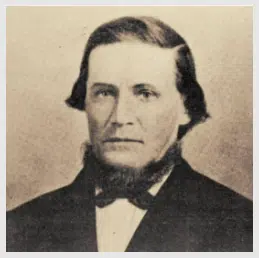
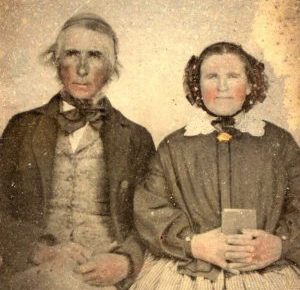
The Reber family came to this country from Switzerland. They lived on farms in the mountains around a small town called Shangnau, in Canton Bern, Switzerland. We have records that show they were probably there back to the 1400s, maybe even farther back. Our main ancestor was Christian Reber born in 1800. He had six children. Three of his kids joined the Mormon church in 1859. They were Johannes, Samuel and Fredrick. The Utah Rebers all come from these three pioneers.

Johannes and his family along with his brother Samuel came to America first. They traveled down the Rhine river, crossed the English Channel and sailed on a ship called the Underwriter in 1860. When they got to New York they traveled, by train, to Nebraska. Then joined the Captain Warren Walling wagon train to salt lake city, Utah. They arrived there in the fall of 1860. Brigham Young, the president of the Mormon church, sent them to Santa Clara in southern Utah, to colonize that area and farm.

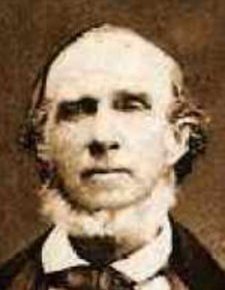
My grandfathers, father, Fredrick, followed the two other brothers to Utah in 1865. Fredrick’s first child born in America was my grandpa Ernest Reber. He was the first white child born in the historic Jacob Hamlin home on the west side of Santa Clara. The home still stands and is a Utah historical monument. He was raised in the Reber home just east of the current Mormon chapel on main Street. This home is also marked as a Utah historical monument. 

The family farmed and made adobe bricks. Many of the old homes that are still standing are made of Reber bricks. Ernest was a hard worker on the farm and in the brickyard. He was a good man and a very good friend. The town was very small and everyone knew him and looked up to him. He stood out from most of the other Swiss people because he was a large man. He stood over 6 feet and weighed well over 200 pounds. 

Reber home, in Santa Clara Ut

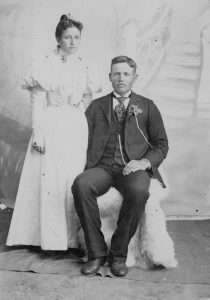
Ernest was married in 1896 to a local girl, Rosina Stahl. Grandpas first child, a little girl, was only 3 pounds at birth. They had to keep her warm in the oven and fed her with an eye dropper.

When she was only 13 months old the church called Ernest on a 2 1/2 year mission back to Switzerland. He was only 25 years old and it was very hard on his young family to be away for those 21/2 long years.

During his mission he became well known around the city of Zurich because he organized a choir that sang Swiss songs. His choir sang all around the area at local fairs and celebrations. Many Swiss people joined the Mormon church because of his influence. After returning home he was honored by the president of the church in a general conference for his Swiss choir and accomplishments on his mission. One very difficult time he had on his mission was the loss of his second child who died at birth.

Ernest took over the farm from his father Frederick and ran it successfully for many years. He had 5 children 4 boys and 1 girl They all worked on the family farm. Grandpa would walk to St. George on days off and work on the Mormon temple that was being built. He became a well respected man in the church and his community. He was a great husband and father. In 1949 he was called by the church to be the second counselor to St. George temple president Harold Snow. 

He was set apart for this calling in Salt Lake by church president George Albert Smith. Unfortunately a few months later Grandpa was killed in an accident in Santa Clara.

I have great respect for my early family and especially my grandpa Ernest. He was a wonderful example to us all and especially to me.

Happy
Happy
0 %
Sad
Sad
0 %
Excited
Excited
0 %
Sleepy
Sleepy
0 %
Angry
Angry
0 %
Surprise
Surprise
100 %
You May Also Like

The Life Story Of Albert Clements And Ada Winchell

Taking the baby's hand from covering his mouth he asked eagerly – "Was President Rigdon there in his place and did he take up the reigns of government and start the good work speeding on with new force & vigor?" "Why do you ask a thing like that, Albert?" Ada questioned, with a look and in a tone that would indicate she almost felt it sacrilege for her husband to have given utterance to such thoughts. "Yes," she continued, "Sidney Rigdon was at the meeting, but he was no better prepared to take the leadership among our people than this baby of ours is.
View Post

BRINKERHOFF, Jesse: A Father’s Journey of Love

The flu epidemic of 1918 sometimes known as the Spanish Flu, reeked havoc across the world killing an estimated 100 million people, more than 500,000 in the US, and killed mostly strong healthy adults. Fear spread the country, along with the flu. Hospitals were full, health professionals died, Schools, churches, public buildings,etc, were closed, and people feared being around others. Little girls made up jump rope rhimes, and here is an example, "I had a little bird, it's name was Enza, I opened the window and in flu Enza.
View Post

HOWARD, Mary Ann Tolman

Her two younger sisters died while crossing the plains and they were just 300 miles from Salt Lake City when her mother passed away. Mary Ann, age 12, and Emma, age 10, washed and dressed their mother, wrapping her in sheets ready for burial. This was a very heart rendering experience for these two young girls. They gathered sage brush to cover and conceal the grave so the coyotes wouldn't find it so easily.
View Post

James Henry Rollins, Faithful Pioneer

The San Bernardino colonizers were called back to Utah by Brigham Young when Johnson’s Army threatened. Henry and his family heeded the call, leaving behind still another home. In Utah, they settled in Minersville where he opened a lead mine and served as postmaster. He spent most of his life there serving faithfully in the church as a Bishop and in other callings well into his 80’s. He spent his last years in Lyman Wyoming to be near his children, where he passed away February 7, 1899.
View Post

CHURCH, Margaret – Still Giving Her Life

Despite their full-time family and farming commitments, the couple accepted teaching and leadership responsibilities in nearly every church position possible. Further, they encouraged each one of their children in educational pursuits. By 1978 their nine sons and seven daughters had completed a total of 67 years of college. After sending eight of their children on missions, Marge and Lathel accepted a call in 1977 to the Rapid City South Dakota Mission. It was during this service that she was chosen as Utah's Mother of the Year. Following are quotes written for that occasion by two of her daughters:
View Post

ROBERTS, Levi

After travelling over the mountains one day we met with some of our brethren from the Valley. This was a time of rejoicing. Captain Brown who left us at Santa Fe with the sick which went by the way of Fort Kearney and a few brethren with him from the Valley, brought news that we were not to go to the Valley, and told us we had better stay another year in California. So the company divided right where we met each other; some went on to Winter Quarters; some to the Valley, and some turned back. Daniel Browett, Slater, Cox, Levi Roberts and myself turned back to Sacramento and went to work for Mr. Sutter who treated us very kindly. I sent a mule to my wife with Brother Harris, which she got…. We all went to work at the same place for Captain Sutter. We took the work of cutting a millrace. Brother Browett went [p.379] to work with the millwright, this was in September and later on in the fall, I and two others took sick with the bilious fever. We were so sick we couldn't help each other to a drink of water. We lay under some ties and had to crawl around with the sun to keep from making us chill…. Our appetites were very poor, and our food was flour, water and squash. Had it not been for the thoughts of my wife and family I could have died, but we all three recovered after awhile and went to work on the millrace again and worked all winter. Sometime in the winter two of the brethren who were working for Mr. Sutter in the mountains found gold in a tailrace they were making. Mr. Sutter let me see the first gold they found before sending it to San Francisco to get it tested. In May 1848 some of the brethren and myself made a trip in the mountains to try and find a road over (instead of going down Truckee River, as we had to cross it about 20 times) but when we got in the mountains we found so much snow we had to return, and on our way back I stopped at what we called the Mormon Island, where there was some of the brethren at work getting gold, Brother Sidney Willis and his brother; also Brother Hudson. I stayed here for a short time and got some gold.
View Post

MAUGHAN, Harrison Davenport & Mary Freestone

Education had already become a high priority in the mind of this teenager. After twelve or fifteen months of employment she had saved enough money to enroll in the new Brigham Young Academy in Logan. Where had she learned what she needed to know to get admitted? How was she able to make her way in the environment of an academy? She may have attended school briefly as a small girl and perhaps for one year just after returning from Franklin Meadows. Mary left one little school workbook, labled “Alpine City, Utah.” It is filled with evidence of studies in math, geology, grammar (including diagraming sentences) and a lot of theology from the Bible. She also left another workbook in penmanship and a series of well-written essays on a variety of subjects. These showed good spelling and extraordinary penmanship, a beautiful script worthy of a highly educated person. Mary attended Brigham Young Academy for perhaps only three months, or maybe asmuch as two semesters. At the end of the spring term in 1882, the students exchanged messages in little autograph books, with one greeting per page in the form of a poetic sentiment. Each page is written in beautiful script – a very impressive exhibit, when compared to twenty-first century handwriting, which is often illegible at the college level!
View Post

ORR, Robert Ustain: A Short Biography

Robert Orr was quite the character on the stage, taking mostly comedy roles. Adept at showing the humorous side of life, he was a good pantomime and had plenty of chances to use his talent. When they were able to have a stage curtain made, he was in charge of running the curtain up and down and kept the coal-oil lamps all clean and filled. The first play they put on was called "Ten Nights in a Bar Room", which Robert had a part. This play was a favorite for many years and they played it at the opening of each season. They also took their plays over to Camp Floyd, Eureka and Tooele.
View Post

WARNICK, Anders Peter: Stalked by Cholera in 1866

From 1863 to 1875 cholera swept through Europe. The Austro-Prussian War in 1866 accelerated its spread. That fateful year 250 thousand people died from the lethal disease in Prussia and Austria, 90 thousand perished in Russia, and 113 thousand succumbed the next year in Italy. Hungary, Holland, and Belgium were similarly hard hit by the disease. Little wonder, then, that the virulent bacteria made its way on board the ship that the Anders Peter Warnick family boarded in Hamburg, Germany on June 1, 1866.
View Post