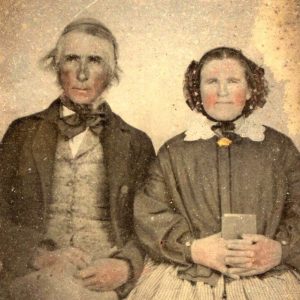
ORR, Robert Ustain: A Short Biography

Robert Orr was quite the character on the stage, taking mostly comedy roles. Adept at showing the humorous side of life, he was a good pantomime and had plenty of chances to use his talent. When they were able to have a stage curtain made, he was in charge of running the curtain up and down and kept the coal-oil lamps all clean and filled. The first play they put on was called "Ten Nights in a Bar Room", which Robert had a part. This play was a favorite for many years and they played it at the opening of each season. They also took their plays over to Camp Floyd, Eureka and Tooele.
0 1
Read Time:2 Minute, 12 Second

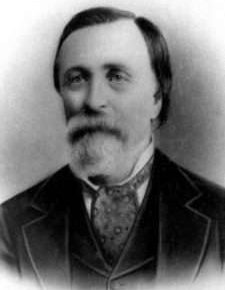
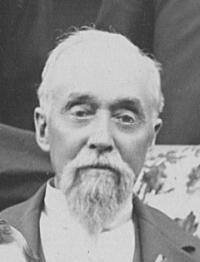
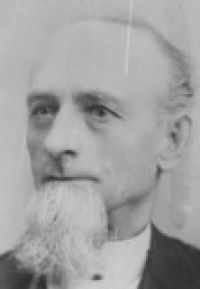
Robert Ustain Orr was born August 2, 1803 at Kilburnie, Ayrshire, Scotland. He was the son of James Orr and Anne Houston. He was an engineer by trade, being employed at one of the large woolen mills where wool fabric was woven.

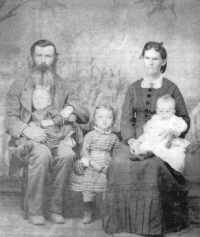
Robert married Elizabeth McQueen in Scotland April 16, 1828, and they made their home at Kilburnie. It was here they were visited by Missionaries from the Church of Jesus Christ of Latter-day Saints. They embraced the Gospel of the Church and Robert was baptized July 28, 1847 at Kilburnie.

Robert and Elizabeth emigrated to America sailing on the ship “Falcon”, March 28, 1853. Robert was 49 years old and Elizabeth, 47. Robert signed on as an engine keeper on the voyage. Listed on the shipping records sailing with them were their children James, 20, Robert, 17, Matthew, 15, Elizabeth 12, Ann, 9, and John, 7. Elder Cornelius Bagnall was President of the Company and the trip across the ocean took 8 weeks. After landing in America they went directly to Nauvoo, Illinois. They crossed the Missouri River and headed across the Plains with the Appleton-Harmon Company arriving in the Salt Lake Valley on October 16, 1853. After arriving in Utah the family made their home in Salt Lake City where Robert and his older sons were employed hauling granite from the quarries in Little Cottonwood Canyon to the Salt Lake Temple Yard.

The family moved to the Tooele Valley and settled in Grantsville in 1855. The years of 1855 and 1856 will always be remembered as the years of famine. Grasshoppers so thick as to darken the sun.

Robert built a log house on the North-west corner of Clark and Cooley Street. Robert and Elizabeth opened a store which they operated for many years in Grantsville. Robert and his sons freighted to points both East and West.

Robert Orr was quite the character on the stage, taking mostly comedy roles. Adept at showing the humorous side of life, he was a good pantomime and had plenty of chances to use his talent. When they were able to have a stage curtain made, he was in charge of running the curtain up and down and kept the coal-oil lamps all clean and filled. The first play they put on was called “Ten Nights in a Bar Room”, which Robert had a part. This play was a favorite for many years and they played it at the opening of each season. They also took their plays over to Camp Floyd, Eureka and Tooele.

Robert died November 7, 1887, and is buried in the Grantsville Cemetery.


Happy
Happy
0 %
Sad
Sad
0 %
Excited
Excited
0 %
Sleepy
Sleepy
0 %
Angry
Angry
0 %
Surprise
Surprise
100 %
You May Also Like

ASHBY, Nathaniel

The Ashbys were seaman and ship wrights until after the War of 1812. Nathaniel however, was apprenticed to a shoemaker at an early age to learn the shoemaking trade. He became expert in the making of fine shoes and started his own business.
View Post

ROBERTS, Levi

After travelling over the mountains one day we met with some of our brethren from the Valley. This was a time of rejoicing. Captain Brown who left us at Santa Fe with the sick which went by the way of Fort Kearney and a few brethren with him from the Valley, brought news that we were not to go to the Valley, and told us we had better stay another year in California. So the company divided right where we met each other; some went on to Winter Quarters; some to the Valley, and some turned back. Daniel Browett, Slater, Cox, Levi Roberts and myself turned back to Sacramento and went to work for Mr. Sutter who treated us very kindly. I sent a mule to my wife with Brother Harris, which she got…. We all went to work at the same place for Captain Sutter. We took the work of cutting a millrace. Brother Browett went [p.379] to work with the millwright, this was in September and later on in the fall, I and two others took sick with the bilious fever. We were so sick we couldn't help each other to a drink of water. We lay under some ties and had to crawl around with the sun to keep from making us chill…. Our appetites were very poor, and our food was flour, water and squash. Had it not been for the thoughts of my wife and family I could have died, but we all three recovered after awhile and went to work on the millrace again and worked all winter. Sometime in the winter two of the brethren who were working for Mr. Sutter in the mountains found gold in a tailrace they were making. Mr. Sutter let me see the first gold they found before sending it to San Francisco to get it tested. In May 1848 some of the brethren and myself made a trip in the mountains to try and find a road over (instead of going down Truckee River, as we had to cross it about 20 times) but when we got in the mountains we found so much snow we had to return, and on our way back I stopped at what we called the Mormon Island, where there was some of the brethren at work getting gold, Brother Sidney Willis and his brother; also Brother Hudson. I stayed here for a short time and got some gold.
View Post

BINGHAM, Sanford

Submitted by John Elggren, Great-Great-Grandson of Benjamin Franklin Lewis      Sanford Bingham, first son of Erastus and Lucinda (Gates) Bingham, born in Concord, Essex, Vermont, 3 May 1821. He married…
View Post

WALKER, John

This article originally appeared in the Mar/Apr 1980 issue of Pioneer Magazine THE JOHN WALKER FAMILY—EARLY CHURCH STALWARTS by Rowland P. Corry The following is about John Walker, my great…
View Post

Elihu Marcellus Allen

Elihu and his family experienced severe persecution while living in Missouri because of their religion. Elihu executed an affidavit on 18 May 1839 in Quincy, Adams, Illinois itemizing a bill of damages against the State of Missouri for $1,000 for property lost and expenses incurred during the expulsion.
View Post